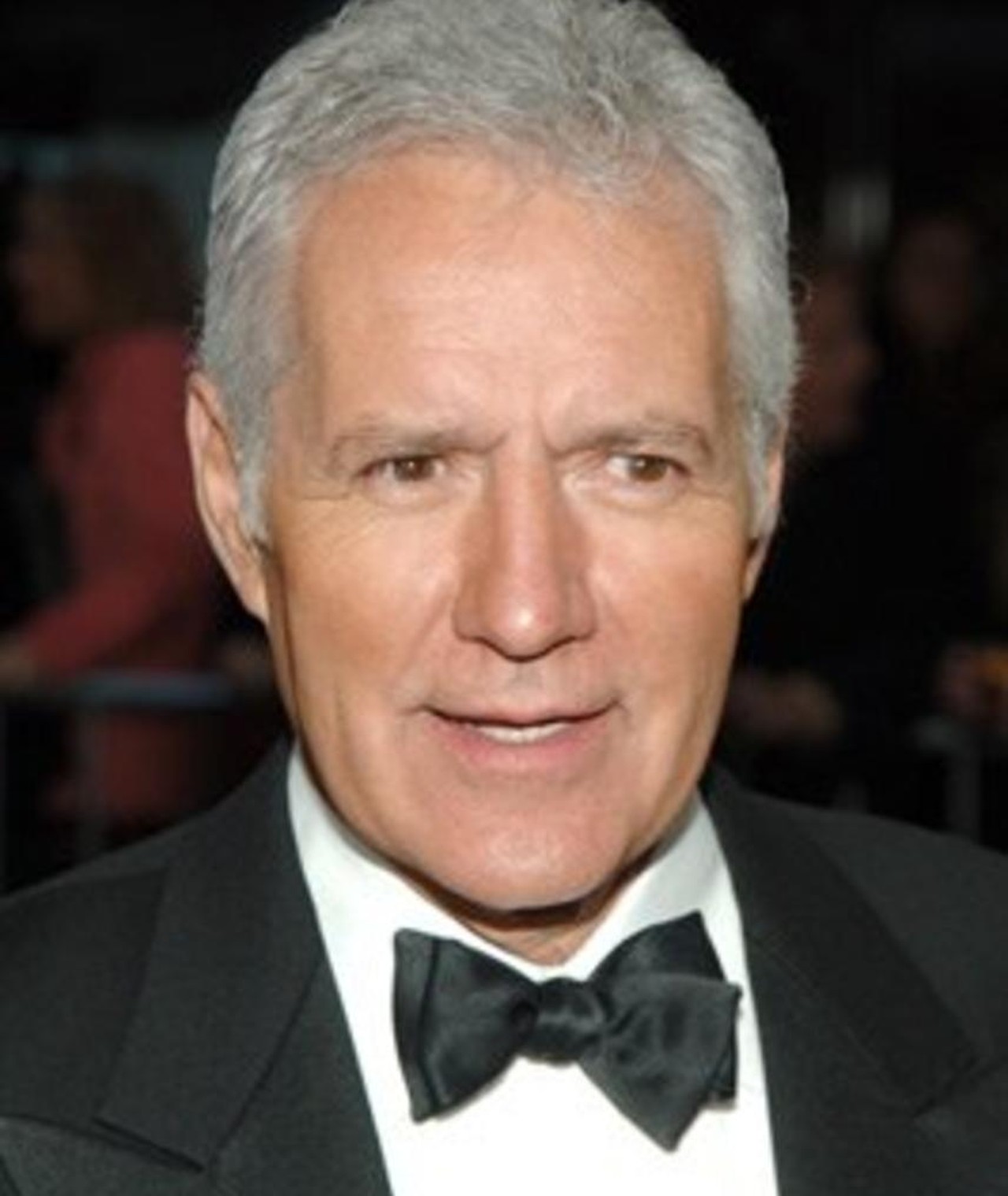
Before he was the gray-haired, authoritative icon of American trivia, Alex Trebek was just a kid from a nickel-mining town in Ontario trying to find a rhythm. Most people remember him as the man with all the answers. But honestly? The story of young Alex Trebek is way more chaotic than the polished "Jeopardy!" podium suggests.
He wasn't always the "Professor" of television. In fact, if things had gone slightly differently in the 1950s, he might have spent his life in a monastery instead of a Hollywood studio.
The Sudbury Kid and the Trappist Mistake
George Alexander Trebek was born in July 1940 in Sudbury, Ontario. His dad, George Edward Trebek, was a Ukrainian immigrant who worked as a chef. His mother, Lucille Lagacé, was Franco-Ontarian. This meant Alex grew up in a bilingual household, a skill that would later make him a unicorn in the broadcasting world.
But here’s the kicker: as a teenager, he wasn't dreaming of Emmy Awards.
He actually considered the priesthood. He even spent a summer at a Trappist monastery. Apparently, the "vow of silence" thing didn't sit well with a guy who would eventually make a living talking for thirty minutes straight every night. He also had a brief stint in a military college in Quebec, but he dropped out for a very "Alex" reason. They wanted him to shave his head.
He liked his hair too much. He left.
The CBC Hustle: When Young Alex Trebek Did Everything
By the time he got to the University of Ottawa, Trebek was a philosophy major. Philosophy! It explains a lot about his later demeanor—that calm, slightly detached logic. To pay for tuition, he started working nights at the CBC (Canadian Broadcasting Corporation).
He literally did everything.
He filled in for announcers. He read the weather. He covered horse racing and curling. If there was a microphone and a time slot, Trebek was there. This wasn't the high-glitz world of Los Angeles; it was the grit of 1960s Canadian radio and local TV.
In 1963, he landed a gig hosting a show called Music Hop. It was basically Canada’s version of American Bandstand. If you look up footage of a young Alex Trebek from this era, it’s jarring. He’s 23 years old, bouncing around with a skinny tie, surrounded by teenagers dancing to rock and roll. It’s the polar opposite of the man who would later explain the nuances of the Magna Carta to a software engineer from Ohio.
Learning to Laugh at the Mistakes
Trebek later told the Television Academy that Music Hop was where he learned his most important lesson: how to fail on camera. The show had no cue cards. If you messed up, you just had to keep going. He famously said you have to learn to laugh at yourself, but never at the job.
The "Reach for the Top" Era
In 1966, Trebek found his true calling: the quiz show. He started hosting Reach for the Top, a Canadian staple where high school students competed in academic drills.
This is where the "Academic Alex" persona started to bake. He wasn't just a guy reading questions; he was the authority figure. He was firm. He was fast. He was fair. He stayed with the show until 1973, becoming a household name across Canada.
Fun fact: He almost became the host of Hockey Night in Canada around 1971. He was the top choice of the producer, Ralph Mellanby. But the big boss at the time supposedly didn't want a host with a mustache.
The mustache stayed. The hockey job went to someone else.
Moving South: The American Gamble
By 1973, Trebek had hit a ceiling in Canada. His friend Alan Thicke (yes, the Growing Pains dad) encouraged him to move to the U.S.
His first American job was a show called The Wizard of Odds. It wasn't exactly a hit—it only lasted a year—but it got him through the door. Throughout the 70s, he became a "utility player" in Hollywood. He hosted:
- High Rollers (where he looked like a 70s movie star with the open collar and the thick hair)
- Double Dare (the 1976 version, not the Nickelodeon one)
- The $128,000 Question
He was working constantly, but he wasn't a superstar yet. He was just a very reliable, very handsome Canadian guy who never tripped over his words.
Why the Early Years Matter for Fans Today
If you want to understand why Alex Trebek was so good at Jeopardy!, you have to look at those early CBC years. He wasn't a "performer" in the way some game show hosts are. He was a journalist first. He treated the clues like news copy.
Most people don't realize that when Merv Griffin revived Jeopardy! in 1984, Trebek wasn't just the host—he was a producer too. He brought that "no-nonsense" Canadian sensibility to the show. He insisted on the tournament formats we see today, like the Teen Tournament and the College Championship. He knew those worked because he’d seen them succeed on Reach for the Top decades earlier.
Surprising Facts About Early Trebek:
- He was a polyglot: His ability to pronounce "Genre" or "Ennui" with a perfect French accent wasn't an act. It was his upbringing.
- The Mustache wasn't always there: In his earliest CBC days, he was clean-shaven. The iconic "Trebek Stache" didn't fully take over until the 70s.
- He was a "Fixer": Off-camera, Trebek was a notorious handyman. Even when he was a young star, he'd rather spend his weekend fixing a roof or tiling a bathroom than going to a Hollywood party.
Taking Action: How to Explore the Trebek Legacy
If you’re a fan of the show and only know the "modern" Alex, you’re missing out on the foundation of his greatness.
Watch the archival footage. Search YouTube for "Alex Trebek Music Hop" or "Reach for the Top 1960s." Seeing him navigate a room full of dancing 1960s teens gives you a whole new appreciation for his composure. It shows a man who paid his dues in the trenches of local broadcasting before ever becoming a legend.
Read his memoir. In The Answer Is...: Reflections on My Life, he goes into depth about his Sudbury roots. It’s a fast read and feels like he's sitting in the room with you, probably wearing a flannel shirt and holding a screwdriver.
Appreciate the craft. The next time you watch a game show, notice the pacing. Modern hosts often try to make the show about them. Young Alex Trebek learned early on that the host is the medium, not the message. That’s why he lasted 37 years.
He didn't just fall into the job; he built it, brick by brick, from a small radio station in Ottawa to the most famous lectern in television history.