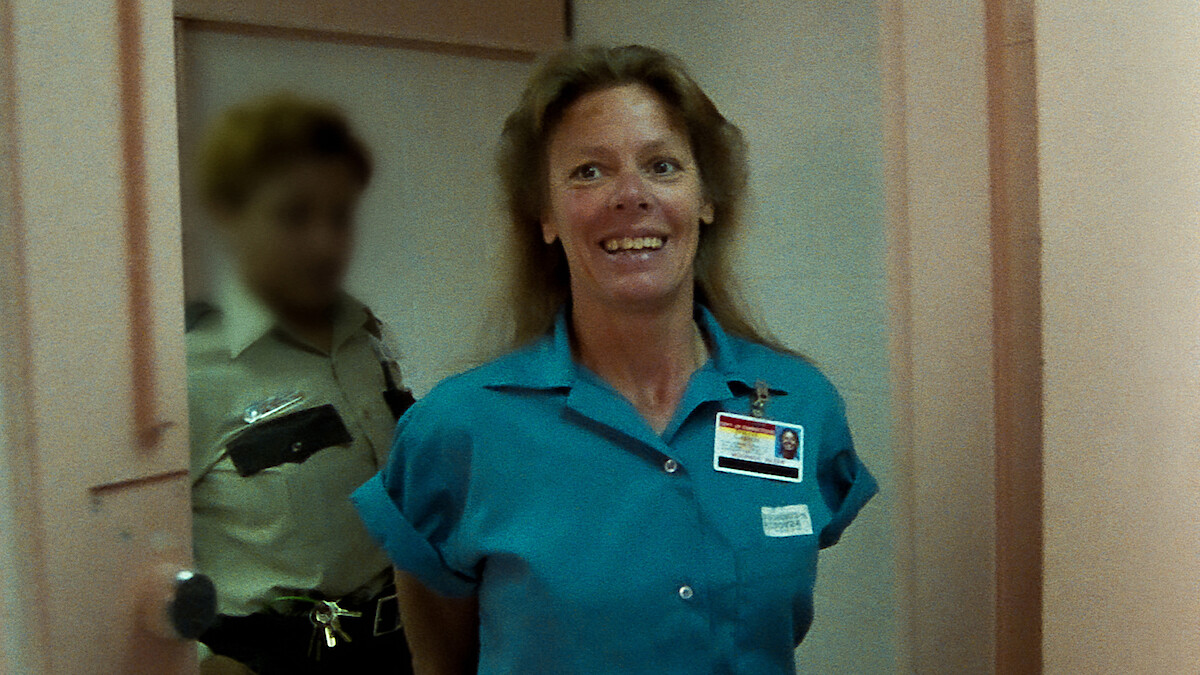
Honestly, when you look at those grainy young Aileen Wuornos pics from the sixties and seventies, it’s hard to reconcile the face of a blonde teenager with the "Monster" the media eventually sold to us. People search for these photos because they’re looking for a "why." They want to see the moment the light went out, or maybe find some hint of the violence to come. But real life is messier than a movie script.
Most of the photos floating around aren’t just pictures; they’re evidence of a life that was basically a train wreck before it even started. We see a kid in Michigan with a forced smile, but the backstory is heavy. It's a mix of severe trauma and a total lack of a safety net.
The Story Behind the Childhood Snapshots
You've probably seen the black-and-white shots of Aileen as a young girl. She looks... normal? Kinda. But the facts are brutal. Born in Rochester, Michigan, in 1956, her father was already in prison for child molestation. He eventually killed himself there. Her mom, Diane, bailed when Aileen was just four.
Imagine being a toddler and your mother just walks out.
Aileen and her brother Keith were "adopted" by their grandparents, Lauri and Britta Wuornos. This wasn't a rescue mission. According to court records and Aileen's own later testimony, the household was a nightmare. Lauri was an alcoholic who reportedly beat and sexually abused her. By the time she was 11, she was already trading sex for cigarettes and beer. The neighborhood kids even had a cruel nickname for her: "Cigarette Pig."
It’s heartbreaking, really.
One specific photo often pops up of Aileen as a teenager. She’s got this feathered hair, very 70s. She looks like any other high schooler, but by that age, she’d already given birth at 14. The baby was the result of a rape by a family friend. Her grandfather forced her to give the child up for adoption, and then, a few months later, he kicked her out of the house entirely.
She spent her mid-teens literally living in the woods.
Why These Photos Keep Resurfacing
People are fascinated by the "before." In the young Aileen Wuornos pics that survive, there's a startling lack of the hardened, wide-eyed stare she became famous for during her 1992 trial.
- The Humanization Factor: Seeing her as a child reminds people she wasn't born a serial killer. She was made into one.
- The Contrast: Compare a photo of her at 15 to her mugshots at 35. The physical toll of the "highway life"—alcohol, drugs, and constant survival—is staggering.
- The Mystery of the Son: People often search for photos of her son, but those don't exist in the public domain. He was adopted and his identity has been shielded, which is probably for the best.
Life Before the Highway: The Florida Marriage
One of the weirdest chapters in her life—and one where more "young" photos exist—is her marriage to Lewis Gratz Fell. This happened in 1976. Aileen was only 20; he was a 69-year-old yacht club president.
It sounds like a dark comedy.
There are actually newspaper clippings from the Deland Sun News showing their wedding announcement. In the photos, she looks polished, almost like she’s trying to play the part of a "society wife." But the facade didn't last. She was arrested for assault within weeks, and she reportedly hit Fell with his own cane. The marriage was annulled after only nine weeks.
Basically, she couldn't outrun the chaos.
Examining the "Monster" Narrative
When we talk about Aileen Wuornos, we have to talk about how the media framed her. She was labeled "America's first female serial killer," which isn't even factually true. Women like Jane Toppan were killing people with poison long before Aileen was born.
But Aileen was different. She used a .22 caliber pistol. She killed men she met while hitchhiking—men she claimed tried to rape her.
The young Aileen Wuornos pics serve as a reminder that the legal system often ignores the "pre-crime" history of its defendants. At her trial, much of the childhood abuse she suffered was downplayed. The jury saw a woman who confessed to killing seven men "as cold as ice." They didn't see the 14-year-old girl sleeping in an abandoned car in the Michigan winter.
Actionable Insights: Moving Beyond the Images
If you’re looking at these photos to understand the psychology of crime, here are a few things to keep in mind:
- Trauma is a Predictor, Not an Excuse: Understanding Aileen’s childhood doesn’t absolve her of the murders, but it explains the total lack of empathy and the "war" she felt she was in with the world.
- Verify Your Sources: Many "young Aileen" photos online are actually stills of Charlize Theron from the movie Monster. Always cross-check with archival sites like Getty Images or the Florida Department of Corrections for authentic historical photos.
- Look at the Context of the Era: The 1970s "hitchhiking culture" was extremely dangerous for women, and Aileen’s photos from this period reflect a subculture of transient workers that the law largely ignored until bodies started turning up.
The reality is that young Aileen Wuornos pics are a window into a tragedy that started decades before the first shot was fired in 1989. They show a girl who was essentially failed by every adult in her life, leading to a path that eventually left seven men dead and a woman on death row.
For those researching the case, the most valuable "photos" aren't just the ones of her face, but the ones of the environment she grew up in—the broken homes and the lack of social services in the 1960s. That's where the real story lives.
To dig deeper into the legal side of this case, you should look into the specific testimony of Tyria Moore, Aileen's longtime partner. Her statements often provide more "visual" detail of their life together than any photograph ever could.
Next Steps for Research:
- Compare the 1976 marriage announcement photos with her 1991 arrest footage to see the physical progression of her mental health decline.
- Read the psychological evaluations from her 1992 trial which detail the "attachment disorders" mentioned by experts like Dr. Harry Krop.
- Look for the documentary Aileen Wuornos: The Selling of a Serial Killer by Nick Broomfield, which features some of the most candid, non-staged footage of her towards the end of her life.