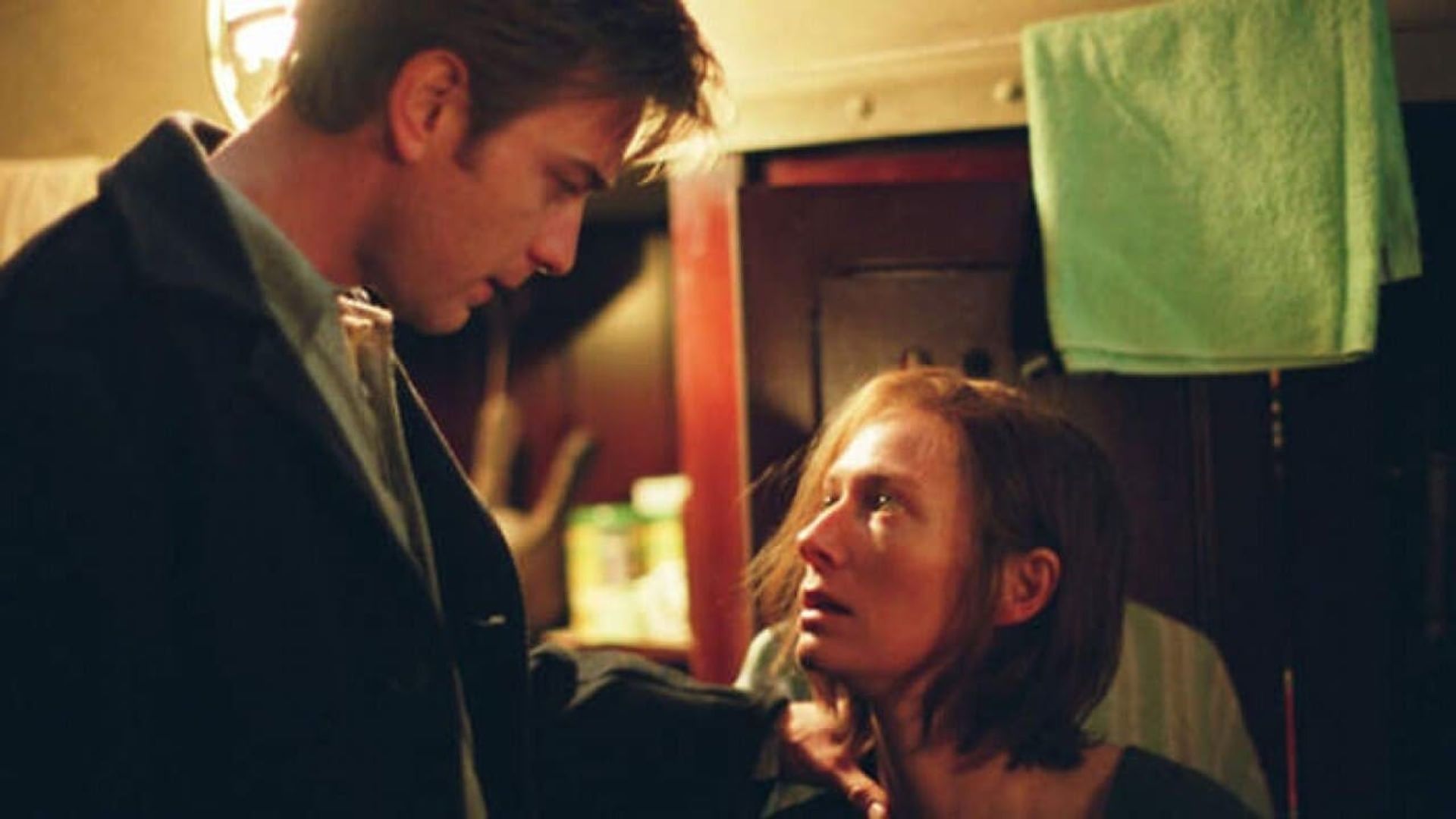
Honestly, if you only know Ewan McGregor from Star Wars or Moulin Rouge!, you haven’t seen the half of it. There is a specific kind of damp, soot-stained cinema that only Scotland seems to get right. Young Adam 2003 movie is the peak of that vibe. It’s a film that doesn’t just ask you to watch it; it asks you to sit in a cold, cramped barge and feel the condensation on the walls.
It’s gritty. It’s uncomfortably erotic. And man, it is quiet.
Directed by David Mackenzie—who later gave us the brilliant Hell or High Water—this adaptation of Alexander Trocchi’s "beat" novel is a masterclass in what isn't said. Most movies about a body being pulled from a river turn into a "whodunit." This isn't that. It’s a "why-is-everyone-so-broken-unit."
The River Clyde and the Body in the Water
The film opens with a shot that sets the tone for the next 98 minutes. Joe Taylor (McGregor) and his boss Les (the always-intense Peter Mullan) pull the corpse of a young woman out of the River Clyde. She’s wearing nothing but a petticoat.
Now, in a standard Hollywood flick, this would launch a high-stakes investigation. Here? It just becomes another part of the day's labor. Joe is a drifter. He’s working on a coal barge plying the canals between Glasgow and Edinburgh. He’s also sleeping with Les's wife, Ella, played by Tilda Swinton in a performance so raw you can practically smell the laundry soap and coal dust on her.
Swinton is phenomenal here. She plays Ella with a sort of brittle, tired sensuality. She’s trapped in a loveless marriage on a floating hunk of metal, and Joe is the only thing that feels like a spark, even if that spark is dangerous.
What Most People Get Wrong About the Plot
A lot of folks go into the Young Adam 2003 movie expecting a thriller. You've got a dead body, a secret past, and a murder trial. But it’s actually an existential character study.
The "twist"—if you can even call it that—isn't about some masked killer. It’s about the slow, agonizing realization that Joe isn't just a witness; he’s a catalyst for misery. Through a series of flashbacks, we see his past life with Cathie (Emily Mortimer). These scenes are jarring because they contrast the bright, hopeful seaside with the murky, grey reality of the barge.
Joe isn't a "bad guy" in the mustache-twirling sense. He’s worse. He’s indifferent.
There is a scene involving custard—yes, custard—that has become infamous in British cinema history. It’s messy, humiliating, and deeply uncomfortable. It’s the moment you realize Joe doesn't just lack a moral compass; he lacks the ability to value other people as anything more than instruments for his own fleeting desires.
Why Young Adam Still Matters in 2026
You might wonder why we’re still talking about a twenty-year-old Scottish indie film. Basically, it’s because it’s one of the few movies that captures "austerity-era" Scotland without turning it into a postcard.
- The Cinematography: Giles Nuttgens uses a palette of greys, browns, and sickly greens. It feels like the 1950s, but not the glamorous version. It’s the 1950s where everyone is cold and nothing ever quite gets clean.
- The Score: David Byrne (of Talking Heads fame) composed the music. It’s ambient, watery, and haunting. It doesn't tell you how to feel; it just hums in the background like the barge engine.
- The Performances: This is arguably McGregor’s best work. He sheds the "pretty boy" image entirely to play a man who is essentially a hollow shell.
The Trial and the Moral Vacuum
As the movie progresses, a man is arrested for Cathie’s murder. Joe knows he’s innocent. He sits in the gallery of the courtroom, watching the legal system grind an innocent man to bits, and he does... almost nothing.
It’s a direct nod to Albert Camus’ The Stranger. Joe is the ultimate outsider. He is physically present but emotionally miles away. When he finally tries to do the "right thing," he does it in the most cowardly way possible. It’s infuriating to watch, which is exactly why it’s a great film.
David Mackenzie doesn't give you a clean ending. There is no redemption arc. There’s just the river, continuing to flow, carrying the debris of these lives along with it.
Actionable Insights for Cinephiles
If you’re planning to revisit or watch the Young Adam 2003 movie for the first time, keep these things in mind to get the most out of the experience:
- Look for the Penguin Books: Joe is a failed writer. In several scenes, he’s holding orange-covered Penguin paperbacks. These are subtle nods to his literary aspirations—his "Hemingway dreams" that have been crushed by his own lethargy.
- Watch the Hands: The film is obsessed with textures. Coal dust on skin, the peeling paint of the barge, the way Joe touches the women in his life. The physical tactile nature of the film is its real language.
- Contextualize the "Sploshing": That custard scene? It’s not just for shock value. It represents the "porous contingency" of life that the original author, Alexander Trocchi, wrote about. It’s about the messiness of existence.
- Compare with "L'Atalante": If you’re a real film nerd, watch the 1934 French classic L'Atalante before or after. Mackenzie is clearly referencing it, but he subverts the romanticism of the "life on a barge" trope by making it claustrophobic and grim.
The Young Adam 2003 movie remains a staple of "New Scottish Cinema" because it refuses to blink. It looks at the darkest parts of human apathy and finds a strange, cold beauty in the wreckage.
To truly appreciate the film's impact, track down the original 1954 novel by Alexander Trocchi. It provides a deeper look into Joe’s internal monologue that the film intentionally leaves opaque. Comparing the two offers a fascinating study in how to adapt internal "beat" literature for a visual medium without relying on cheesy voice-overs.



