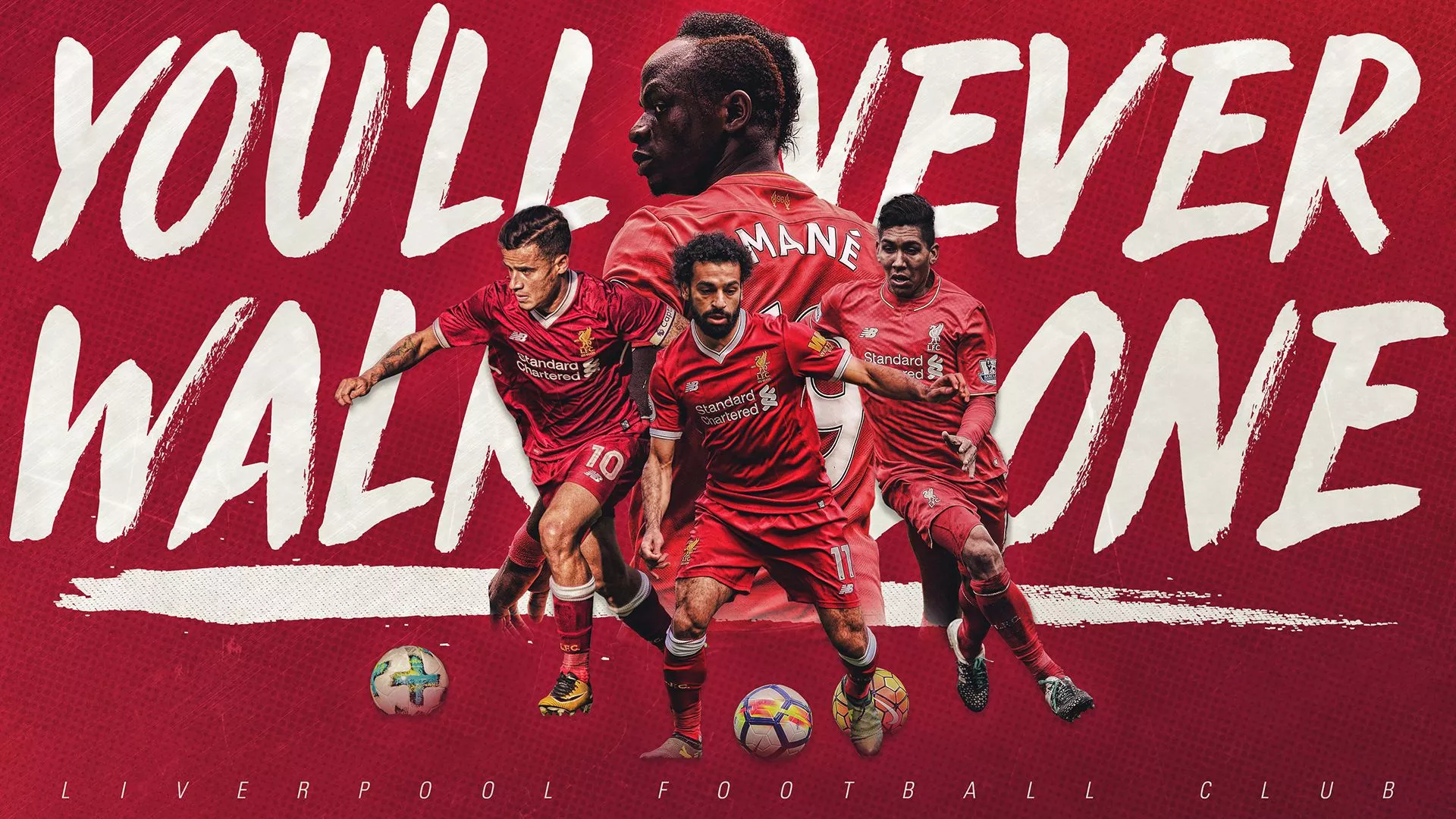
It starts with a hiss. That’s the sound of the needle hitting the record over the Anfield PA system, usually about five minutes before kickoff. Then, the first few notes of the piano kick in. If you’ve ever stood on the Kop, you know the feeling. It’s a physical weight. Suddenly, thirty thousand scarves are in the air, and the air itself feels thick. You'll Never Walk Alone isn't just a pre-match ritual for Liverpool fans; it is the oxygen of the club.
Most people think it’s just a football song. They’re wrong. Honestly, calling it a "song" is like calling the Pacific Ocean a "puddle." It’s a hymn, a protest, a funeral march, and a victory cry all rolled into one. It’s been sung through the glory of the 70s and 80s, the darkness of Hillsborough, and the miracle of Istanbul. You hear it and you realize that Liverpool FC isn't just a business or a collection of eleven guys in red shirts. It’s a community.
Where the Song Actually Came From
You might be surprised to learn that this anthem didn't start on the terraces of a rainy Merseyside stadium. It actually comes from Broadway. In 1945, Oscar Hammerstein II and Richard Rodgers wrote it for the musical Carousel. In the play, it’s sung to comfort a character after a tragedy. That sense of resilience—of walking through a storm—was baked into the DNA of the lyrics from day one.
So, how did a theater tune from New York end up as the heartbeat of English football?
In the early 1960s, a local band called Gerry and the Pacemakers covered the track. Gerry Marsden, the lead singer, was a massive Liverpool fan. He gave a copy of the record to Bill Shankly, the legendary Liverpool manager, during a pre-season trip in 1963. Shankly loved it. The local DJ at Anfield, Stuart Bateman, used to play the top ten hits of the week in descending order. When Gerry’s version hit number one, the fans started singing along. But here’s the thing: when it dropped out of the charts, the fans didn't stop. They kept demanding it. They kept singing.
The Bill Shankly Effect
Shankly was a man of the people. He believed in "Socialism" not as a political theory, but as a way of life where everyone worked for each other. When he heard the Kop singing those lyrics—Walk on through the wind, walk on through the rain—he knew it was the perfect embodiment of his philosophy.
It stuck. It became the club's identity.
The Tragedy that Changed Everything
You cannot talk about why You'll Never Walk Alone matters to Liverpool without talking about April 15, 1989. The Hillsborough disaster, where 97 fans lost their lives due to negligence and a subsequent cover-up, changed the city forever. In the days following the tragedy, the song stopped being about football. It became a tool for grieving.
A few weeks after the disaster, Liverpool played Everton in the FA Cup Final. Before the game, the entire stadium sang it. Not as rivals, but as a city in mourning. It was a promise. It meant that the families of the victims would never be left to fight for justice by themselves. It took 27 years for that justice to finally arrive in a courtroom, and during every single one of those years, the song was the fuel for the fight.
Why Other Clubs Sing It Too
Liverpool isn't the only club that uses the anthem, though they are certainly the most famous. If you go to a Borussia Dortmund game at the Westfalenstadion, you'll hear it. Celtic fans in Glasgow sing it with just as much passion. There’s even a story about how it spread to Feyenoord and FC Tokyo.
- Celtic FC: They claim they were singing it around the same time as Liverpool, though most historians point to a 1966 Cup Winners' Cup match between the two teams as the likely "infection" point.
- Borussia Dortmund: In the 90s, a local band called Pur harmony was asked to cover it. The lead singer was skeptical because he thought the song was too "slow" for football fans, but the Dortmund faithful embraced it immediately.
But even with all these other clubs joining in, there’s a specific "Liverpool" way of doing it. It’s slower. More mournful. It’s not a pop song; it’s a pledge of allegiance.
The Technical Reality of the Anfield Atmosphere
Let’s be real for a second. The atmosphere at Anfield has been criticized lately. Some people say the "European Nights" magic is fading because of ticket prices or the "tourist" crowd. But even the harshest critics shut up when the music starts.
There is a psychological phenomenon called "collective effervescence." It’s a term coined by sociologist Émile Durkheim. It describes the feeling of belonging and electricity that happens when a group of people performs a ritual together. When 54,000 people sing You'll Never Walk Alone, their heart rates actually start to synchronize. It creates a "12th man" effect that isn't just a cliché—it’s a biological reality.
Opposing players have talked about it for decades. Gianluigi Buffon, one of the greatest goalkeepers ever, once said that the atmosphere at Anfield made him realize how special football could be. He’d seen it all, but that song still got to him.
Surprising Facts Most Fans Miss
- The Pink Floyd Connection: Did you know the song is actually featured on a Pink Floyd album? At the end of the track "Fearless" on the 1971 album Meddle, you can hear a recording of the Kop singing the anthem.
- Elvis Sang It: Elvis Presley recorded a version in 1967. It’s actually quite good, though it lacks the raw, gravelly emotion of the Gerry Marsden version that Liverpool fans prefer.
- The Irony of the Lyrics: The song tells you to "toss and turned" and "walk on with hope in your heart," which is basically a manual for being a sports fan. It acknowledges that the "storm" is inevitable.
Is It Still Relevant Today?
In the era of billion-dollar transfers and state-owned clubs, something like You'll Never Walk Alone feels almost quaint. It’s a relic of a time when football was a community asset rather than a global entertainment product. But that’s exactly why it’s more important now than ever.
It’s a reminder. When the owners tried to join the European Super League in 2021, the fans used the values of the song to protest. They reminded the board that "You'll Never Walk Alone" includes the fans, not just the balance sheet. The owners backed down.
How to Experience It Properly
If you're planning a trip to Anfield, don't be the person filming the whole thing on your phone. You'll miss the point.
Put the phone away. Hold your scarf up. If you don't have a scarf, just stand there. Feel the vibration in the floor of the stand. It’s one of the few things in modern life that actually lives up to the hype. It’s loud, it’s out of tune, and it’s beautiful.
Actionable Insights for the Modern Fan
If you want to truly understand the culture behind the anthem, do these three things:
- Visit the Hillsborough Memorial: Before the game, go to the memorial at Anfield. Read the names. You'll realize why the lyrics "walk on through the rain" carry so much weight for the locals.
- Listen to the 1963 Gerry Marsden version: Don't just listen to the stadium version. Listen to the original recording and hear the Merseybeat influence that helped define an entire era of British culture.
- Research the "Shankly Gates": Look at the top of the gates outside the stadium. The words are forged in iron. It’s a permanent reminder that the song and the club are inseparable.
The song is a bridge. It connects the grandfathers who watched Billy Liddell to the kids watching Mohamed Salah today. It’s the one constant in a sport that changes way too fast. As long as that song is sung, Liverpool FC will always be more than just a football club. It will be a family. And in a family, you really do never walk alone.