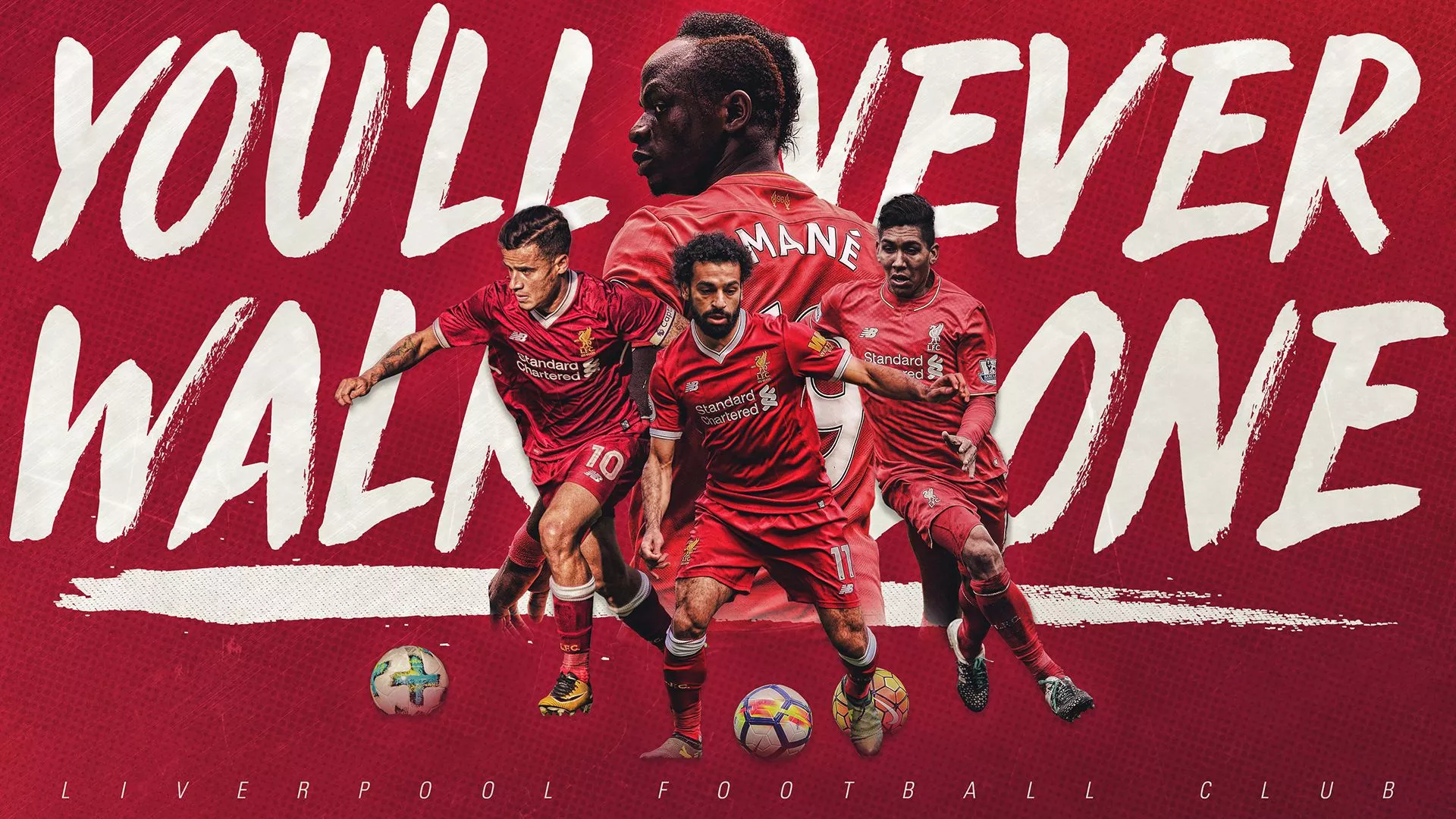
It starts as a low hum. It’s that grainy, collective mumble of 50,000 people clearing their throats in the damp Merseyside air before the scarf-snapping begins. If you’ve ever stood on the Kop, you know the feeling. It isn't just a song. Honestly, calling it a "club anthem" feels like a massive understatement, kinda like saying the Beatles were just a decent boy band. You'll Never Walk Alone Liverpool is a cultural phenomenon that has outlived managers, owners, and even the physical structure of the stadium itself.
Most people think it started with Gerry Marsden in the sixties. They're mostly right, but the roots go way deeper than a Merseybeat recording studio. It’s actually from a 1945 Rodgers and Hammerstein musical called Carousel. Imagine that. A gritty, working-class city adopting a Broadway show tune as its sacred hymn. It sounds ridiculous on paper, but in practice, it’s the most powerful sound in world football.
The Day the Music Started
So, how did a song about walking through a storm actually end up at Anfield? The legend goes that Gerry and the Pacemakers—local heroes and rivals to the Beatles—recorded their version in 1963. Back then, the Anfield DJ used to play the top ten hits over the PA system before kickoff. Fans would sing along to whatever was popular.
When "You'll Never Walk Alone" hit number one, the fans sang it. Then it dropped to number two, then three, and eventually fell off the charts. But the Kop didn't care. They kept singing it anyway. They essentially refused to let the song die. Bill Shankly, the legendary manager who basically built the modern Liverpool, heard it and fell in love. He reportedly told Gerry Marsden that he had given the club a "poem."
It stuck.
It wasn't just about the melody. The lyrics mirrored the city's resilience. Liverpool has always been a place that feels a bit "apart" from the rest of England—a port city with its own slang, its own attitude, and a history of being overlooked by the London elite. The idea of walking through a storm with your head held high? That isn't just a lyric to a Scouser. It’s a survival strategy.
More Than Just 90 Minutes
You can't talk about You'll Never Walk Alone Liverpool without talking about tragedy. This is where the song shifts from a sports chant to something deeply spiritual. After the Hillsborough disaster in 1989, where 97 fans lost their lives, the song became a tool for grieving and a cry for justice.
It was sung at funerals. It was sung at vigils. It was sung during the long, grueling decades of legal battles to clear the names of the fans who were wrongfully blamed for the crush. When you hear it now, you aren't just hearing a football song; you’re hearing a tribute to those who never came home. The irony is that the title itself—the promise that no one walks alone—became a literal mission statement for the families of the victims.
Pink Floyd even sampled the Anfield crowd singing it on their track "Fearless" back in 1971. That shows you how early the song became iconic outside of just the local matches. It’s a wall of sound. It’s intimidating. Opposing players like John Terry and Paolo Maldini have gone on record saying how the atmosphere during the song, especially on European nights, is genuinely unnerving.
The Global Spread of a Local Anthem
Liverpool doesn't own the song exclusively, of course. Celtic fans in Scotland claim they sang it first (a debate that will probably never end, though the evidence leans toward Anfield). Borussia Dortmund fans sing it with incredible passion too. You'll hear it in the Netherlands with Feyenoord and in Japan with FC Tokyo.
But there’s a specific "Liverpool" way of doing it.
The tempo is usually a bit slower. The scarves are held taut above the head, creating a sea of red and white. It’s a visual shield. When Liverpool faced AC Milan in the 2005 Champions League final in Istanbul, they were 3-0 down at halftime. The fans in the stadium started singing it during the break. The players heard it in the dressing room. Jamie Carragher has mentioned that hearing the fans still believing, even when the game looked dead, changed the mental energy of the team. We all know what happened next—the greatest comeback in the history of the sport.
What Most People Get Wrong About the Lyrics
People often mess up the words, or they think it's meant to be a happy-clappy song. It isn't. It’s actually quite dark if you look at the verses. It talks about dark skies, wind, and rain. It’s a song about endurance.
- The "Storm" isn't figurative—it represents the hardships of life.
- The "Golden Sky" is the reward, but it only comes after the walk.
- The emphasis is on the "Walk," which implies movement and action, not just sitting around waiting for things to get better.
When the 2020 pandemic hit, the song saw another massive resurgence. It was played simultaneously across radio stations in Europe as a tribute to healthcare workers. It proved, yet again, that the song has a life of its own far beyond the Shankly Gates.
Honestly, if you ever get the chance to stand in the stadium when the music cuts out and the crowd takes over the final chorus a cappella, take it. It doesn't matter if you hate Liverpool or don't care about football. It’s one of the few remaining tribal rituals in the modern world that feels 100% authentic.
Why the Anthem Still Matters Today
In an era of "plastic fans" and billionaire owners who sometimes feel disconnected from the local community, You'll Never Walk Alone Liverpool acts as a tether. It reminds the owners and the players that they are temporary custodians of something much older and more important than a balance sheet.
It’s also a bridge between generations. You’ll see grandfathers in their 80s singing it next to kids who are five years old. It’s the first thing you learn as a fan. It’s probably the last thing many fans want to hear.
How to Experience It Properly
If you're planning a trip to Anfield to hear it, there are a few things you should know. Don't be that person filming the whole thing on your phone. Put the phone away. Hold your scarf up. If you don't have a scarf, just stand.
- Arrive early: The song usually starts about five to ten minutes before kickoff.
- The Second Verse: Most people only know the chorus, but the build-up in the first verse is where the tension lies.
- Respect the silence: Sometimes the song is followed by a minute of silence for various commemorations. The transition from the loudest noise you've ever heard to total silence is bone-chilling.
The song is etched into the very architecture of the club. It's written across the top of the Shankly Gates. It’s on the club crest. It’s embroidered into the back of the jerseys. It is the brand, but it’s a brand that was built on tears and dirt, not in a marketing boardroom.
We see a lot of forced traditions in sports now—fake chants over the loudspeakers, light shows, choreographed dances. But you can't manufacture what happens at Anfield. It’s a messy, loud, emotional, and deeply human expression of solidarity. Whether the team is winning the league or struggling in mid-table, the song remains the constant. It’s the heartbeat of the club.
To truly understand the impact, look at the footage of the players standing in front of the Kop after they beat Barcelona 4-0 in 2019. They weren't celebrating; they were just standing there, exhausted, singing along with the fans. That’s the power of it. It levels the playing field. In those three minutes, the millionaire superstar and the guy who saved up all month for a ticket are exactly the same.
Actionable Insights for Fans and Visitors:
- Study the History: Read up on the Hillsborough Justice Campaign to understand why the lyrics "Walk on, with hope in your heart" carry so much weight for the locals.
- Visit the Museum: The Liverpool FC museum at Anfield has a dedicated section on the song's origins and its connection to Gerry Marsden.
- Listen to the Original: Check out the 1945 Carousel version to hear how much the song has evolved from its theatrical beginnings to the roaring anthem it is now.
- Go to a Match: There is no substitute for being there. If you can't get a ticket, head to a local pub like The Albert or The Sandon near the ground during pre-match. The atmosphere is nearly as intense.
The song is a reminder that football is more than a game. It's a way to belong to something bigger than yourself. And in a world that can feel pretty lonely sometimes, that’s a hell of a thing to have.