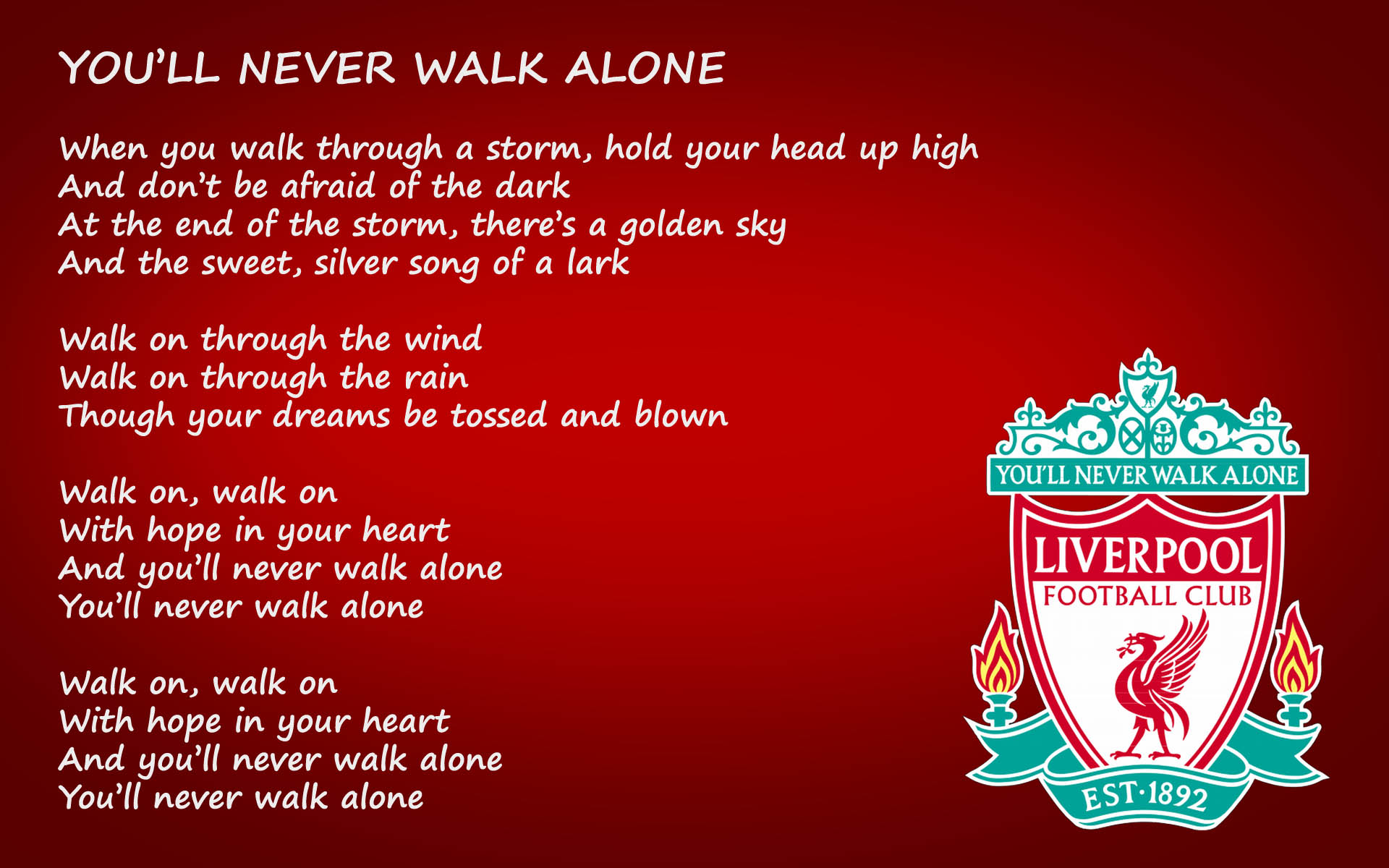
It starts with a single, lonely note. Then, a voice. By the time the chorus hits, you aren't just listening to a song; you’re part of a massive, roaring wall of sound that feels like it could knock over a building. Most people today think You'll Never Walk Alone is just a soccer chant. They see the scarves held high at Anfield or hear the crowd in Dortmund and assume it was written for the pitch.
But it wasn't. Honestly, the real story is way weirder and much more emotional than a sports rivalry. You might also find this related story useful: The Bonnie Tyler Coma Clickbait and the Broken Economics of Nostalgia Touring.
Back in 1945, Richard Rodgers and Oscar Hammerstein II were the kings of Broadway, but they were taking a massive gamble. They were adapting a dark, Hungarian play called Liliom into a musical called Carousel. The plot was heavy. We’re talking about a protagonist who dies by suicide halfway through the show after a botched robbery. Not exactly the "feel-good" vibe people expected from the guys who wrote Oklahoma!
The Broadway Birth of a Titan
In the final scene of Carousel, the heroine, Julie Jordan, is grieving. Her husband is gone. She’s alone. Her cousin sings these lyrics to comfort her. It was a functional piece of theater, designed to squeeze every last tear out of a New York audience. It worked. People didn't just clap; they sobbed. As extensively documented in detailed coverage by The Hollywood Reporter, the effects are worth noting.
The song was a massive hit long before it ever touched a blade of grass in England. Frank Sinatra recorded it. Louis Armstrong did a version. Even Judy Garland put her stamp on it. But these were all very "showtune" or "crooner" versions. They were pretty. They were polished. They weren't yet the anthem we know today.
That shift happened because of a guy named Gerry Marsden.
In the early 1960s, Liverpool was the center of the musical universe. The Merseybeat sound was exploding. Gerry and the Pacemakers—the "other" big band from Liverpool alongside The Beatles—needed a new hit. Gerry had seen Carousel as a kid and loved the tune. He brought it to the band, and they sped it up. They gave it that driving, 60s pop energy.
When they released it in 1963, it went straight to number one in the UK.
How the Kop Claimed It
If you’ve ever been to a football match in England, you know the pre-game ritual. At Anfield, the home of Liverpool FC, the stadium DJ used to play the top ten hits of the week in descending order. The crowd would sing along to everything from The Beatles to Cilla Black.
Because You'll Never Walk Alone stayed at number one for four weeks, the fans got very, very good at singing it.
Even when the song dropped out of the charts, the fans didn't stop. They kept shouting for it. They kept singing it. It became a communal prayer. Bill Shankly, the legendary Liverpool manager, supposedly heard it and told Gerry Marsden that he’d given the club a song that would last forever. He wasn’t kidding.
It’s easy to forget how radical that was at the time. Before this, football songs were mostly "Go on, lads!" or simple rhythmic chants. This was a hymn. It was a song about walking through a storm with your head held high. It gave a voice to the working-class fans of a city that was going through a lot of economic hardship. It wasn't just about football; it was about survival.
The Tragedy and the Meaning
You can't talk about You'll Never Walk Alone without talking about the Hillsborough Disaster of 1989. For those who don't know the history, 97 fans lost their lives due to a fatal crush caused by police mismanagement.
In the weeks and years of grief and legal battles that followed, the song changed again.
It wasn't just a celebratory "we win games" song anymore. It became a solemn promise of justice. When you hear 50,000 people sing it today, there’s a weight to it that you don't get with other sports anthems. It’s a funeral march and a victory parade at the same time. It’s basically the emotional DNA of the city of Liverpool.
Other clubs have adopted it, too. Celtic fans in Scotland claim they were the first to sing it (though the timeline usually favors Liverpool). Borussia Dortmund fans in Germany sing it with incredible precision. You’ll hear it in Japan, Australia, and all across Europe.
Why? Because the lyrics are universal.
- The Storm: Everyone goes through a period where the "wind is blowing" and the "rain is pouring."
- The Hope: The idea of a "golden sky" at the end of the tunnel is the ultimate human desire.
- The Community: The core promise that you aren't doing this by yourself.
What Most People Miss About the Lyrics
Look closely at the words. Hammerstein was a genius because he kept it simple. He didn't use complicated metaphors. He talked about "the sweet silver song of a lark."
There’s a specific bit of advice in the lyrics: "Walk on through the wind, walk on through the rain, though your dreams be tossed and blown."
It’s not telling you that the storm will stop. It’s telling you to keep moving while the storm is happening. That’s a huge distinction. Most pop songs are about everything being perfect. This song acknowledges that life is often a total mess, but you keep walking anyway.
Variations That Actually Work
While the Gerry and the Pacemakers version is the gold standard for many, there are some deep cuts you should check out if you want to understand the song’s range.
- Pink Floyd: Check out the song "Fearless" from their 1971 album Meddle. At the end, you can hear a field recording of the Liverpool Kop singing the anthem. It’s haunting.
- Elvis Presley: He recorded a gospel-heavy version in 1967. It’s soulful and slow, leaning into the "hymn" aspect of the melody.
- Aretha Franklin: Her live recording is a masterclass in vocal power. She takes it to church.
- The Adicts: For something totally different, this punk band did a high-energy cover that proves the melody is indestructible, no matter the genre.
Why It Still Matters in 2026
We live in a pretty disconnected world. We spend a lot of time behind screens. There are very few moments left in modern life where thousands of people stand together and sing the same words without a backing track or a digital filter.
You'll Never Walk Alone is one of the last "analog" experiences that actually feels massive.
Whether it’s being played during the COVID-19 lockdowns—where it became a tribute to healthcare workers across Europe—or being sung at a memorial service, it fills a gap that most modern music can't touch. It’s a "big" song for "big" moments.
If you’re looking to truly experience the song, don’t just listen to it on Spotify. Go find a video of the 2005 Champions League final in Istanbul. Liverpool were 3-0 down at halftime. The fans started singing. They weren't singing because they were winning; they were singing because they were losing. They were reminding the players that even in a total collapse, they weren't alone. Liverpool came back to win.
That’s the power of a few simple chords and a message of stubborn hope.
How to Truly Appreciate the Anthem
If you want to dive deeper into why this song resonates, there are a few things you can do right now.
First, watch the original "You'll Never Walk Alone" sequence from the 1956 film version of Carousel. Seeing the context of the Broadway tragedy makes the "walk on" lyrics feel much more earned. It’s not just a happy-clappy song; it’s a song born out of death and resilience.
Second, listen to the different tempos. Notice how the Broadway version is a waltz ($3/4$ time), while the Gerry and the Pacemakers version feels more like a steady march ($4/4$ feel, even if it keeps the triplet swing). This change in rhythm is what made it work for a crowd of people who needed to stomp their feet.
Finally, next time you’re going through something difficult, actually listen to the words. Ignore the football associations for a second. Just listen to the promise of the lyrics. There’s a reason this song has survived for over 80 years while thousands of other hits have been forgotten. It’s a piece of emotional infrastructure. It holds people up when they feel like they’re falling down.
Actionable Insights for Music Lovers:
- Explore the Catalog: Don't just stick to the radio version. Compare the Nina Simone version (pure jazz piano) to the Marcus Mumford version for a look at how the "vibe" changes based on the arrangement.
- Understand the History: Read up on the Hillsborough Inquest to understand why the song is a political statement as much as a musical one.
- Sing It: There’s actual scientific evidence that group singing lowers cortisol levels. Whether you like Liverpool or not, joining in when a crowd sings this is a genuine physical experience.
The song isn't going anywhere. It’s been through Broadway, the 60s pop charts, stadiums, and global tragedies. It’s a reminder that no matter how loud the storm gets, there is always someone walking next to you.
Next Steps for Deepening Your Knowledge:
- Search for "Liverpool vs AC Milan 2005 halftime singing" on YouTube to see the song's impact in real-time.
- Look up the "Gerry and the Pacemakers" discography to see how this song fits into the wider Merseybeat movement.
- Visit the Liverpool FC museum if you're ever in the UK to see the original sheet music and the history of the "You'll Never Walk Alone" iron gates at Anfield.



