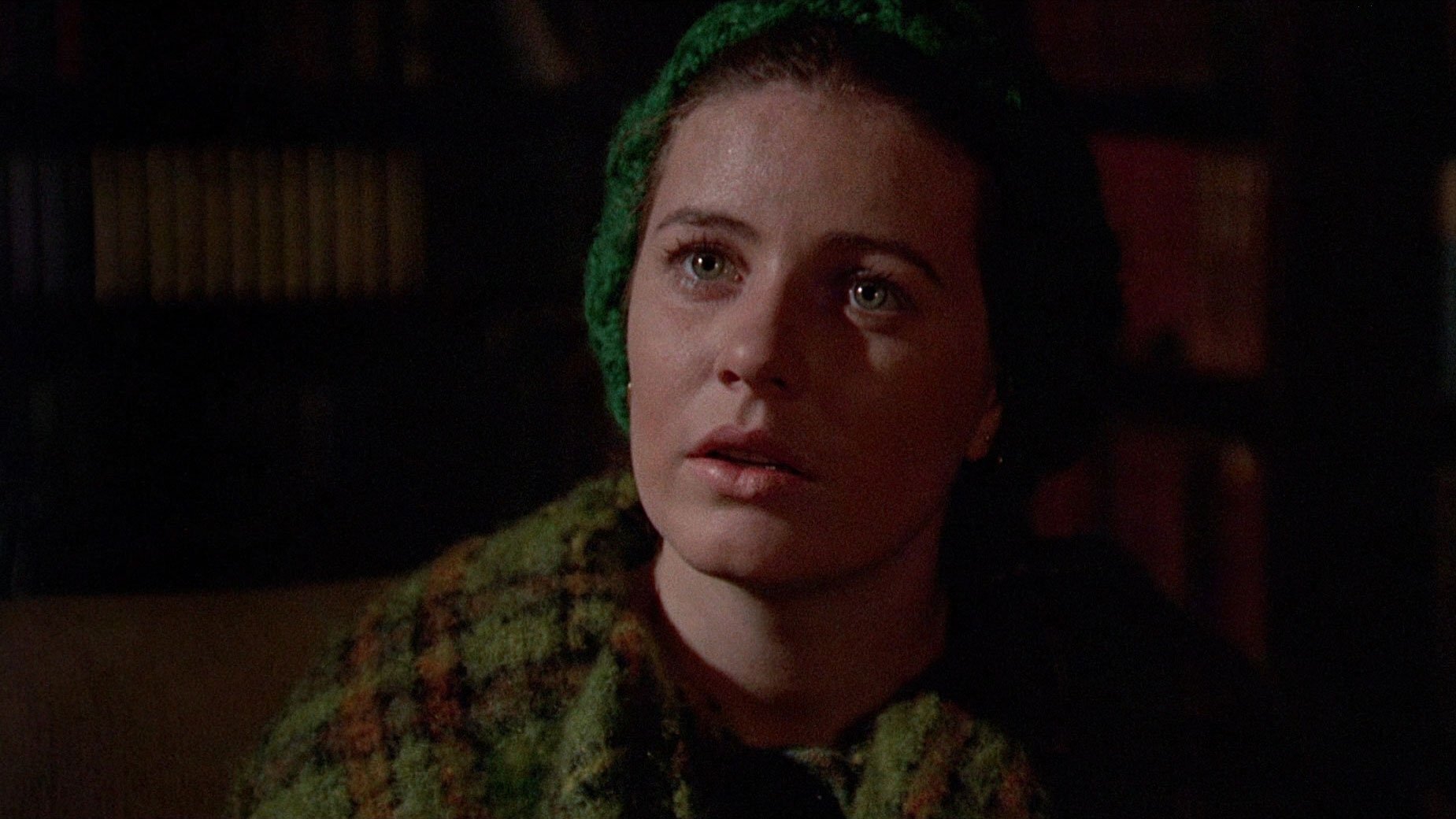
If you’ve ever found yourself scrolling through late-night cable or digging into the dusty corners of a streaming service and stumbled upon a movie called You’ll Like My Mother, you probably thought it was some kind of sweet, sentimental family drama. Honestly? You couldn’t be more wrong. This 1972 gem is a claustrophobic, snowy nightmare that basically invented the "trapped in a house with a psycho" trope before it became a Hollywood staple. It stars Patty Duke—fresh off her teen star era—and Richard Thomas, who most people know as the wholesome John-Boy from The Waltons. Seeing him play a total creep is a trip.
The movie centers on Francesca (Patty Duke), a very pregnant widow who travels to Minnesota in the dead of winter to meet her late husband’s mother. She’s never met the woman. She’s looking for a connection, maybe a bit of comfort. What she finds instead is a massive, decaying mansion and a mother-in-law, Mrs. Kinsolving (Rosemary Murphy), who is about as warm as a block of ice. It’s cold. It’s isolating. The snow is piled ten feet high outside, and inside, things are even worse.
What Most People Get Wrong About You'll Like My Mother
People often dismiss 70s thrillers as being "slow" or "tame" compared to the jump-scare fests we see today. That’s a mistake here. You’ll Like My Mother doesn't rely on CGI or buckets of gore; it relies on the absolute dread of being physically vulnerable. Francesca is heavily pregnant throughout the film. Her mobility is limited. Her body is working against her. When the realization hits that she is essentially a prisoner in this house, the tension is suffocating.
It’s actually a brilliant piece of "Hagsploitation"—a subgenre where older actresses played unhinged or villainous roles—but it’s handled with more grace than most. Rosemary Murphy plays the mother-in-law with a terrifying, repressed stillness. She isn't screaming or wielding a chainsaw. She’s just... wrong. She’s manipulative. She’s hiding a secret that involves her other son, Kenny, played by Richard Thomas.
Let's talk about Richard Thomas for a second. In 1972, The Waltons was a massive hit. He was the golden boy of American television. Seeing him show up in this movie as a rapist and murderer who has been "hidden" by his mother is genuinely shocking. It’s a bit like seeing Tom Hanks play a serial killer today. He brings a soft-spoken, boyish quality to the role that makes the character’s violence feel even more unpredictable. You keep waiting for the "good boy" to appear, but he never does. He’s a predator.
The Minnesota Gothic Aesthetic
The setting is a character in itself. The film was shot on location at the Glensheen Historic Estate in Duluth, Minnesota. If that name sounds familiar to true crime fans, it’s because the house became the site of a real-life double murder in 1977, five years after the movie was filmed. There is an eerie, heavy energy to the house that the director, Lamont Johnson, captures perfectly.
Snow isn't just a backdrop in this movie. It’s the bars of the cage.
You’ve got these wide shots of the frozen landscape that make the mansion look like an island in the middle of nowhere. Inside, the decor is all dark wood, heavy velvet curtains, and shadows. It feels like 19th-century Victorian horror dropped into the early 1970s. This isn't the vibrant, colorful 70s of The Brady Bunch. This is the grimy, cynical 70s of The Texas Chain Saw Massacre or Last House on the Left, just dressed up in a fancy coat.
Why the Climax Still Holds Up
Without spoiling the entire ending for those who haven't seen it, the third act is a masterclass in survival horror. Francesca is forced to give birth in that house while hiding from a killer. It’s visceral. Patty Duke puts in an incredible performance here. She was an actress who knew how to channel raw, frantic energy, and you feel every ounce of her desperation.
The movie also touches on some heavy themes for 1972. It deals with unwanted pregnancies, familial shame, and the lengths a mother will go to protect a "monstrous" child. Mrs. Kinsolving isn't just evil for the sake of being evil; she is a woman trapped by her own sense of duty and a twisted desire to keep her family’s secrets buried. It’s a psychological tug-of-war where everyone is losing.
Why You Haven't Heard of It
It’s weird that this movie isn't more famous. It was a modest hit at the time, but it sort of fell through the cracks of film history. Maybe it was too dark for the general audience and too "prestige" for the horror crowd. It doesn't have a masked killer or a supernatural hook. It’s just human beings being terrible to each other in a cold house.
But if you look at modern "home invasion" movies or even something like Barbarian, you can see the DNA of You’ll Like My Mother. It’s about the loss of safety in a place that should be a sanctuary. It’s about the realization that the people who are supposed to care for you are actually your greatest threat.
How to Watch It Today
For a long time, this was a hard movie to find. It existed on grainy VHS tapes and occasional late-night TV broadcasts. Thankfully, Scream Factory released a Blu-ray a few years back that cleaned up the transfer beautifully. You can finally see the details in the shadows of the Glensheen mansion. It’s also occasionally available on boutique streaming services like Shout! TV or Kanopy.
If you’re a fan of psychological thrillers, you owe it to yourself to track it down. It’s a lean, mean 90 minutes. No filler. Just pure, icy tension.
Real-World Impact and Legacy
The film’s legacy is mostly felt in the way it influenced the "final girl" trope. Francesca isn't a traditional action hero. She can’t outrun the villain. She has to outthink him. She has to use her environment and her wits while dealing with the physical toll of childbirth. It’s a very grounded, female-centric take on survival that was way ahead of its time.
Critics at the time were somewhat divided. Roger Ebert gave it a decent review, noting that it was a "very effective" thriller, even if it felt a bit like a TV movie at times. But that TV-movie quality actually adds to the discomfort. It feels intimate. It feels like something that could happen in the house next door.
Actionable Takeaways for Film Buffs
If you're looking to dive deeper into this specific era of thriller, there are a few things you should do to get the most out of the experience:
- Watch for the Contrast: Pay attention to how the movie uses the "John-Boy" persona of Richard Thomas against the audience. It’s a brilliant bit of meta-casting that would be lost on anyone who didn't grow up with The Waltons.
- Research the Glensheen Mansion: After watching, look up the history of the Congdon family and the real murders that happened there in 1977. The parallels between the movie’s plot and the real-life tragedy are unsettling.
- Double Feature it: Pair You’ll Like My Mother with Wait Until Dark (1967). Both films feature a physically vulnerable woman (Audrey Hepburn is blind in the latter) fighting off intruders in a confined space. It makes for a great study in tension-building.
- Check the Score: The music by Gil Mellé is minimalist and eerie. It doesn't tell you how to feel; it just sits in the background like a low-frequency hum of anxiety.
Ultimately, You’ll Like My Mother stands as a testament to what you can do with a small cast, a great location, and a simple, terrifying premise. It’s a movie that deserves a spot on your "must-watch" list for the winter months. Just make sure the doors are locked before you start.
Next Steps for Your Watchlist
To truly appreciate this era of filmmaking, seek out the Scream Factory Blu-ray for the best visual experience, as the cinematography in the snow is a major part of the film's power. Follow this up by exploring other 1970s "winter horrors" like The Little Girl Who Lives Down the Lane to see how the decade perfected the art of suburban isolation.



