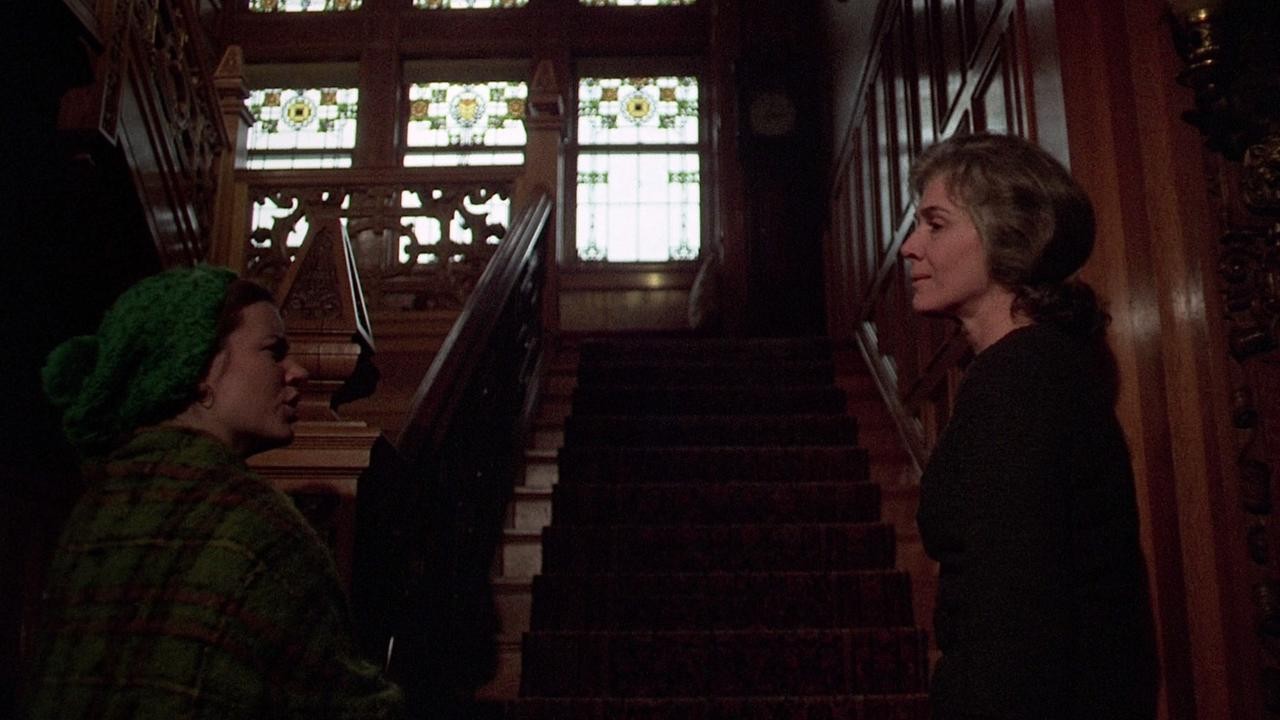
Some movies just feel cold. I don’t mean the temperature of the theater or the lighting on the screen, though You'll Like My Mother has plenty of both. I’m talking about that deep, bone-chilling isolation that only a 1972 psychological thriller filmed in a snow-covered mansion in Minnesota can truly capture. If you’ve ever stumbled across this film on a late-night TCM broadcast or found it buried in a "Scream Factory" Blu-ray collection, you know exactly what I’m talking about. It’s weird. It’s claustrophobic. And honestly? It’s a masterclass in building dread without needing a massive budget or a high body count.
What Actually Happens in You'll Like My Mother
The setup is deceptively simple. Patty Duke—who was already an Oscar winner and a household name by this point—plays Francesca Kinsolving. She’s very pregnant, very alone, and very grieving. Her husband was killed in Vietnam, and she’s traveled all the way to a desolate estate in Duluth to meet the mother-in-law she’s never actually spoken to. Meanwhile, you can explore similar events here: The Media Anatomy of Celebrity Health Revelations: Quantifying the Clarkson Disclosure Function.
You’d think a grieving mother would welcome her son's widow with open arms, right? Wrong.
Rosemary Murphy plays Mrs. Kinsolving with a coldness that makes Nurse Ratched look like a sweetheart. From the second Francesca steps through the door, the vibe is off. The house is a mausoleum. The snow is piling up outside, trapping them. And then there's the realization that Mrs. Kinsolving doesn't just dislike Francesca—she wants her gone. But the "gone" she has in mind isn't exactly a bus ticket back to the city. To see the bigger picture, we recommend the detailed article by The Hollywood Reporter.
The Cast That Made the Creepiness Work
Patty Duke is the anchor here. By 1972, she was trying to move away from the "teen idol" persona of The Patty Duke Show. She brings a raw, vulnerable quality to Francesca that makes you genuinely worried for her. You feel her physical exhaustion. You feel the weight of the pregnancy.
- Rosemary Murphy: She is the definition of "menacing." She doesn't scream. She doesn't need to. Her performance is all about the subtle ways she exerts power over the house.
- Richard Thomas: Before he became the wholesome John-Boy on The Waltons, he played Kenny in this movie. If you only know him as the nice guy from the mountains, his performance here will give you whiplash. He’s unsettling. He’s dangerous. It’s a side of Thomas that people rarely talk about but should.
- Sian Barbara Allen: She plays Kathleen, the "slow" daughter who becomes Francesca’s only hope. Her performance earned her a Golden Globe nomination, and for good reason. She provides the only bit of warmth in an otherwise freezing narrative.
Why the Atmosphere Matters More Than the Plot
Most modern thrillers rely on jump scares. They want to startle you. You'll Like My Mother isn't interested in that. It wants to make you uncomfortable. The director, Lamont Johnson, used the Glensheen Historic Estate in Duluth as the primary filming location.
It’s a massive, 39-room mansion.
In the film, the house becomes a character. The heavy wood paneling, the narrow hallways, and the constant presence of the blizzard outside create a sense of "no escape." It’s a proto-slasher in some ways, but it functions more like a Gothic horror story updated for the 1970s. The isolation is the real villain.
The "Glensheen" Connection: Reality vs. Fiction
Here’s a bit of trivia that usually blows people's minds. A few years after the movie was filmed at the Glensheen estate, a real-life double murder occurred there. In 1977, Elisabeth Congdon and her nurse were killed in the house.
While the movie has nothing to do with the real-life crimes, the coincidence has given the film a legendary status among true crime buffs and horror fans. When you watch the movie now, knowing what eventually happened in those rooms, it adds a layer of unintentional macabre that’s hard to shake. It’s like the house itself was already cursed.
Breaking Down the 70s Thriller Vibe
The 1970s were a golden age for "women in peril" movies. You had Wait Until Dark a few years earlier, and Halloween would arrive a few years later. You'll Like My Mother sits right in the middle of that evolution. It’s more sophisticated than a B-movie, but it lacks the big-studio gloss of a Hitchcock film.
That’s its strength.
It feels gritty. The lighting is naturalistic. The stakes feel personal. There are no supernatural entities here—just terrible people doing terrible things in a big house. Honestly, that’s much scarier than a ghost.
Is It Still Worth Watching?
Absolutely. But you have to go into it with the right mindset. If you’re expecting Saw, you’ll be bored. If you want a slow-burn mystery that relies on performance and tension, it’s a gem.
The pacing is deliberate. It takes its time revealing why the mother-in-law is so hostile. It waits to show you the full extent of the danger Francesca is in. By the time the third act hits, the tension is so thick you can practically feel the frost on the windows.
Where to Find It
For a long time, this was a hard movie to find. It lived on grainy VHS tapes and bootlegs. However, Shout! Factory released a high-definition version a while back that looks incredible. Seeing the contrast between the white snow and the dark interiors of the mansion in 1080p changes the experience entirely. It looks crisp. It looks cold.
The Ending (No Spoilers, I Promise)
The finale of the film is surprisingly intense for 1972. It doesn't wrap everything up in a neat little bow with a "happily ever after" feeling. It leaves you feeling a bit drained, which is exactly what a good thriller should do. It’s about survival, plain and simple.
Actionable Takeaways for Movie Buffs
If you're looking to dive into the world of 70s psychological thrillers or specifically want to appreciate You'll Like My Mother, here is how to get the most out of it:
- Watch it on a cold night. Seriously. The atmospheric effect of the film is doubled if it’s actually winter outside. It helps you relate to Francesca’s literal and metaphorical "chilled" state.
- Research the Glensheen Estate. After you watch the film, look up the history of the house. Understanding the geography of the rooms makes the "cat and mouse" sequences in the movie much more interesting.
- Compare it to Misery. There are some fascinating parallels between this film and Stephen King’s Misery. Both deal with confinement, a "caretaker" who is actually a captor, and the desperation of a physically limited protagonist.
- Check out the "Scream Factory" Extras. If you can get your hands on the physical media, the interviews with Sian Barbara Allen and the crew provide great context on how they filmed in such brutal weather conditions.
You'll Like My Mother is more than just a footnote in Patty Duke’s career. It’s a reminder that tension doesn't need a high budget—it just needs a locked door, a snowstorm, and a mother-in-law from hell.



