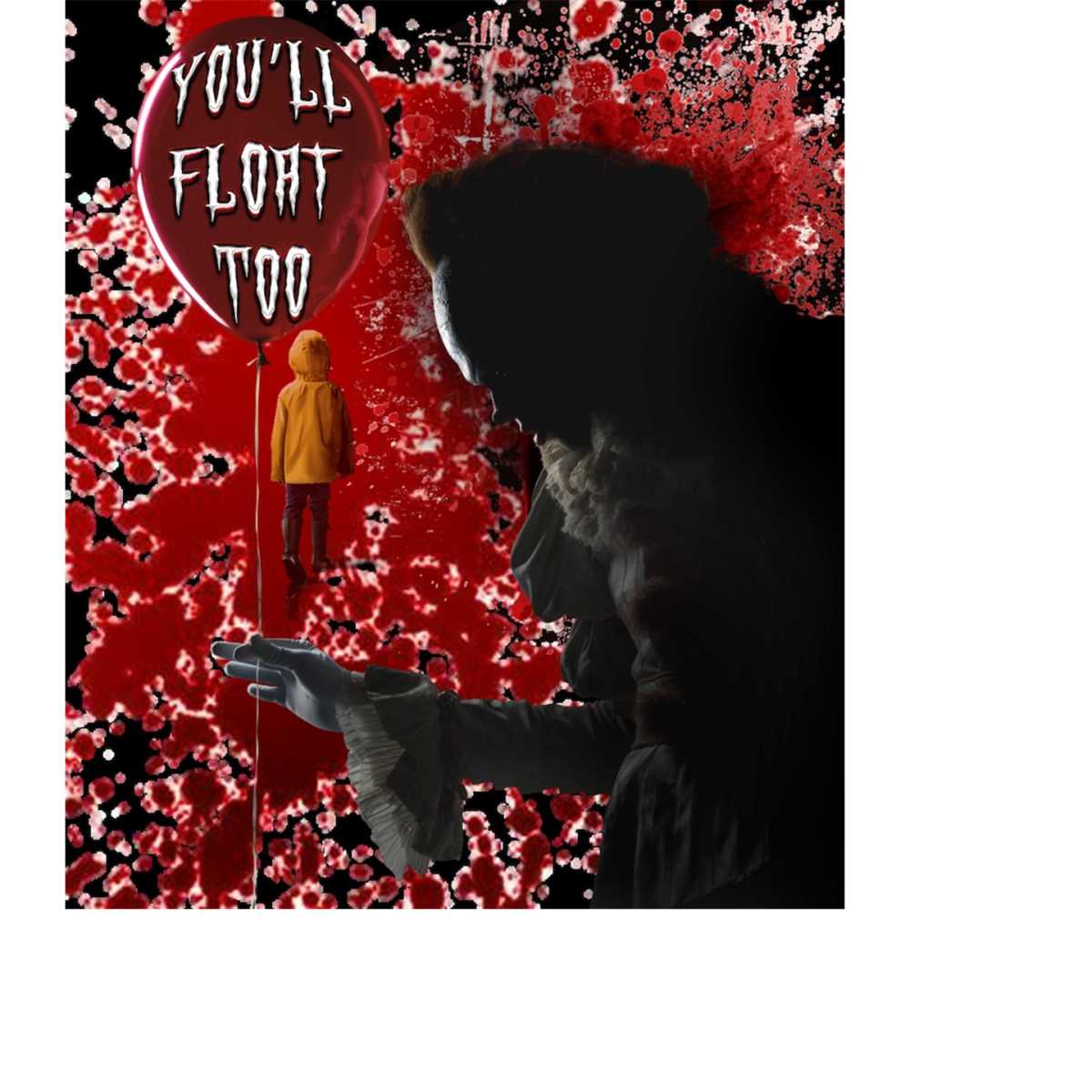
It’s a rainy day in Derry. A little boy in a yellow slicker chases a paper boat down a gutter. Then, the boat vanishes into a storm drain. We all know what happens next, even if we’ve never read a single page of Stephen King’s 1,100-page tome. The phrase you'll float too has become more than just a movie quote. It’s a cultural shorthand for childhood dread.
Honestly, it’s kind of wild how three simple words can trigger such a visceral reaction. Most people think it’s just about balloons. It isn’t. When Pennywise the Dancing Clown whispers those words to Georgie Denbrough, he isn't making a lighthearted observation about buoyancy. He’s issuing a death sentence that spans generations.
The Origin of the Nightmare
The line first appeared in Stephen King’s 1986 novel, IT. It was chilling then, but it didn't truly explode into the global consciousness until the 1990 miniseries starring Tim Curry. Curry’s delivery was gravelly and menacing. However, the 2017 cinematic reboot took it to an entirely different level.
In the 2017 film, the scene where Bill sees a ghostly version of his brother Georgie in the flooded basement is peak horror. The repetition is what does it. "You’ll float too. You’ll float too. You’ll float too!" It ramps up from a whisper to a rhythmic, manic scream. Bill Skarsgård’s Pennywise added a layer of drooling, predatory hunger that made the promise of "floating" feel like a physical threat.
But what does it actually mean to float?
In the context of the lore, the "deadlights" are the true form of the entity known as IT. When IT consumes a victim’s soul, they don't just die. They exist in a state of eternal, waking torment. They are suspended in the orange lights of the macroverse. They are, quite literally, floating in a void of endless suffering. It’s pretty dark when you actually break it down.
Why It Sticks in Your Brain
Psychologically, the phrase works because it subverts something innocent. Think about it. Floating is usually a good thing. You float on a pool noodle in the summer. You float in a dream. It’s weightless. It’s free.
King takes that feeling of weightlessness and attaches it to a corpse.
The imagery of the sewers is also vital here. In Derry, the sewers represent the "underbelly" of society—the things we ignore, the trauma we bury, and the history we’d rather forget. When Pennywise says everyone down there floats, he’s talking about the discarded members of the town. The missing children. The forgotten.
The Marketing Genius of Pennywise
Let’s talk about the 2017 marketing campaign for a second. It was brilliant. Warner Bros. didn't just put up posters. They tied red balloons to sewer grates in major cities like Sydney and Los Angeles.
People would be walking to work, see a single red balloon bobbing over a drain, and immediately think: you'll float too. It’s the kind of viral marketing that money can barely buy because it relies on collective memory. It turned the physical world into a jump scare.
The phrase has also evolved into a meme. You see it on T-shirts, coffee mugs, and even used as a joke when someone’s basement floods. It’s become a way for horror fans to signal to each other. It’s a "if you know, you know" moment.
Variations in Media
While the 2017 film made it a chant, the 1990 miniseries handled it with a bit more of a "carnival barker" vibe. Tim Curry’s Pennywise was almost inviting. He sounded like a guy trying to sell you a bad used car, which in some ways, is even creepier.
In the book, the line is often associated with the phrase "down here."
"Everything down here floats," Pennywise says.
The book spends a lot of time describing the physical sensation of the sewers—the smell of wet fur, the rot, the darkness. The "floating" is a contrast to the heavy, oppressive atmosphere of the tunnels.
The Real-World Impact
Interestingly, the success of the IT franchise and the popularity of the phrase caused a bit of a headache for real-world clowns. The World Clown Association actually reported a decline in bookings. People were genuinely more afraid of professional entertainers because the image of the "floating" clown was so dominant in the media.
It shows the power of a well-crafted line. A few words can change an entire industry's reputation.
Breaking Down the Lore: What Most People Miss
A lot of casual fans think Pennywise is just a monster. He's not. He's an interdimensional predator that landed in Maine millions of years ago. He wakes up every 27 years to feed.
The phrase you'll float too is his way of taunting the Losers' Club. He wants them to be afraid. Fear "salts the meat," according to the lore. If the children aren't terrified, they don't taste as good. So, the floating isn't just a byproduct of his power; it's a seasoning tool.
It's also worth noting that the "floating" imagery changes throughout the story. Sometimes it’s literal—bodies suspended in a massive underground chamber. Other times, it’s metaphorical, representing the way the town of Derry drifts through time, willfully blind to the evil in its midst.
Common Misconceptions
People often ask if the kids are actually alive while they are floating.
The answer is... complicated. In the book, the "floating" bodies are described as being wrapped in webbing, sort of like a spider's larder. They aren't alive in the sense that they could go grab a burger, but their souls are being kept "fresh."
Another misconception is that Pennywise says it to everyone. Actually, he’s pretty selective. He uses it most effectively on the Denbrough family because it’s tied to the trauma of losing Georgie. It’s a psychological weapon tailored to their specific grief.
How to Use the Phrase Today
If you’re a writer or a creator, there’s a lot to learn from how King and the filmmakers used this line.
- Subvert the mundane: Take something harmless (a balloon, a drain) and make it scary.
- Repetition is key: Saying something once is a statement. Saying it three times is a curse.
- Vague is better: Never fully explain what "floating" looks like until the very end. Let the audience’s imagination do the heavy lifting.
The legacy of the phrase is secure. As long as there are rainy days and dark corners, people will keep looking at sewer grates with a slight sense of unease. It’s a testament to the fact that horror doesn’t need a complex plot to work. Sometimes, it just needs a simple, terrifying promise.
Taking Action
If you want to dive deeper into the world of Derry, the best next step isn't just rewatching the movies. Read the "Ritual of Chüd" chapter in the original novel. It provides the cosmic context for the deadlights and the floating that the movies only hint at.
Also, look into the real-life inspirations for Derry. King based the town on Bangor, Maine. You can actually take tours there that show you the "real" storm drain that inspired Georgie's final moments. Just... maybe don't bring a paper boat.