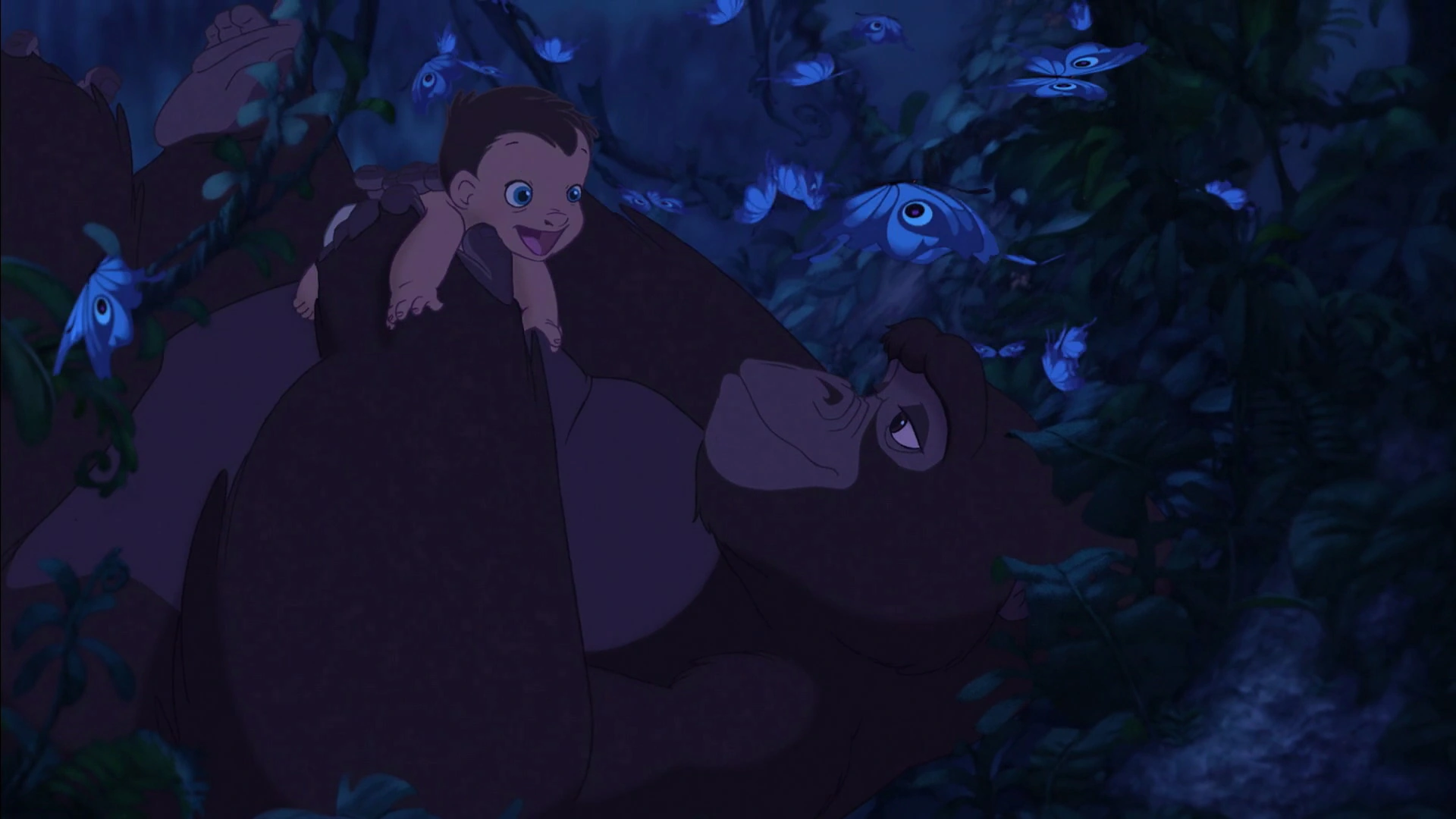
Phil Collins was an unlikely choice for a Disney movie. In the mid-90s, the studio was coming off the high of the "Menken and Ashman" era—Broadway-style showstoppers with singing lobsters and genies. Then came Tarzan. Instead of having the characters break into song while swinging from vines, Disney tapped a British prog-rock legend to provide a narrative voice from the outside. The result was You'll Be in My Heart, a track that didn't just win an Oscar; it fundamentally changed how we think about "lullaby" songs in pop culture.
It's a weirdly personal song. Honestly, if you grew up in 1999, you couldn't escape it. It was everywhere. It played at weddings, funerals, and graduations. But there’s a specific reason it stuck around while other movie tie-ins faded into the background of bargain bins and deleted playlists. It bridges the gap between a parent's desperation to protect their child and the universal fear of being separated by things we can't control.
The Demo That Changed Everything
Most people don't realize that You'll Be in My Heart wasn't written in a high-tech studio with a dozen songwriters. Phil Collins actually wrote it on a piece of wrapping paper while at a Christmas party at his neighbor's house. He had been shown the sketches for the Tarzan "lullaby" scene—where the gorilla mother, Kala, comforts a crying human baby—and the melody just hit him.
He played it on a piano for the directors, Kevin Lima and Chris Buck. It was stripped back. Raw. None of the heavy 80s drums he was famous for. Just a simple promise. In the film, the song starts with Glenn Close (who voiced Kala) singing a few lines before Collins’ voice takes over, transitioning the scene into a montage of the baby growing up. That transition is where the magic happens. It stops being a "cartoon song" and becomes a Top 40 power ballad that somehow works in both contexts.
Why the Lyrics Feel Different
You’ve probably noticed the lyrics are surprisingly vague. "Come stop your crying / It will be alright." There’s no mention of jungles, apes, or loincloths. This was intentional. Disney’s music executive at the time, Chris Montan, pushed for songs that could stand alone outside the movie theater.
The song tackles a heavy theme: the "us against the world" mentality. When Collins sings about how "they" don't understand, he’s tapping into the isolation of being an outsider. In the movie, it’s about a human living with gorillas. In real life, it’s about anyone who has ever been told their love or their family doesn't "fit" the norm.
It’s actually quite a short song if you look at the structure. It builds. It starts with a heartbeat-like pulse—a rhythmic choice Collins made to simulate a mother's chest—and slowly adds layers of strings and percussion. By the time the bridge hits, it’s a full-on anthem.
The 2000 Oscars and the South Park Rivalry
We have to talk about the controversy. 1999/2000 was a wild year for movie music. Phil Collins was up against some heavy hitters for the Best Original Song Oscar. Specifically, he was up against "Save Me" by Aimee Mann from Magnolia and—the one everyone remembers—"Blame Canada" from the South Park movie.
When Collins won, people were genuinely shocked. The South Park creators, Trey Parker and Matt Stone, famously showed up to the ceremony wearing dresses (homages to Jennifer Lopez and Gwyneth Paltrow) and were reportedly tripping on acid. They were convinced they’d win. When Collins took the stage to accept the award for You'll Be in My Heart, it cemented a rivalry that led to South Park brutally parodying Collins for years.
But looking back, the Academy made the "safe" choice that ended up being the "timeless" choice. While "Blame Canada" is a funny relic of its era, Collins’ track is still being streamed millions of times every month in 2026. It has a shelf life that satire just can’t touch.
The Technical Side of the "Heartbeat" Sound
Musicians often geek out over the production here. Collins handled the drums himself, obviously. But he didn't go for the "In the Air Tonight" gated reverb sound. Instead, he used a very tight, dry snare and a warm bass kick.
- The tempo is 94 BPM. This is a "walking" pace, which makes the song feel steady and reliable.
- The key is E-flat Major, but it modulates. That lift you feel during the chorus? That’s the emotional pay-off of a well-executed key change.
- He recorded the song in five different languages: English, French, German, Italian, and Spanish.
Recording in all those languages wasn't a gimmick. Collins actually learned the phonetic pronunciations so he could provide the vocals for the international releases of the film. He wanted the emotional connection to be consistent across the globe. That’s a level of commitment you rarely see from a superstar "hired gun" songwriter.
Misconceptions About the Meaning
Some folks think this is strictly a song about a parent and a child. While that's the primary engine, Collins has mentioned in various interviews over the years that it’s also about the end of relationships and the way we carry people with us after they’re gone.
It's a song about memory as much as it is about protection. When you say You'll Be in My Heart, you aren't just saying "I'll take care of you." You're saying "Even when I'm not here, the version of you I love stays with me." It’s why it’s become such a staple at funerals. It offers a weird kind of secular comfort that’s hard to find in pop music without being overly cheesy.
The Legacy of the Tarzan Soundtrack
The Tarzan soundtrack was a massive commercial success, certified double platinum. It was one of the last times a single-artist soundtrack for an animated film dominated the charts. After this, Disney moved more toward "Pop Star Covers" or the Shrek model of using a variety of licensed songs.
Phil Collins didn't just write a hit; he validated a new way for Disney to tell stories. He proved that you could have a sophisticated, adult contemporary sound in a kid's movie and have it resonate with both demographics. Without this song, we might not have had the same approach to music in films like Moana or Encanto, where the songs function as deep character studies rather than just plot points.
How to Revisit the Track Today
If you haven't heard it in a while, don't just put on the radio edit. Go find the "Phil Version" from the original soundtrack. It has a longer intro and a much more satisfying build.
Listen for the subtle percussion. Collins is a drummer first, and you can hear it in the way he syncopates the lyrics against the beat. It’s not just a ballad; it’s a masterclass in pop construction.
Actionable Insights for Music Lovers
- Check out the "Trashin' the Camp" sessions: If you want to see the contrast to the balladry, watch the footage of Collins and NSYNC recording the more upbeat tracks for the same film. It shows his range.
- Analyze the Modulation: If you play piano or guitar, look at the chord progression during the bridge. It moves from a place of uncertainty to a definitive, triumphant finish.
- International Versions: Track down the Spanish version, "En Mi Corazón Tu Vivirás." Even if you don't speak the language, the vocal performance is arguably more passionate than the English original.
- The "Heartbeat" Experiment: Play the first 30 seconds of the song and tap along to the pulse. It’s exactly the rate of a resting human heart, which is why the song feels so inherently "calming" from the first note.
The staying power of You'll Be in My Heart isn't an accident. It’s the result of a legendary songwriter being given a simple brief and responding with something deeply personal. It survived the 90s, survived the South Park parodies, and survived the transition to the streaming era because it says something we all want to believe: that some bonds are actually permanent.
Next Steps for Deep Listening: Start by comparing the Glenn Close film version with the Phil Collins radio edit. Notice how the orchestral arrangement in the film version emphasizes the "danger" of the jungle, while the radio version strips that away to focus on the intimacy of the lyrics. Afterward, listen to Collins' 2004 First Final Farewell Tour live version to see how the song evolved into a stadium anthem that sounds nothing like a "Disney song."



