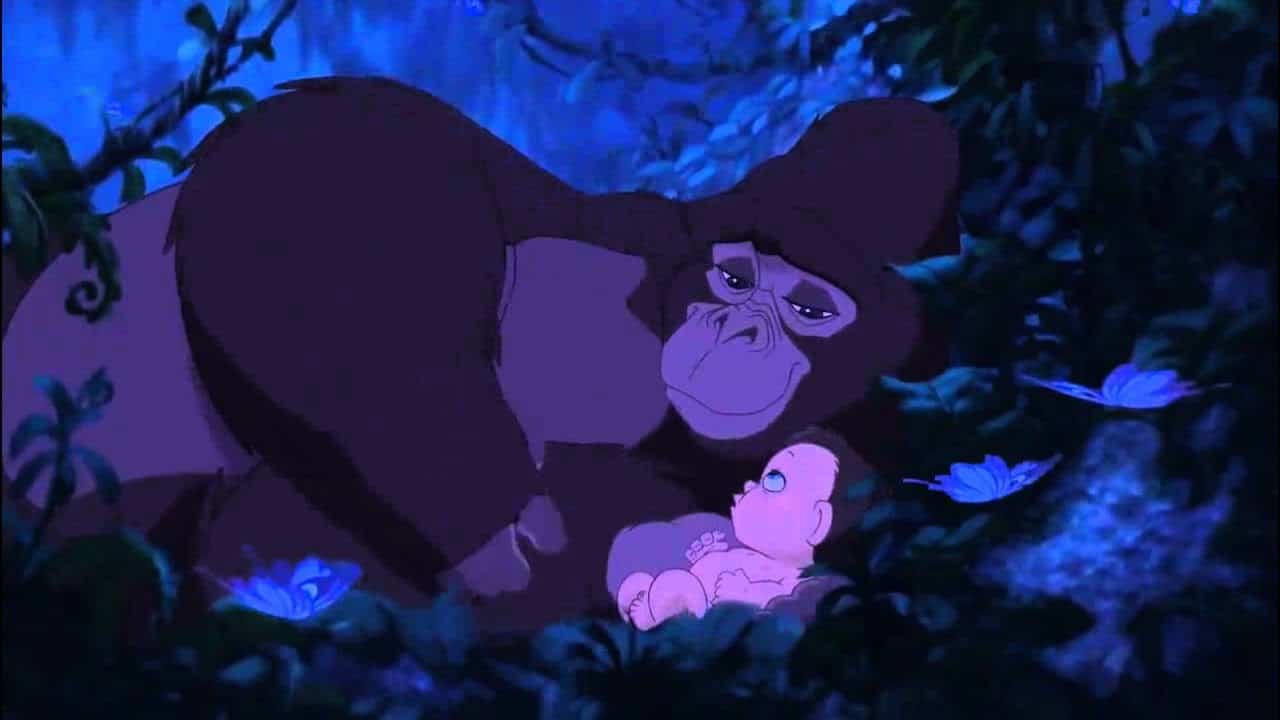
It’s been over twenty-five years. Seriously. If you close your eyes and hear those first few synth-heavy notes and that rhythmic, heartbeat-like percussion, you’re probably already starting to feel a little bit misty. Phil Collins didn't just write a song for a Disney movie; he basically hard-wired a core memory into an entire generation. You’ll Be in My Heart Tarzan is one of those rare tracks that stepped out of its own film and became a universal anthem for protection, grief, and the kind of love that doesn't care about DNA.
The thing is, nobody expected Phil Collins to be the guy for this. In the late 90s, Disney was coming off the "Broadway era" defined by Alan Menken’s theatrical showstoppers in Beauty and the Beast and Aladdin. Then comes this British prog-rock legend who decided to ditch the "characters singing to each other" trope. Instead, he acted as a narrator. He played the drums himself. He made it raw. Learn more on a similar issue: this related article.
The Lullaby That Conquered the Oscars
Most people forget that the song actually started as a lullaby for Phil’s daughter, Lily Collins. Yeah, that Lily Collins. He was literally messing around on the piano at a friend's house, trying to write something that felt like a heartbeat. He wrote the lyrics on a piece of wrapping paper. That’s the "secret sauce" here. It wasn't corporate. It wasn't manufactured by a committee of songwriters trying to hit a demographic. It was a dad writing to his kid.
When you hear the lyrics in the context of the movie, they hit different. Kala, the gorilla mother, is comforting a human baby who just lost everything. It’s about adoption. It’s about the "us against the world" mentality. When Collins sings about how "they’ll see in time, I know," he’s talking about the prejudice of the troop, but he’s also talking to anyone who has ever felt like an outsider. Additional reporting by Deadline delves into similar views on this issue.
The song eventually won the Academy Award for Best Original Song in 2000. It beat out Randy Newman. It beat out Diane Warren. People were shocked, but they shouldn't have been. It stayed at the top of the Adult Contemporary charts for nineteen weeks. Nineteen weeks! That’s nearly five months of Phil Collins dominating the radio with a song about a jungle man and his ape mom.
Why the Production Style Changed Disney Forever
Before 1999, Disney songs were very... "Disney." You had the big chorus, the orchestral swells, and the clear hero’s journey. Tarzan changed the vibe. Directors Kevin Lima and Chris Buck didn't want the characters to break into song because, honestly, how does a gorilla sing a power ballad without it looking ridiculous?
Collins was brought in to provide the inner monologue. This allowed the animation to do the heavy lifting. While the song plays, we see the passage of time. We see Tarzan growing from a clumsy toddler into a muscular, vine-swinging powerhouse. The music isn't just background noise; it's the glue.
The Rhythm of the Jungle
Phil Collins is, first and foremost, a drummer. You can hear it in the "You’ll Be in My Heart Tarzan" arrangement. It’s not just strings and fluff. There’s a driving, percussive energy that mirrors the movement of the characters through the canopy. He recorded the song in five different languages: English, French, German, Italian, and Spanish. Imagine the work that went into making the phrasing work in Italian without losing that iconic "Phil Collins" rasp.
He didn't just phone it in. He lived in those sessions.
The Emotional Complexity Most People Miss
We usually think of this as a "mom song." It’s played at every mother-son dance at every wedding since the turn of the millennium. But there’s a darker, more desperate undertone to the lyrics if you really listen. "Don't listen to them, 'cause what do they know?" is a line about isolation. It’s a song written for someone who is being told they don't belong.
In the film, Tarzan is a freak of nature to the gorillas. To the humans he eventually meets, he’s a wild animal. The song acts as his only constant. It’s his identity.
- The song serves as a bridge between two worlds that shouldn't meet.
- It validates non-traditional families (adoption/foster care).
- It uses a 4/4 time signature that mimics a steady pulse, which has a literal psychological calming effect on listeners.
There’s also the "Kala factor." Glenn Close voiced Kala, and while she doesn't sing the full version, her spoken intro to the song in the film sets the stakes. You aren't just listening to a pop star; you're listening to a mother promising to protect her child from a leopard that just killed his biological parents. It’s heavy stuff for a "kids' movie."
Why It Still Charts Today
Honestly, it’s the simplicity. Most modern movie songs are over-produced. They try too hard to be TikTok viral hits. You’ll Be in My Heart Tarzan is just a melody that feels like a hug. It’s become a massive "legacy" track. On Spotify, it consistently racks up millions of streams every month because it’s moved past the movie. It’s played at funerals. It’s played in neonatal intensive care units. It’s played when people are saying goodbye.
Phil Collins has had a lot of hits. In the Air Tonight has the drum fill. Against All Odds has the drama. But You’ll Be in My Heart has the soul. It’s the song that redefined his career for a younger audience who didn't know him as the frontman of Genesis. To them, he was just the guy who understood how they felt.
Technical Nuances in the Recording
If you’re a music nerd, you’ll notice the song doesn't actually have a traditional "big" bridge. It builds. It’s a linear crescendo. By the time the final chorus hits, the key hasn't just shifted; the intensity has doubled. Collins uses his signature "gated reverb" sound—though a bit more polished for Disney—which gives the drums that massive, cavernous feel. It sounds like it was recorded in a canyon.
The transition from the gentle piano opening to the full-band explosion at the end mirrors Tarzan’s own growth. It starts small and vulnerable. It ends indestructible.
Common Misconceptions About the Track
People often think this song was written specifically for the scene where Tarzan leaves the jungle. It actually plays much earlier. It’s also often misattributed to other 90s balladeers like Bryan Adams or Richard Marx. While they were the kings of the power ballad, they didn't have the percussive "grit" that Collins brought to the table.
Another weird fact? The song almost didn't make the cut. There were early discussions about making the movie a more traditional musical. If that had happened, we would have had a singing gorilla, and this masterpiece might have never been written as a standalone pop track. Thank goodness the directors stuck to their guns.
Putting the Legacy to Work
If you’re looking to revisit the magic or use this track for a special moment, keep these things in mind:
- For Weddings: The "Radio Version" is much better for dancing than the "Movie Version," which has dialogue breaks.
- For Playlists: Pair it with Strangers Like Me and Son of Man to get the full narrative arc of the soundtrack.
- For Musicians: The song is in the key of E-flat major, but the chorus jumps into a series of modulations that are actually pretty tricky to pull off on an acoustic guitar.
The enduring power of You’ll Be in My Heart Tarzan lies in its honesty. It doesn't promise that things won't be scary. It doesn't promise that the world will be kind. It just promises that you won't be alone. In a world that feels increasingly disconnected, that’s a message that isn't going to go out of style anytime soon.
Go back and watch the "Trashin' the Camp" sequence or the opening shipwreck scene. The music is the heartbeat of that film. But this song? This song is the soul. It’s Phil Collins at his absolute peak, proving that sometimes, the best way to tell a story is to just sit down at a piano and think about the people you love.
To truly appreciate the craftsmanship, listen to the orchestral instrumental version. You can hear the complexity of the arrangement that often gets buried under the vocals. It’s a masterclass in scoring. Whether you're a 90s kid or a new fan, this track is a permanent fixture in the Great American Songbook of animation.
Next Steps for the Ultimate Tarzan Experience:
- Check out the Disney+ "Making of Tarzan" featurette to see Phil Collins in the studio working with the animators; it's wild to see how they synced his drumming to the movement of the gorillas.
- Listen to the Spanish version ("En Mi Corazón Tu Vivirás")—even if you don't speak the language, Phil’s vocal performance is arguably more emotional because of the phonetic stresses of the lyrics.
- Compare the original 1999 master to the 2024 remastered digital editions to hear the improved clarity in the low-end percussion.



