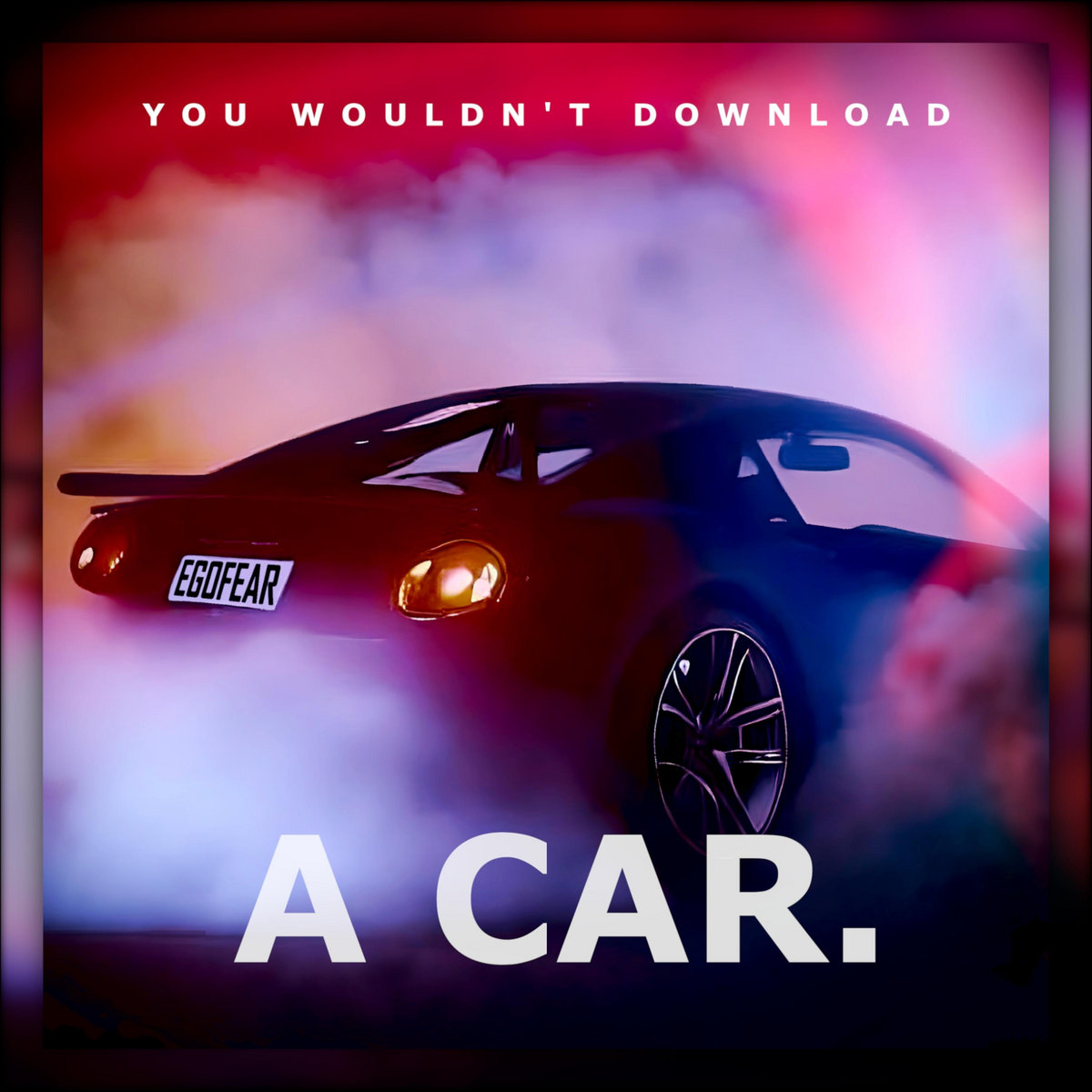
The year was 2004. You just popped a fresh DVD of Spider-Man 2 or The Bourne Supremacy into your player. You’re ready for the movie, but first, you have to sit through it. That aggressive, strobe-lit, industrial-metal nightmare. A grainy montage of a girl typing at a computer, a guy stealing a handbag, and then—the line that launched a thousand memes—You wouldn’t download a car. It was intense. It was loud. Honestly, it was a little bit traumatizing if you were a kid just trying to watch a cartoon.
Fast forward to today, and the "Piracy. It's a Crime" campaign has achieved a weird kind of immortality. We laughed at it for decades because the logic felt so fundamentally broken. I mean, downloading a file isn't the same as boosting a physical vehicle from a parking lot, right? One is theft; the other is duplication. But as we move deeper into 2026, the joke is starting to feel a little too real. Between 3D printing, the "Right to Repair" battles, and the fact that car companies now literally charge you a monthly subscription to use your own heated seats, the line between digital data and physical property has blurred into total chaos.
The Weird History of the Anti-Piracy PSA
Most people remember the "You wouldn’t download a car" ad as a global phenomenon, but it actually started with the Federation Against Copyright Theft (FACT) in the UK and the Motion Picture Association of America (MPAA). They wanted something that hit harder than the old "Home Taping is Killing Music" slogans of the 80s. They wanted it to feel like an action movie.
The irony? It’s been widely reported—though sometimes debated in copyright circles—that the music used in the ad itself might have been used without the proper licensing. While that particular urban legend has some holes (the artist Melodious Thunk did eventually clarify some of the licensing confusion), the sheer optics of a multi-billion dollar industry scolding teenagers while potentially tripping over their own legal feet is peak 2000s energy.
The ad didn't just stop at cars. It told us we wouldn't steal a handbag. We wouldn't steal a television. We wouldn't steal a movie. But the car line stuck. It stuck because it was absurd. At the time, the idea of "downloading" a car was a physical impossibility, a reach so far it became a parody of itself.
Why the Logic Actually Failed (and Why We Memed It)
If you ask any copyright lawyer or digital rights activist like Cory Doctorow, they’ll tell you why the ad’s central premise was flawed from day one. Stealing a car is a "zero-sum" game. If I take your Honda Civic, you no longer have a Honda Civic. You are walking to work.
Piracy is different.
If I download a copy of Shrek 2, you still have your copy of Shrek 2. The studio still has the original file. The "theft" is actually a loss of potential revenue, not the loss of a physical object. By equating a digital copy with a physical grand theft auto, the MPAA lost the locker room. They tried to use fear and shame against a generation that viewed "copying" as a fundamental feature of the internet, not a bug.
It felt out of touch. It felt corporate. It felt like your grandpa yelling at a cloud because he didn't understand how a .zip file worked.
3D Printing and the Revenge of the Ad
Here is where things get spooky. Technology caught up to the hyperbole.
In 2013, an enthusiast named Ivan Sentch started 3D printing a 1961 Aston Martin DB4 in his garage. He wasn't "stealing" it in the traditional sense, but he was essentially downloading the CAD files and manifesting a car out of plastic. Suddenly, the phrase you wouldn’t download a car wasn't a joke anymore. It was a DIY weekend project.
Today, we see this everywhere.
- 3D printing of car parts is standard for hobbyists.
- The "Right to Repair" movement is fighting for the legal right to "download" the software needed to fix your own tractor or Tesla.
- Open-source vehicle designs allow people to share blueprints globally.
The MPAA thought they were using a ridiculous example to scare us. Instead, they accidentally predicted the future of manufacturing. We would download a car. In fact, we’ve been trying to do it for twenty years.
The Subscription Trap: When the Car Downloads You
There’s a darker twist to this story that nobody in 2004 saw coming. We used to worry about us stealing from the companies. Now, the companies have figured out how to use the "digital" nature of cars to squeeze us.
Think about BMW or Mercedes-Benz. In recent years, they’ve experimented with locking hardware features—like faster acceleration or rear-wheel steering—behind a digital paywall. The hardware is already in the car you paid for. It’s sitting right there. But to "unlock" it, you have to pay a subscription.
If you hack your car to enable the heated seats you already bought, are you "downloading" a car? The industry says yes. They’ve turned physical goods into digital services. This has created a massive spike in "car piracy," where owners use third-party software to bypass manufacturer restrictions. The irony is delicious. The same companies that told us not to pirate movies are now essentially pirating our own ownership rights by turning our vehicles into "software as a service" (SaaS).
Cultural Impact: Why We Can’t Let It Go
The meme has outlasted the DVD format itself. You see it on T-shirts, in The IT Crowd (the famous parody where the guy steals a policeman's helmet), and in endless Twitter threads.
It’s a shorthand for "corporate overreach."
When a streaming service removes a show you "bought" from your library, someone inevitably tweets a screenshot of the old piracy ad. It’s a way of pointing out the hypocrisy of modern digital ownership. If "buying" isn't "owning," then "piracy" isn't "stealing." That’s the modern rebuttal to the 2004 PSA.
The Legal Reality of 2026
If you’re actually looking for the legal side of this, things have shifted. Courts are increasingly looking at "digital exhaustion" and what it means to own a file.
The Digital Millennium Copyright Act (DMCA) is still the big hammer, but it’s getting chipped away.
- Exemptions for Repair: The Library of Congress has granted some exemptions that allow people to bypass "digital locks" to fix their own stuff.
- The EU Factor: European regulators are being much stricter about "planned obsolescence" and digital locks than US regulators.
- The NFT Blip: Remember when people thought NFTs were the answer to "owning" a digital car? That didn't exactly pan out, did it? Most of those "cars" are now just broken links on a dead server.
Moving Forward: What You Can Actually Do
The legacy of you wouldn’t download a car isn't about piracy anymore. It’s about who controls the things you own. If you want to stay on the right side of the law while still maintaining your digital freedom, there are actual steps you can take.
Support DRM-free platforms. Whether it’s GOG for games or Bandcamp for music, buying files that don’t have "digital locks" is the only way to truly own what you download. If a company can flip a switch and take it away, you didn't buy it; you rented it.
Follow the Right to Repair movement. Groups like iFixit are at the forefront of ensuring that when you buy a piece of hardware—be it a phone or a Ford—you have the right to the software and parts needed to keep it running.
Back up your physical media. If you still have those old DVDs that featured the "You wouldn't download a car" ad, hang onto them. Physical media is the only thing that can't be "un-downloaded" by a licensing dispute between two massive corporations.
The ad was wrong. We would download a car if we could. And in a world where everything is becoming a subscription, downloading might be the only way to keep what's ours.