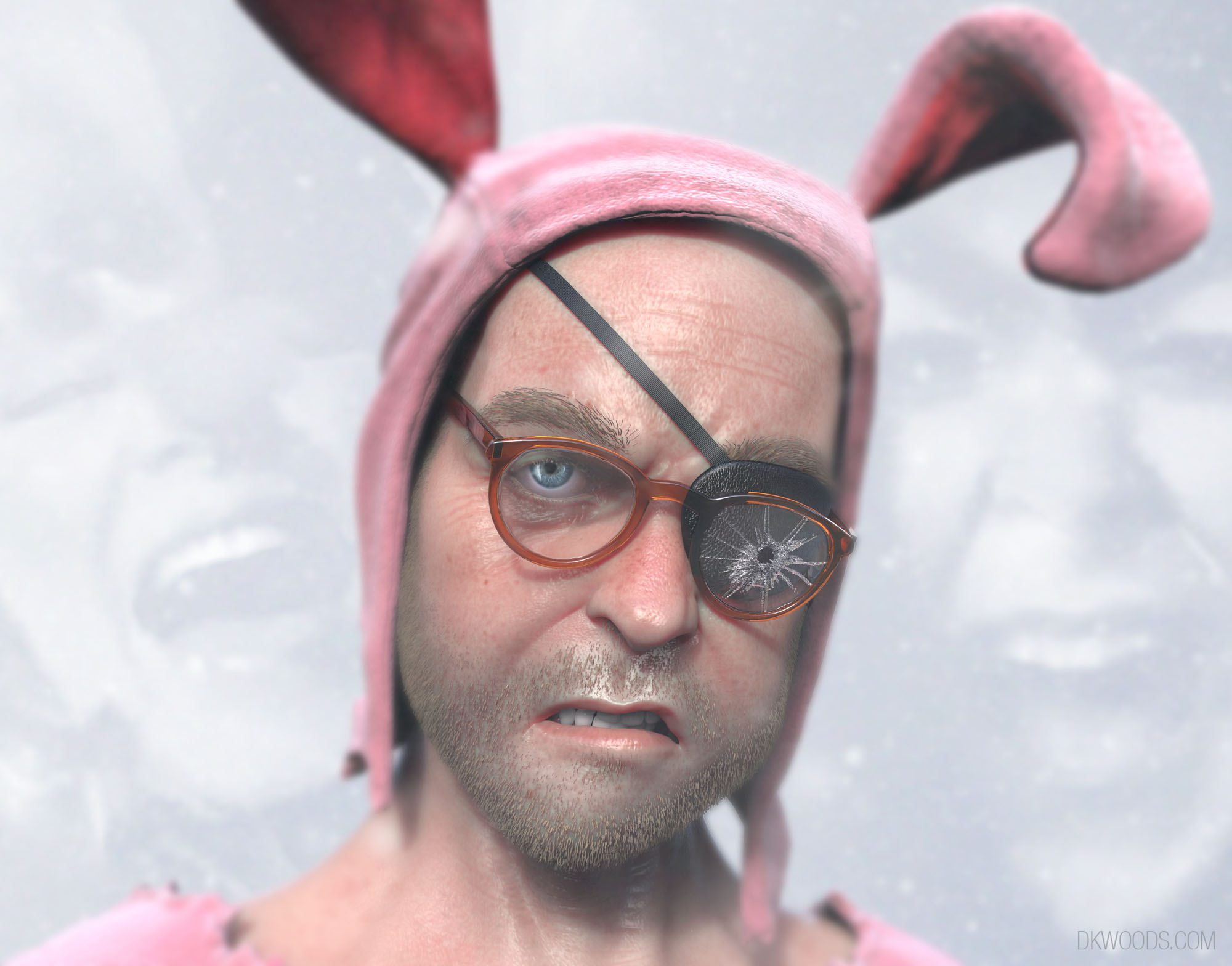
"You'll shoot your eye out, kid."
It’s the most famous rejection in cinematic history. If you’ve spent any time near a television in December, you’ve heard Mrs. Parker, the teacher Miss Shields, and even the terrifying Higbee’s Santa Claus crush Ralphie Parker’s dreams with that exact phrase. A Christmas Story (1983) turned a simple warning about a BB gun into a global cultural touchstone. But honestly? Behind the nostalgia and the department store slides lies a fascinating intersection of 1940s Americana, mid-century safety anxieties, and the very real physics of a Daisy Red Ryder.
Jean Shepherd, the narrator and author of the semi-autographical stories the film is based on, wasn't just making up a catchy line. He was tapping into a collective parental fear that defined an entire generation of kids who grew up in the shadow of World War II.
The Myth and Reality of the Red Ryder
Ralphie didn't just want any gun. He wanted the Red Ryder carbine-action, 200-shot, range model air rifle with a compass in the stock and "this thing which tells time."
The funny thing? That specific model didn't actually exist in the way the movie describes. Daisy did make a Red Ryder, but the compass and sun dial were features Jean Shepherd likely conflated from other outdoor tools or earlier models to make the "Holy Grail" of toys sound more legendary.
When you look at the phrase you will shoot your eye out, it’s usually dismissed as classic parental hyperbole. We think of it as the 1940s equivalent of "don't stare at the microwave" or "your face will freeze that way." However, the ballistics of an early-to-mid-century BB gun were no joke. These weren't the high-powered pellet rifles of today used for small game hunting, but they also weren't Nerf blasters.
A standard Daisy BB gun from that era typically fired a lead or steel projectile at velocities around 200 to 350 feet per second. While that sounds slow compared to a firearm, it's more than enough to penetrate soft tissue—specifically the cornea. In fact, if you look at historical safety data, eye injuries from air rifles were a legitimate public health concern that peaked right around the time the movie is set.
Why the Warning Stuck in Our Collective Brain
Most people think the movie is just a comedy. It’s not. It’s a documentary about the obsessive nature of childhood desire.
When Mrs. Parker says you will shoot your eye out, she isn't just worried about Ralphie’s physical safety; she’s engaging in a ritualistic denial of adulthood. To Ralphie, the gun represents agency. It represents the ability to protect his family from "Black Bart" and the villains of the world. To the adults, it represents a dangerous tool that a clumsy boy with "pink bar soap" in his mouth isn't ready for.
There’s a specific psychological phenomenon here called "The Ralphie Effect." It’s that moment where a child’s intense, singular focus on a specific object blinds them to any potential risk. Jean Shepherd’s writing captures this perfectly. The phrase became a meme before memes existed because it perfectly encapsulates the gap between how kids see the world (as an adventure) and how parents see it (as a series of liabilities).
The Physics of the "Ricochet" Scene
Remember the climax of the film? Ralphie finally gets the gun, goes out into the backyard, fires at a target on a metal sign, and the BB bounces back and knocks his glasses off.
"Oh my god," he gasps. "I shot my eye out!"
He didn't, of course. The BB hit his spectacles. But was that realistic? Ballistics experts and enthusiasts have spent decades debating this. In a 2010 episode of MythBusters, the team actually tested whether a BB could ricochet off a target and hit the shooter in the eye with enough force to cause damage.
Their findings were surprisingly nuanced. While most BBs would lose significant kinetic energy upon impact with a hard surface, certain angles—specifically those involving rounded surfaces or metal backing—could absolutely send a projectile straight back at the shooter. The fact that Ralphie was wearing glasses probably saved him from a genuine trip to the emergency room, which, ironically, validates every adult in the movie.
The Red Ryder Legacy in 2026
Even now, decades after the film’s release and nearly a century after the fictional events took place, the Daisy Red Ryder remains a bestseller. Daisy Outdoor Products even released "anniversary" editions that specifically include the compass and sundial in the stock, finally making the movie’s fictionalized version a reality.
But the landscape of safety has changed. Modern air rifles often come with mandatory safety glasses in the box. The "you will shoot your eye out" warning has shifted from a parental nagging to a legally required disclaimer.
We see this everywhere.
- Toy manufacturers include massive warning labels.
- Digital games have "screen time" warnings.
- Even "all-natural" supplements have to warn you about potential side effects.
We’ve become a culture of disclaimers. But Ralphie’s story resonates because it was the first time many of us realized that the things we want most might actually be a little bit dangerous.
Why We Still Watch It
Every year, TBS and TNT run the 24-hour marathon of A Christmas Story. People watch it while opening gifts or cooking ham. The phrase you will shoot your eye out is shouted at the screen by families who know every line.
It’s about the tension between the "Old Man" (the father) and the mother. The father, a man who fights "the furnace" and "the Bumpus hounds," secretly relates to Ralphie’s desire for the gun. He’s the one who actually buys it for him. He remembers being a boy. He remembers the lure of the "blue steel."
The mother represents the grounded, often harsh reality of keeping a family alive and intact. When she says he'll shoot his eye out, she's being practical. When the father buys the gun, he's being sentimental. It’s that balance that makes the movie—and the warning—timeless.
How to Safely Introduce "Dangerous" Hobbies
If you have a kid who is currently obsessing over something that makes you want to scream you will shoot your eye out, whether it’s a chemistry set, a drone, or their first pocket knife, there’s a better way to handle it than just saying "no."
- Mandate Protective Gear Early. Don't make it an option. If it's a bike, it's a helmet. If it's an air rifle, it's Z87+ rated safety glasses. If the gear isn't on, the toy stays in the closet. Period.
- Focus on Proper Mechanics. Most accidents happen when kids (or adults) get "creative" with how they use a tool. Teach them the four rules of firearm safety, even if it's just a BB gun. Treat every gun as if it's loaded. Never point it at something you don't intend to destroy.
- Supervised Trial Runs. Ralphie went out alone. That was the mistake. The first few times a child uses a "grown-up" tool, you should be within arm's reach.
- Explain the "Why." Instead of just saying "it's dangerous," explain the physics of a ricochet. Show them how a BB can bounce off a hard surface. Knowledge usually trumps a vague fear of "shooting your eye out."
Ultimately, the reason Ralphie’s story ends happily—despite the broken glasses and the close call—is because he learned the lesson the hard way. He realized that the adults weren't just trying to ruin his fun; they were trying to protect him from a reality he wasn't quite ready to handle.
Next time you hear that iconic warning, remember it’s not just a movie line. It’s a piece of survival wisdom passed down through generations of people who just wanted to make it to December 26th with both eyes intact. In a world of increasing complexity, there's something weirdly comforting about a danger so simple and a warning so direct.



