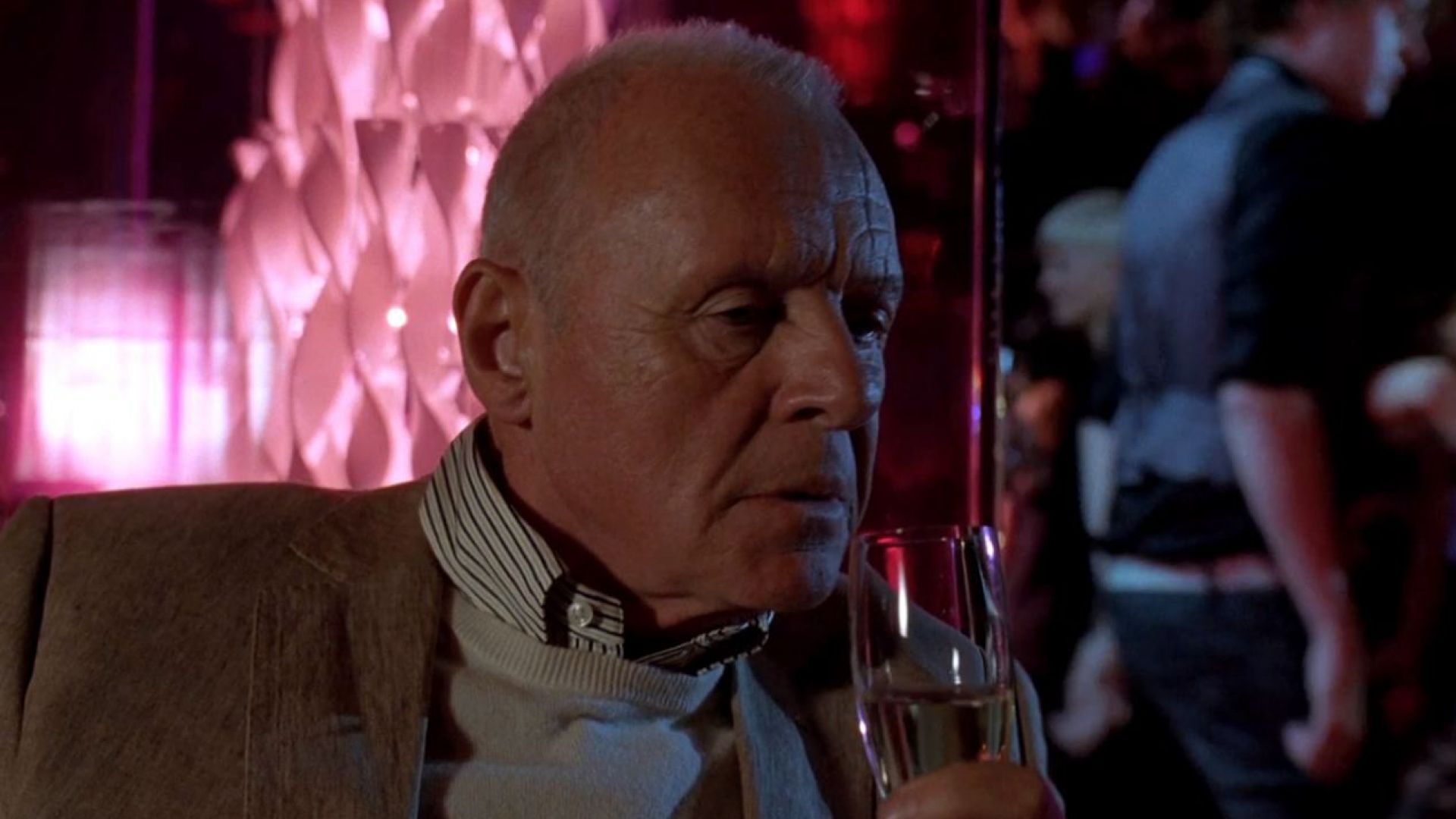
We’ve all heard the cliche. A crystal ball, a hazy room, and a psychic whispering that you will meet a tall dark stranger. It’s the ultimate trope of escapism. But when Woody Allen released his 2010 film with that exact title, he wasn't interested in giving anyone a happy ending. He wanted to talk about how much humans hate reality.
Honestly, the movie is a bit of a mess, but it’s a fascinating mess. It arrived during a prolific, yet shaky, period for Allen—sandwiched between the relative success of Vicky Cristina Barcelona and the massive comeback of Midnight in Paris. Starring Anthony Hopkins, Naomi Watts, Josh Brolin, and Antonio Banderas, the cast was stacked. Despite the star power, it remains one of his more polarising London-based films. People either find it a cynical masterpiece or a repetitive slog through mid-life crises.
What's it actually about?
Illusions. Basically, everyone in the story is chasing a version of life that doesn't exist. You have Alfie (Hopkins), who panics about death, leaves his wife, and marries a call girl. Then there’s Helena (Gemma Jones), who finds solace in a fraudulent fortune teller. Their daughter, Sally (Watts), is pining for her boss, while her husband, Roy (Brolin), is staring out the window at a girl in a red dress.
It’s grim. But it’s also weirdly relatable if you’ve ever felt like your life was stuck in second gear.
The Brutal Reality Behind the Fortune Teller’s Lies
The title isn't just a catchy phrase. It refers to the "tall dark stranger" we all eventually meet: death. Or, at the very least, the unknown. In the film, Helena is the only character who ends up "happy," and she’s the one being most aggressively lied to. She spends her savings on a psychic who tells her exactly what she wants to hear.
There’s a specific nuance here that critics like Roger Ebert pointed out at the time. Ebert noted that the film suggests "the only way to be happy is to be crazy." That’s a heavy takeaway. If you look at the screenplay, the psychic's predictions aren't just wrong—they’re dangerously vague. Yet, Helena thrives because she has hope, even if that hope is built on sand.
Compare that to Roy, the struggling novelist. He’s obsessed with his own talent, or lack thereof. He steals a dead friend's manuscript because he can’t face the fact that his own career is over. He’s looking for a shortcut to greatness. He wants the "tall dark stranger" of fame to knock on his door. It never does. Not in the way he expects, anyway.
Why the London Setting Changed Everything
Woody Allen used to be synonymous with New York. Then, the money moved to Europe. By the time you will meet a tall dark stranger went into production, Allen had already filmed Match Point and Scoop in London.
London in this film isn't the London of postcards. It’s a city of grey skies, cramped flats, and expensive art galleries. The setting mirrors the characters' internal claustrophobia. They are trapped by their own choices. Cinematographer Vilmos Zsigmond, who worked on legendary films like Close Encounters of the Third Kind, gives the movie a warm, golden hue that contrasts sharply with the coldness of the plot. It looks like a romantic comedy, but it feels like a tragedy.
Interestingly, the production had to navigate the complexities of filming in London’s upscale neighborhoods like Notting Hill and Chelsea. It wasn't cheap. The film cost around $22 million to make, and while it didn't bomb, it didn't exactly set the world on fire either. It’s a "quiet" movie. You won't find explosions or high-stakes chases. Just people talking in rooms, making terrible decisions.
Breaking Down the Cast: Who Actually Shines?
Josh Brolin is surprisingly good at playing a loser. We’re so used to him being Thanos or a rugged cowboy that seeing him as a pathetic, failed writer is refreshing. He brings a physical heaviness to Roy. You can tell the character hasn't showered in two days just by the way Brolin sits on a sofa.
Naomi Watts carries the emotional weight. Her character, Sally, is the most grounded, which makes her eventual failure the hardest to watch. She wants to open an art gallery. She wants a child. She wants a man who notices her. Instead, she’s surrounded by men who are looking past her at something "better."
And then there's Anthony Hopkins.
He plays Alfie with a mixture of vanity and terror. He buys a Porsche, gets a fake tan, and tries to keep up with a woman half his age. It’s cringe-inducing. But Hopkins makes you feel the underlying fear of a man who realizes his time is running out. He’s running toward a "tall dark stranger" of his own making, trying to bribe his way out of aging.
Common Misconceptions About the Movie
- It’s a Rom-Com: It really isn't. If you go in expecting Annie Hall, you’ll be disappointed. There are very few jokes.
- The Ending is Unfinished: Many viewers felt the film just "stopped." That’s intentional. Allen is famous for his abrupt endings that suggest life just goes on, usually in circles.
- It’s a "Minor" Woody Allen Film: While often ranked lower than Manhattan, it’s a crucial piece of his late-career philosophy regarding the "meaninglessness of existence."
The Philosophy of "The Tall Dark Stranger"
The phrase usually refers to a mysterious lover. In the context of this film, it’s a metaphor for the delusions we use to survive. We all have a "tall dark stranger"—a dream job, a perfect partner, a lottery win—that we think will fix our lives.
The film argues that these dreams are just as much of a lie as the fortune teller's predictions. Roy's "stranger" is the stolen book. Alfie's "stranger" is his young wife. Sally's "stranger" is her boss, Greg. None of them find what they are looking for because they are looking for something outside of themselves to provide internal peace.
There’s a bleakness to this that many people find off-putting. Why watch a movie where everyone loses? Well, because it’s honest. It reflects that period of life—the mid-life crisis—where you realize that you might never be the person you thought you'd be. It’s about the grieving process for your own potential.
How to Approach the Film Today
If you’re planning to watch you will meet a tall dark stranger, don't look for a moral. There isn't one. Instead, watch it as a character study on the dangers of "wishful thinking."
For those studying screenwriting or film, look at how Allen uses the narrator. The narration is detached, almost like a nature documentary. It creates a sense of fate. The characters think they have agency, but the narrator knows they are just repeating the same mistakes humanity has made for centuries.
Actionable Insights for Viewers
- Context Matters: Watch this film alongside Match Point and Midnight in Paris. It forms an unofficial trilogy about the role of "luck" and "fantasy" in our lives.
- Focus on Helena: While the other characters are more "active," Helena is the heart of the movie’s message. Her arc is the most controversial because she is rewarded for her ignorance. Ask yourself if you’d rather be "right and miserable" or "wrong and happy."
- Check the Soundtrack: Like most Allen films, the jazz and classical selections are top-tier. The music often mocks the characters' desperation, providing an upbeat tempo to their downward spirals.
- Analyze the "Red Dress": Pay attention to the visual cues Roy follows. The girl in the red dress across the street represents the "grass is greener" syndrome that fuels the entire plot.
In the end, you will meet a tall dark stranger is a reminder that the stories we tell ourselves are often the most dangerous ones. Whether it's a psychic's reading or our own inflated ego, these fictions keep us moving, but they rarely lead us home. It's a cynical, beautifully shot, and deeply human look at why we can't just be happy with what we have.
If you want to understand the movie’s legacy, look at the careers of the actors involved. For many, it was a paycheck or a "bucket list" item to work with a legend. For the audience, it remains a bitter pill, sugar-coated in the aesthetics of a London summer. It won't give you answers, but it will definitely give you something to talk about over a drink. Just don't ask the bartender for a fortune. You probably won't like what they have to say.



