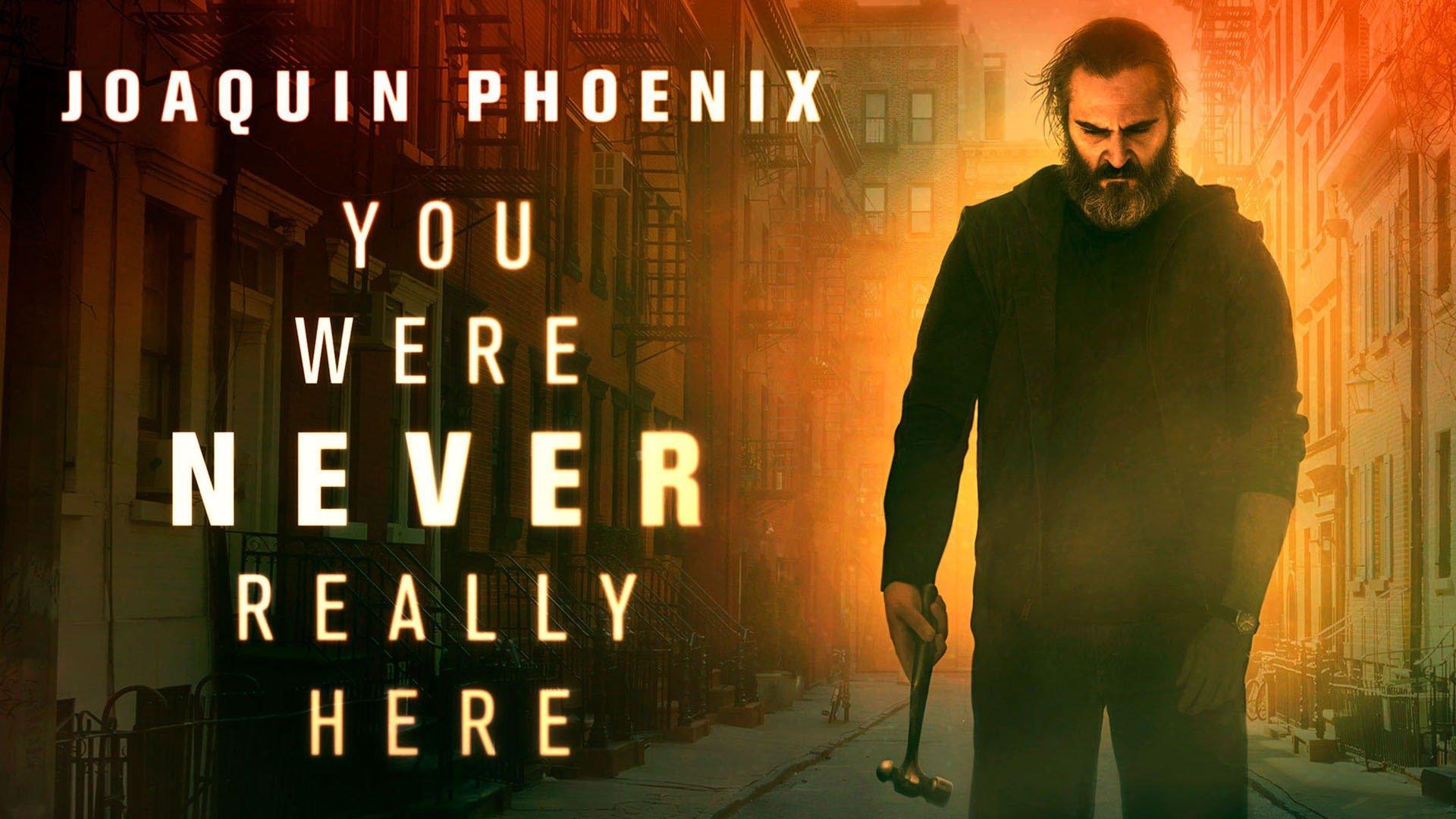
When Lynn Ramsay’s You Were Never Really Here first landed, it didn’t just walk into theaters; it sort of stumbled in, bleeding and breathing heavy. People expected another John Wick. They wanted a clean, high-octane revenge flick where the "good guy" saves the girl and rides off into the sunset. Instead, what we got was Joaquin Phoenix as Joe—a man who looks like he hasn't slept since the nineties—using a ball-peen hammer to navigate a fever dream of trauma.
Honestly, it’s a miracle the movie works at all. Meanwhile, you can read related stories here: The Art of the Silent Vow.
It’s short. Barely 90 minutes. In an era where every blockbuster feels the need to stretch into a three-hour endurance test, Ramsay’s brevity is a punch to the gut. The film is stripped of all the fat. There are no long-winded monologues explaining why Joe is the way he is. We don't get a tidy flashback sequence of his childhood or his time in the military. We just get the aftermath. We get a guy who counts down from ten to keep his head from exploding.
The Brutal Reality of Joe’s World
Let's talk about that hammer. Most action heroes pick a signature weapon because it looks cool or high-tech. Joe picks a hammer because it's a tool. It’s utilitarian. It’s messy. In You Were Never Really Here, violence isn't stylized or choreographed like a dance. It’s ugly and frantic. Half the time, the camera actually looks away from the impact, focusing instead on a security monitor or Joe’s reacting face. To understand the full picture, we recommend the detailed article by Rolling Stone.
This isn't a mistake.
Ramsay is making a point about the desensitization of violence. By showing us the quiet moments—Joe cleaning his mother's feet or sitting in a dark kitchen—she makes the sudden bursts of aggression feel even more jarring. It’s about the psychological weight. Joe isn't a superhero; he’s a deeply broken veteran suffering from what many experts would identify as severe, untreated PTSD. According to the National Center for PTSD, the "re-experiencing" symptoms Joe displays—the intrusive memories and flashbacks—are textbook.
But Joe doesn't talk about it. He just buys more duct tape.
Sound and Silence: The Jonny Greenwood Factor
You can't discuss why You Were Never Really Here stays with you without mentioning the score. Jonny Greenwood, the Radiohead multi-instrumentalist who’s basically become the go-to guy for "unsettling genius" soundtracks, creates a landscape of noise that mirrors Joe’s internal state.
It’s twitchy.
Sometimes the music is a pulsing, electronic beat that feels like a racing heart. Other times, it’s a dissonant string section that makes you want to crawl out of your skin. It’s one of those rare cases where the audio is doing just as much heavy lifting as the acting. When Joe is underwater, the sound muffles. When he’s in a crowded train, the ambient noise becomes an assault.
The film relies on visual storytelling to a degree that’s almost silent-movie-esque. Think about the scene where Joe and a dying assassin end up holding hands on the floor. It’s weird. It’s incredibly uncomfortable. But it’s also weirdly human. It breaks every rule of the "tough guy" genre. They’re both just two people who have been used as weapons by more powerful men, and in that final moment, the animosity just... evaporates.
The Source Material vs. The Screen
The movie is based on a novella by Jonathan Ames. If you’ve read the book, you know it’s actually quite different. Ames wrote something that feels a bit more like a traditional noir thriller. It’s grittier in a pulp fiction sort of way.
Ramsay took that skeleton and draped it in impressionism.
- Joe’s Mother: In the book, she’s a presence, but in the film, the relationship is the emotional anchor. Their banter about Psycho is funny, sure, but it’s also heartbreaking because you realize she’s the only thing keeping him tethered to reality.
- The Ending: No spoilers, but the film’s conclusion is far more ambiguous than the book. It asks if "being okay" is even a possibility for someone like Joe.
- The Pacing: The film feels like a memory. Things skip. Details are blurred.
Why People Still Argue About the Plot
A common complaint about You Were Never Really Here is that "nothing happens" or the "conspiracy is too simple."
That’s kinda missing the forest for the trees.
The conspiracy—the politicians, the girl, the child sex trafficking ring—is almost secondary. It’s the catalyst, not the point. The film is a character study of a man who is "never really there" because he’s trapped in his own head. He’s a ghost haunting his own life. When Nina, the girl he’s sent to rescue, tells him "It’s a beautiful day," it’s the first time Joe actually looks at the world instead of through it.
The film challenges the idea of the "savior." Joe thinks he’s saving her, but by the end, you realize she’s the one with the clearer vision of the future. She’s seen the worst of humanity, just like he has, but she hasn't surrendered to the darkness yet.
Technical Mastery: Lighting and Color
The cinematography by Thomas Townend deserves a shoutout. New York City usually looks one of two ways in movies: sparkling and magical or grimy and grey. Townend gives us a third version. It’s neon-soaked but cold.
The use of red is particularly striking. It’s not just the blood. It’s the taillights of a car, the glow of a diner sign, the reflection in a window. Red represents the trauma Joe can’t escape. Conversely, the scenes in the water are washed in a deep, suffocating blue. It’s beautiful, but it’s the beauty of drowning.
Phoenix reportedly put on significant muscle mass for the role but kept a "dad bod" softness to it. He looks like a guy who was once an elite soldier but has let himself go because he stopped caring. He’s heavy. You can hear his knees creak. You can feel the weight of his boots. It’s a physical performance that doesn't rely on gym-bro aesthetics, but on the reality of a body that has been used as a tool for too long.
Actionable Insights for Cinephiles and Creators
If you’re a filmmaker or just someone who loves analyzing stories, there are a few big takeaways from Joe's journey.
First, less is more. You don't need a 20-minute exposition scene to explain a character's trauma. Joe’s scars—the physical ones and the way he flinches at loud noises—tell the story better than any dialogue could.
Second, sound is a character. If you watch the movie with the sound off, it’s a different experience. If you listen to it without the picture, it’s a horror movie. The synergy between the two is where the magic happens.
Third, challenge the genre. If you’re making a "revenge" story, ask yourself what the cost of that revenge actually is. You Were Never Really Here shows that revenge doesn't heal anything. It just leaves you with a bloody hammer and a lot of questions.
Final Perspective on the Film's Legacy
Years later, the film holds up because it doesn't try to be "timely." It doesn't lean on current political trends or flashy tech. It’s a primal story about a man trying to find a reason to wake up the next morning.
It’s a tough watch. It’s not something you put on while you’re folding laundry. But if you give it your full attention, it offers a level of empathy for the "broken veteran" archetype that few other films even attempt. It’s a reminder that the wars people fight don't always end when they come home. Sometimes, the real fight is just trying to be "there" for five minutes of peace.
To truly appreciate what Ramsay achieved, watch it back-to-back with something like Taxi Driver. You’ll see the DNA, but you’ll also see how Ramsay evolved the "lonely man in the city" trope into something far more internal and, ultimately, far more haunting.
Next Steps for Deepening Your Understanding:
- Analyze the Editing: Watch the scene in the hallway where the camera switches to the CCTV feed. Notice how the cuts happen on the beat of the music.
- Read the Novella: Grab Jonathan Ames' book to see how a director can strip a story to its bare essentials while keeping its heart.
- Research the Score: Listen to Jonny Greenwood’s interview on the Soundtracking podcast where he breaks down how he used "broken" instruments to create Joe’s theme.
- Study the Visuals: Look for the motif of "reflection." Joe is almost always seen in mirrors, windows, or puddles—rarely directly. This reinforces the idea that he’s a fragmented person.



