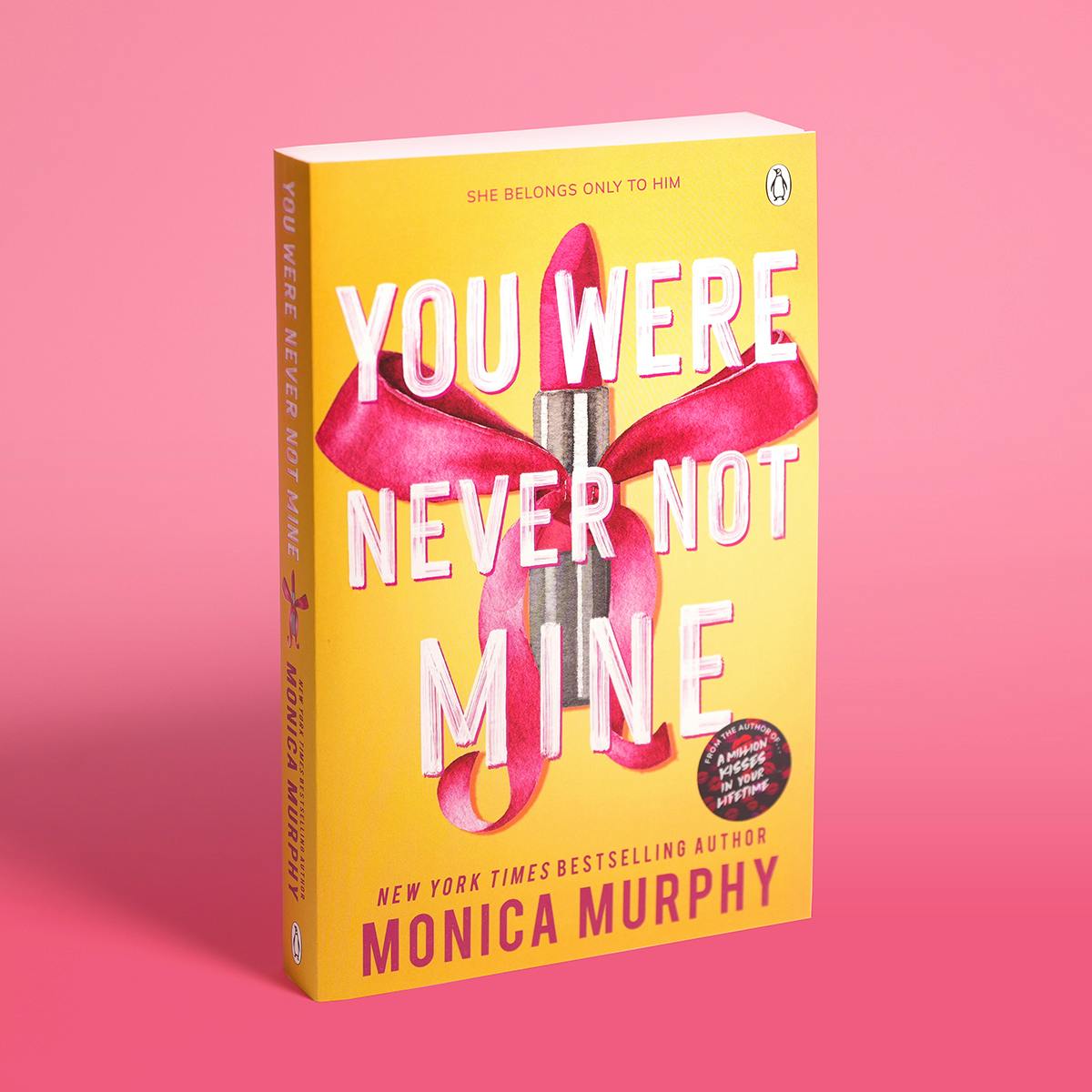
It hits different. You know that feeling when you're reading a book or watching a show, and two characters have been circling each other for years, and then someone finally drops the line? You were never not mine. It’s heavy. It’s not just about romance; it’s about a bone-deep, historical claim on someone else's soul. Honestly, it’s one of the most powerful phrases in modern fiction and "booktok" culture because it bypasses the "will-they-won't-they" and goes straight for the "they-always-were."
We’re obsessed with it.
People crave this kind of narrative because it promises a level of permanence that feels impossible in the real world. In a dating landscape defined by ghosting and "situationships," the idea that someone could belong to you—mentally, emotionally, spiritually—even while you were apart is basically the ultimate fantasy.
The Psychology of the "Never Not Mine" Connection
Why does this specific phrasing work better than a simple "I love you"? It’s the double negative. By saying "never not," the speaker is asserting that there hasn't been a single second, not a heartbeat, where the connection was severed. It’s a total refusal of any gap in their history.
Psychologically, this taps into our attachment styles. For someone with an anxious attachment, hearing that they were never truly "lost" to their partner is the ultimate reassurance. It's security. It's a shield against the fear of being replaced. When a character in a Colleen Hoover novel or a Taylor Jenkins Reid story leans into this sentiment, they aren't just talking about the present. They are rewriting the past to make it safe.
Why complexity matters more than perfection
Standard romance stories often follow a linear path. Boy meets girl, they fight, they make up. Boring. The you were never not mine trope requires messiness. It requires the "middle years" where they weren't together, maybe they were with other people, or maybe they lived on different continents.
The weight of the phrase comes from the endurance of the feeling despite the circumstances. If you've ever looked at an ex and felt that weird, lingering tether, you get it. It’s that haunting realization that even if you don't talk, the space they occupy in your head is permanent. It’s a "pre-owned" heart scenario.
Real Examples in Pop Culture and Literature
You see this everywhere once you start looking. It’s the "Invisible String" theory Taylor Swift sings about. It’s the soulmate logic where time is just a pesky suggestion rather than a barrier.
In the world of contemporary romance novels—think authors like Beth O'Leary or Christina Lauren—this theme often surfaces during the "grand gesture" phase. But it’s most potent in "second chance" romance. Take a look at stories where childhood sweethearts reunite after a decade. One of them might have a whole life, a marriage, or a career elsewhere, but the core identity remains tied to that first person.
- The Notebook: Noah’s letters. It wasn't over. It was never not them.
- Normal People: Marianne and Connell. Their lives weave in and out, but the "ownership" they have over each other’s growth is constant.
- Persuasion: Jane Austen was the original queen of this. Captain Wentworth’s letter is essentially a 19th-century version of "you were never not mine." He was half agony, half hope, but he was always hers.
Some people find it toxic. Kinda makes sense. If you take it too literally, it sounds possessive. "You belong to me even when we aren't together" can definitely veer into "red flag" territory if the writing isn't careful. But in fiction, we allow it to be poetic. We allow it to represent a devotion that survives the ego.
The Viral Impact of the Sentiment
Social media has turned "you were never not mine" into a brand. If you scroll through aesthetic edits on Pinterest or TikTok, you’ll find this phrase slapped over grainy videos of rainy windows or couples holding hands in the dark. It’s a mood.
It resonates because it validates the "long game." We live in a fast-paced world. Everything is disposable. When a piece of media tells us that something can be undisposable—that a bond can be so tight that even a breakup can’t actually break it—we buy in. It’s emotional wish fulfillment.
Is it actually healthy?
Let's be real for a second. In real life, thinking "you were never not mine" about an ex who has moved on is usually called "not being over it." It can be a bit of a trap. Experts in relationship psychology often warn against "destiny beliefs"—the idea that you are fated to be with one person. People with high destiny beliefs tend to give up on relationships when they get hard because they figure, "If it were meant to be, it wouldn't be this difficult."
However, the "never not mine" trope is slightly different. It’s not about things being easy. It’s about the persistence of the internal state. It’s about the fact that even when it was hard, or even when they were apart, the internal compass never stopped pointing toward that one person.
How Writers Master the Internal Monologue
If you're a writer trying to capture this, you can't just have a character say it. You have to prove it. You have to show the years of longing.
You show it in the way a character remembers a specific, tiny detail about the other person—like how they take their coffee or the way they squint when they're lying—even after five years of silence. That’s the proof of "never not mine." It’s the storage of useless information that only matters because of who it belongs to.
Short sentences help here.
They looked at each other. Five years vanished. Nothing had changed, really. The world moved, but they stayed pinned to that one summer.
That’s how you build the tension. You make the reader feel the frustration of the lost time so that when the "you were never not mine" moment finally happens, it feels like a relief. It feels like coming home.
Breaking Down the Misconceptions
People often confuse this with "right person, wrong time." They aren't the same. "Right person, wrong time" is an excuse for why it didn't work. "You were never not mine" is a claim that it always worked, just maybe not in the way the world could see.
It's also not just about "first loves." You can meet someone at thirty, have a whirlwind three months, lose touch for years, and still feel this. It’s about the intensity of the imprint. Some people leave a mark that doesn't fade, no matter how much "life" you try to scrub over it.
The Role of Nostalgia
Nostalgia is a powerful drug. It filters out the bad parts. When we engage with the you were never not mine trope, we are engaging with a sanitized version of history. We forget the fights. We forget the reason they weren't "together" in the first place. We only focus on the thread.
Actionable Takeaways for Readers and Writers
If you're currently obsessed with this trope or trying to find it in your own life/work, here’s how to handle the "never not mine" energy without losing your mind:
- Distinguish between "fate" and "choice." The most romantic versions of this trope are when the characters choose to stay loyal to that memory, not just because they have to.
- Watch for the nuance. If a story uses this phrase but the characters don't actually respect each other's boundaries, it’s not a romance; it’s a thriller.
- Value the history. The reason this phrase works is because of the shared history. If you're writing, don't skip the flashbacks. We need to see why they "belong" together.
- Acknowledge the growth. The most satisfying "never not mine" moments happen when both people have changed, but their core connection remains the same. They aren't the kids they used to be, but the "us" part of them is still there.
Basically, "you were never not mine" is the ultimate literary "I told you so." It’s a middle finger to time, distance, and all the other people who tried to fill the gap. It’s messy, it’s arguably a little bit crazy, and it’s exactly why we keep turning the pages until 3:00 AM.
To apply this to your own reading list or creative projects, start by identifying the "anchors" in a relationship—those specific, unchangeable facts that keep two people tethered even when they’re drifting. Focus on the internal consistency of the characters' feelings rather than their outward actions. Analyze the "silent years" in a narrative; if the connection persists through the silence, that's where the "never not mine" magic truly lives. Look for stories that prioritize emotional continuity over mere plot convenience.



