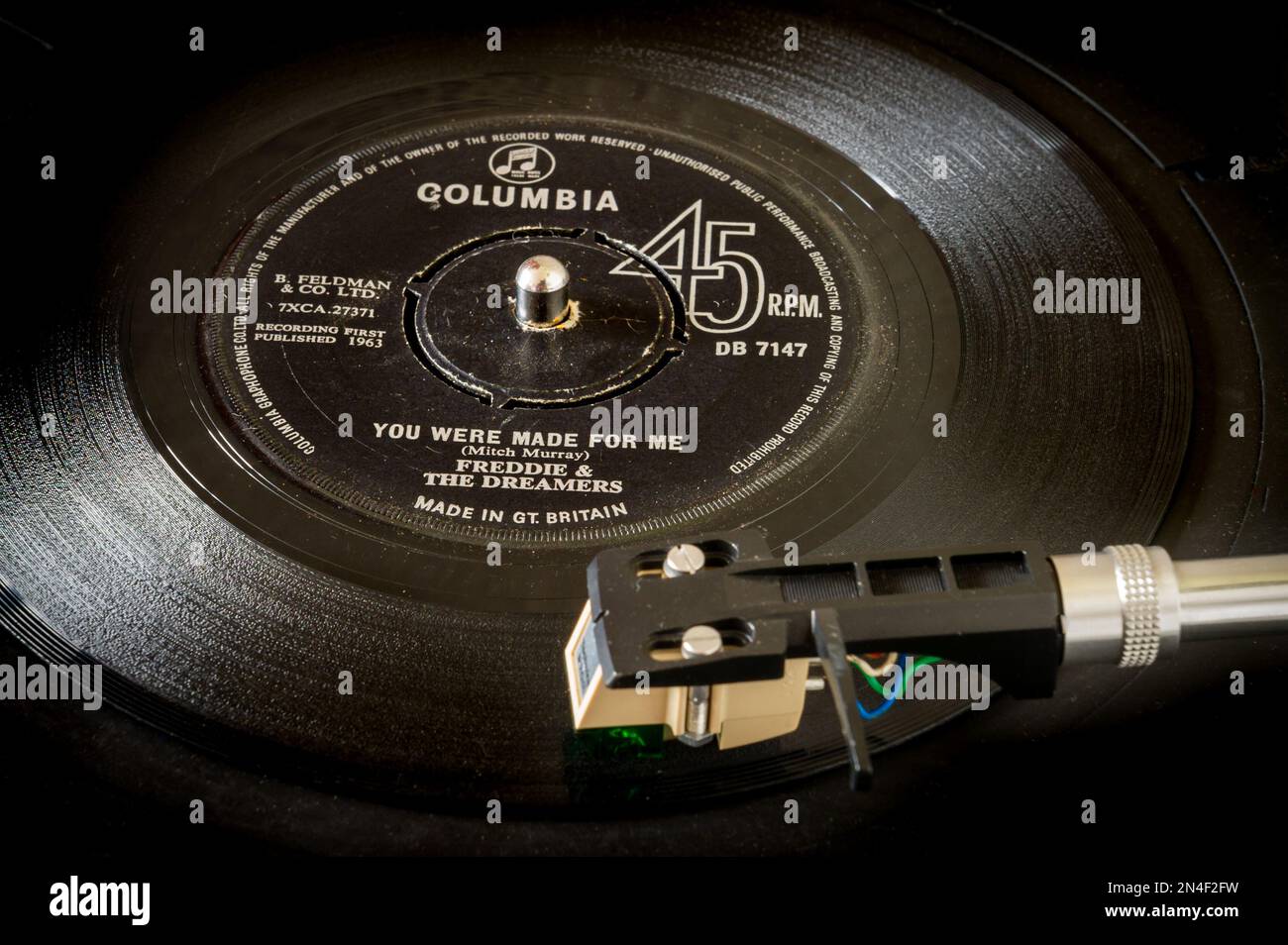
If you close your eyes and think about the British Invasion, you probably see the Beatles’ mop-tops or the Stones’ snarls. But then there’s Freddie Garrity. He was the guy leaping into the air with limbs flailing like a caffeinated spider. Honestly, it was ridiculous. It was also brilliant. You Were Made For Me Freddie and the Dreamers captures that specific, hyper-energetic moment in 1963 when pop music didn't have to be cool—it just had to be fun.
Freddie wasn't trying to be a sex symbol. He was a former milkman from Manchester who looked like your quirky accountant. When the band released "You Were Made For Me" in late 1963, they were already riding high on the success of "If You Gotta Make a Fool of Somebody." But this track? This was different. It was the quintessential Merseybeat sound, even though they weren't actually from Liverpool.
Why the Song Actually Worked
The song was written by Mitch Murray. If that name sounds familiar, it’s because he was the king of the "infectious earworm" back then. He’s the same guy who penned "How Do You Do It?" which the Beatles famously rejected before Gerry and the Pacemakers turned it into a massive hit. Murray had a formula. It wasn't complex. It was basically a musical hug.
"You Were Made For Me" relies on a very specific type of innocence. The lyrics are straightforward—almost childlike. “A mountain was made for the climbing / A ship was made for the sea.” It’s logic that a five-year-old could follow, wrapped in a 4/4 beat that makes it impossible not to tap your foot. You’ve got to remember the context here. In 1963, the world was vibrating. The youth finally had money in their pockets and a desire to see something that didn't look like their parents' ballroom dancing.
Freddie Garrity gave them that. He did "The Freddie." It was a dance that involved swinging your arms and legs out sideways. It looked goofy. It was goofy. But when he performed You Were Made For Me, that energy translated into record sales. The song hit Number 3 on the UK Singles Chart. It stayed in the charts for months. People loved it because it felt accessible. You didn't need to be a guitar virtuoso to understand what the Dreamers were doing.
The American Invasion (Eventually)
While the UK was swooning over Freddie’s glasses and high-pitched vocals in '63, America didn't get the memo until 1965. This is where the timeline gets a bit weird for modern listeners. We tend to think of the British Invasion as one big wave. In reality, it was more like a series of splashes.
By the time You Were Made For Me Freddie and the Dreamers landed on the US Billboard Hot 100, the band was actually already starting to cool off back home in England. But in the States? They were fresh. They appeared on The Ed Sullivan Show. They were on Shindig!. The American audience, still reeling from the loss of JFK and looking for an escape, ate up the British eccentricity.
There's a common misconception that Freddie and the Dreamers were just a "joke" band. That's not really fair. Sure, the stage antics were comedic, but the musicianship was solid. Derek Quinn’s lead guitar work on "You Were Made For Me" is crisp. It’s that clean, Vox-amplifier-driven tone that defined the era. They knew how to lock into a groove. If you listen closely to the rhythm section—Bernie Dwyer on drums and Pete Birrell on bass—they provide a surprisingly sturdy foundation for Freddie’s whimsical vocals.
The Mitch Murray Connection
Let's talk about Mitch Murray again for a second. The guy was a hit machine. He understood that a pop song didn't need to be a symphony. It needed a "hook."
- A recognizable intro.
- A chorus that repeats the title at least three times.
- A middle-eight that provides just enough tension to make the resolution feel good.
You Were Made For Me hits every one of these marks with clinical precision. It’s a masterclass in 1960s songwriting. It’s also a bit of a time capsule. You can hear the transition from the 1950s doo-wop influence into the more aggressive beat music of the mid-60s. It’s a bridge between two worlds.
The Criticisms: Was it Too Silly?
Not everyone was a fan. Music critics of the time—the ones who took themselves very seriously—often looked down on the Dreamers. They saw them as a novelty act. While the Animals were singing about the "House of the Rising Sun" and the Kinks were inventing heavy metal riffs with "You Really Got Me," Freddie was jumping around singing about how mountains were made for climbing.
Does that make the song less valuable? Honestly, no.
Pop music serves different masters. Sometimes it serves the soul, and sometimes it just serves the Saturday night dance hall. "You Were Made For Me" was a dance hall king. It didn't try to change the world; it just tried to make the next two minutes and ten seconds a little brighter.
The Legacy of Freddie Garrity
Freddie passed away in 2006, but his influence (and that specific song) pops up in the strangest places. You’ll hear it in commercials or as a background track in movies set in the swinging sixties. It has a "purity" that is hard to replicate.
If you're a collector or a vinyl enthusiast, finding an original Columbia 45rpm of You Were Made For Me is a rite of passage. The production, handled by the legendary John Burgess at Abbey Road, is surprisingly lush for what people dismiss as "teenybopper" music. They were recording in the same building as the Beatles, using the same equipment and the same engineers. The quality is there.
How to Listen to it Today
If you want to truly appreciate the track, don't just stream it on a tinny phone speaker.
- Find the Mono Mix: Most of these early 60s tracks were designed for mono. The stereo "re-channeling" of the era often sounds muddy and weird. The mono version has a punch that hits you right in the chest.
- Watch the Footage: Go to YouTube and find their performance from the film What a Crazy World. Seeing the band move while they play "You Were Made For Me" changes how you hear the rhythm.
- Check the B-Side: The B-side was "Silly Girl." It’s... well, it’s exactly what the title suggests. But it shows the band's commitment to their "happy-go-lucky" brand.
Beyond the "Freddie" Dance
There’s a nuance in Freddie’s voice that often gets overlooked because of the jumping. He had a surprisingly clear tenor. On You Were Made For Me, he hits these light, airy notes that almost lean toward folk music. It’s a reminder that before the Dreamers, he was part of a skiffle group. That DIY, acoustic-heavy background stayed with him.
The song represents the final gasp of pre-psychedelic pop. Within three years of this song's release, the world would move on to Sgt. Pepper and Jimi Hendrix. The innocence would be gone. But for that brief window in 1963 and 1964, a song about how "the stars were made for the night" was exactly what everyone needed.
Key Takeaways for the Modern Listener
If you're diving into the history of the British Invasion, don't skip the "fun" bands. It’s easy to get bogged down in the "important" artists, but you miss the heartbeat of what people actually danced to.
- Simplicity is hard: Writing a song as catchy as "You Were Made For Me" is actually more difficult than writing a complex prog-rock epic.
- Performance matters: Freddie Garrity proved that your visual identity is just as important as your sound. He was the first real "video" star before music videos were even a thing.
- Geographic diversity: While Liverpool got all the credit, Manchester (the Dreamers' home) was a powerhouse of talent that paved the way for later acts like The Hollies.
To really get the most out of this era, start building a playlist that mixes these upbeat tracks with the grittier blues-rock of the time. It provides a much more accurate picture of what life sounded like in the mid-60s. You’ll find that You Were Made For Me Freddie and the Dreamers holds its own against much "cooler" songs simply because its joy is so authentic.
Next time you’re feeling a bit overwhelmed by the complexity of modern music, put this track on. Lean into the silliness. Maybe even try a leg twitch or two. It’s impossible to stay in a bad mood when Freddie is telling you that you were made for him.
Check out the original UK chart listings from 1963 to see just how dominant this sound was. You’ll see Freddie’s name right up there with Elvis and The Beatles. It wasn't a fluke; it was a phenomenon.
Actionable Insights:
- Explore the Manchester Beat: Look up other bands from the "Northwest" scene like The Dakotas or The Fourmost to see how the regional sound differed from London.
- Vinyl Hunting: Look for the Freddie and the Dreamers eponymous debut album on the Columbia label for the best audio fidelity.
- Compare and Contrast: Listen to "You Were Made For Me" back-to-back with The Beatles' "Please Please Me." You'll notice the similarities in the driving snare hits and the vocal harmonies that defined the "Big Three" era of British pop.



