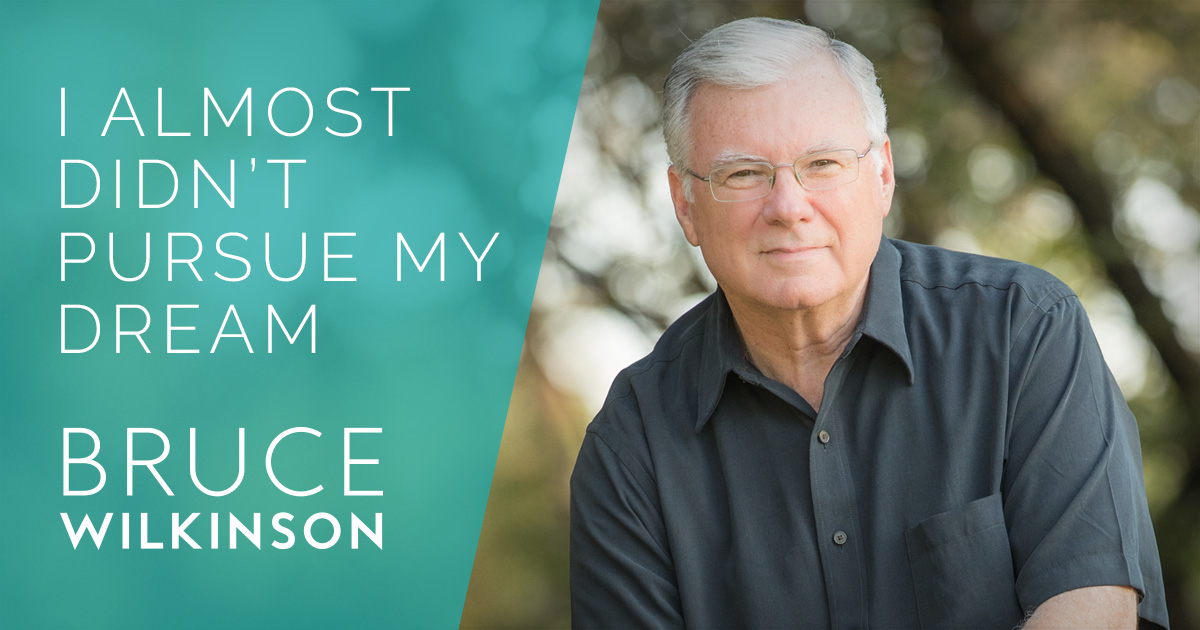
Most people are just tired. They wake up, drink coffee, answer emails, and wonder if there is more to life than just surviving the week. Bruce Wilkinson basically gambled his entire career on the idea that there is more. In 2009, he released You Were Born for This, and honestly, it felt like a shock to the system for anyone stuck in a rut. It wasn't just another self-help book about "finding your passion." It was about something way more specific: being a delivery person for God.
Whether you are religious or just curious about how people find meaning, the core of You Were Born for This Bruce Wilkinson is about the "God-nudge." You know that weird feeling you get when you think you should call a friend or give five bucks to a stranger? Wilkinson argues those aren't coincidences. He calls them invitations.
It’s been over fifteen years since this book landed on shelves. Yet, in a world that feels increasingly disconnected and digital, his message about looking for "divine appointments" in the grocery store or the office has a weirdly fresh relevance.
The Problem with "The Prayer of Jabez" Shadow
You can't talk about Wilkinson without mentioning The Prayer of Jabez. That tiny book was a juggernaut. It sold millions. It made him a household name. But it also brought a ton of criticism. People accused him of promoting a "prosperity gospel"—the idea that if you pray right, you get rich.
You Were Born for This Bruce Wilkinson feels like a pivot or maybe a clarification. While Jabez was about asking for more for yourself, this book is about giving yourself away. It’s a shift from "bless me" to "make me a blessing."
He spends a lot of time breaking down the "Five Signals." These are the internal cues he claims people feel when they are being called to help someone else. It's not magic. It's about paying attention. Wilkinson is a master storyteller, and he fills the pages with accounts of people who followed a random impulse and ended up changing someone’s life. Critics might call these anecdotes, but for the millions who read his work, they are blueprints for a more intentional life.
How the Five Signals Actually Work
Wilkinson doesn’t just say "go be nice." He categorizes the ways he believes people are prompted to act. He talks about things like the "Need Signal," where you suddenly become aware of a specific lack in someone’s life, or the "Voice Signal," which is more of an internal conviction.
It sounds a bit mystical. It is.
But if you strip away the theological language, what he’s describing is radical empathy.
Think about it. We spend most of our lives behind screens. We have noise-canceling headphones on. We avoid eye contact in elevators. Wilkinson’s "Signals" are essentially a training manual for turning off the autopilot and actually seeing the humans around us. He suggests that if you start your day by asking to be used for something bigger, you’ll start seeing opportunities everywhere.
One of the most striking things about You Were Born for This Bruce Wilkinson is the emphasis on the "Delivery-Man" mindset. He argues that you don't have to be the source of the miracle; you just have to be the guy who drops off the package. That takes the pressure off. You don't need a PhD in counseling or a million dollars in the bank. You just need to be willing to follow through on a hunch.
Why 2026 Needs This Perspective
We are living through a loneliness epidemic. It’s well-documented. US Surgeon General Vivek Murthy has been talking about it for years. We are "connected" but miserable.
This is where Wilkinson’s framework gets interesting. He argues that the greatest joy a human can experience is being "on mission." When you feel like you were born for this, the mundane parts of life stop being so heavy.
The Psychology of Service
Psychologists often talk about the "helper’s high." When we do something for someone else, our brains dump oxytocin and endorphins. Wilkinson is essentially wrapping that biological reality in a spiritual cloak. He’s saying that we are hardwired for contribution.
If you’ve ever felt like your job is pointless or your daily routine is a loop, this book offers a different lens. It’s not about quitting your job and moving to a remote village to dig wells—though he’s done that too with Global Vision Resources. It’s about the 2:00 PM meeting. It’s about the person crying in the breakroom.
The Controversy of "Divine Intervention"
Let’s be real for a second. Some people hate this book.
There is a segment of the population that finds the idea of "God-nudges" to be manipulative or self-delusional. They argue that it leads people to act on impulses that might be unwanted. If someone thinks they are "sent by God" to talk to me while I’m trying to eat my salad in peace, that’s not a miracle; it’s an annoyance.
Wilkinson addresses this, though perhaps not as deeply as some skeptics would like. He emphasizes that these "miracles" should be characterized by love and timing. It’s not about being a pest; it’s about meeting a real, felt need at the exact moment it’s needed.
The nuance is in the reception.
A lot of the stories in You Were Born for This involve a "second party" who was praying for help. The delivery man (you) shows up, and the recipient is the one who confirms the "appointment." Without that confirmation, it’s just a nice gesture. With it, Wilkinson argues, it’s a supernatural event.
Actionable Steps: Testing the Theory
If you want to see if there’s any meat to the You Were Born for This Bruce Wilkinson philosophy, you don't have to take his word for it. You can test it. Here is how people typically apply the principles found in the book without making it weird:
- The Morning Ask: Instead of checking your phone first thing, spend thirty seconds asking to be "sent" to someone who needs help that day.
- The Three-Second Rule: When you get a nudge to say something kind or help someone, act on it within three seconds. If you wait longer, your brain will talk you out of it.
- Watch for the "Me Too" moments: Wilkinson suggests that our own past pains often qualify us to help others in similar spots. If you see someone struggling with something you've survived, that's a signal.
- Keep it Low-Key: You don't have to announce, "God told me to buy your coffee." Just buy the coffee. The book suggests that the most powerful "deliveries" are often the ones done with the least amount of fanfare.
The Legacy of the Message
Bruce Wilkinson has been a polarizing figure in Christian circles, mainly because of how wildly successful his books became. Success breeds scrutiny. But You Were Born for This remains a staple because it touches on a universal human desire: the desire to matter.
We don't want to just exist. We want to be part of a story.
Wilkinson’s work suggests that the story is happening all around us, every day, in the most boring places imaginable. Whether you believe in the divine aspect or just find it to be a good way to be a better neighbor, the results are usually the same. People get helped. Loneliness gets punctured.
It’s about living with your eyes wide open.
If you are looking for a way to break out of the "me-centric" bubble that 2026 society encourages, revisiting these principles is a solid start. You might find that you really were born for something bigger than your current to-do list.
To actually put this into practice today, pay attention to the first "random" thought you have about someone else's well-being. Don't over-analyze it. Just send the text, make the call, or drop off the meal. See what happens on the other end. That's the only way to know if the "nudge" was real.



