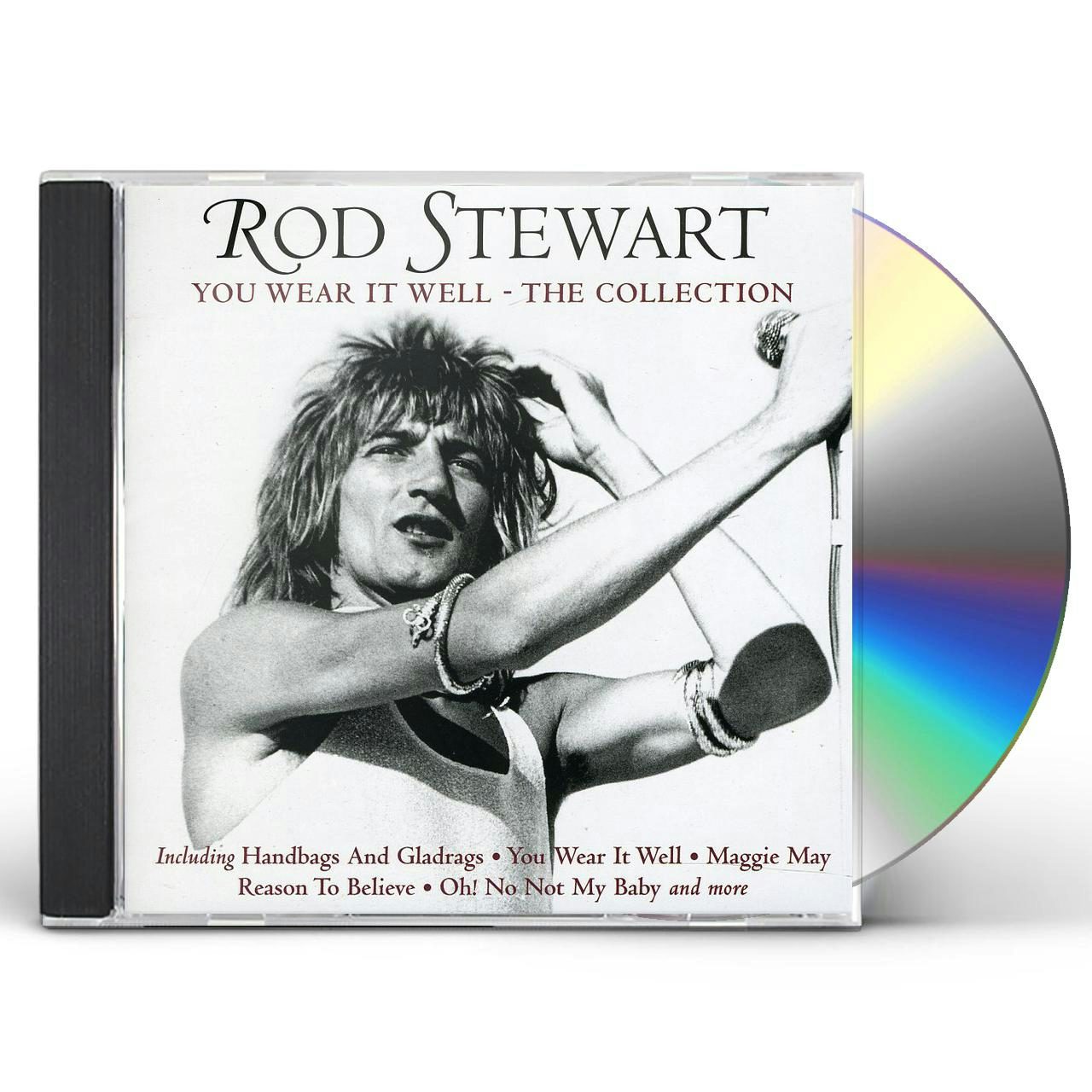
Rod Stewart has a way of making regret sound like a sunny afternoon. Most rock stars from the seventies were busy singing about wizards, hard drugs, or trashing hotel rooms, but Rod? He was writing letters. Specifically, a letter to an ex-girlfriend that turned into "You Wear It Well," a song that basically defined the "lovable rogue" persona he’s carried for over five decades.
Honestly, if you listen to it today, it feels less like a dusty relic and more like a masterclass in how to be a gentleman after a breakup. Sorta.
Released in August 1972, "You Wear It Well" wasn't just a hit; it was a statement. It shot straight to number one in the UK and cracked the top 20 in the US. People often call it the "sequel" to "Maggie May," and they aren't totally wrong. It has that same DNA—the raspy vocals, the acoustic strumming, and that signature Martin Quittenton guitar work. But where "Maggie May" was about a messy, slightly predatory fling, "You Wear It Well" is about growth. It’s about looking at someone you once loved and realizing they’ve turned into something spectacular without you.
The Story Behind the Lyrics (It’s Not What You Think)
There’s this common misconception that "You Wear It Well" is just about a woman looking good in a dress. That’s a massive oversimplification. The lyrics are actually framed as a letter—Rod’s character is sitting down on a "hot afternoon" because he has nothing better to do. He’s been meaning to call from Minnesota, but time slipped away.
It’s incredibly mundane, which is why it works.
He mentions "basement parties" and "brothers' karate." These aren't the lyrics of a rock god; they’re the memories of a guy who grew up in North London. The brilliance of the song lies in the line: "The homesick blues and the radical views haven't left a mark on you." He’s saying that despite the chaos of life, she’s still herself. She’s kept her soul intact.
That Jackie Onassis Reference
One of the most famous lines in the song is "Madame Onassis got nothing on you." In 1972, Jackie Kennedy Onassis was the absolute peak of global style and grace. By comparing his ex-flame to the most famous woman in the world, Rod wasn't just being complimentary—he was being slightly defiant. He’s telling this girl that even though she’s "a little old-fashioned," she’s got more class than a billionaire socialite.
Why the Music Sounds So "Loose"
If you watch the old Top of the Pops performances of this track, it looks like a chaotic party. You’ve got The Faces—Ronnie Wood, Ian McLagan, Kenny Jones, and Ronnie Lane—all onstage together. They weren't even the ones who recorded the studio version (mostly), but they made it their own.
The studio track actually features:
- Martin Quittenton: The secret weapon on acoustic guitar.
- Dick "Tricky Dicky" Powell: The man responsible for that soaring, heartbreaking fiddle solo.
- Micky Waller: Playing the drums with a "heavy snare" feel that Rod loved.
Rod once admitted he was obsessed with the combination of acoustic instruments and a loud, obtrusive drum beat. It creates this "folk-rock-soul" hybrid that nobody has ever quite replicated. It sounds expensive but feels like it was recorded in a kitchen. That’s the magic.
The "Maggie May" Problem
Critics often bash "You Wear It Well" for being too similar to "Maggie May." Rod himself admitted he was aware of the similarities. Same key, same tempo, similar structure. But here’s the thing: "You Wear It Well" is actually the better-written song.
In "Maggie May," the narrator is a bit of a victim, complaining about being used. In "You Wear It Well," the narrator takes the blame. "But I blew it without even trying," he sings. There’s a self-awareness there that was rare for 27-year-old rock stars in the seventies. It’s a song about a guy who knows he had a good thing and let it go, yet he’s happy to see her thriving anyway.
How to Channel that Rod Stewart Style Today
Rod Stewart didn't just sing about wearing it well; he lived it. He was a pioneer of the "Mop Top meets Glam" look. If you want to capture that 1972 energy, you don't need a leopard print spandex suit (save that for his 80s era).
Think about the "Suedehead" transition. Rod was a Mod at heart. He loved sharp tailoring, but he’d mess it up with a messy haircut and a couple of unbuttoned shirts. It’s about the "relaxed dandy" vibe. He once said his father told him, "Others may come and others may go, but that suit will be around wherever you go."
Practical ways to "wear it well" in the modern age:
- Mix textures: Pair a rugged denim or leather jacket with a high-quality silk scarf or a crisp button-down.
- Confidence over trends: Rod’s lyrics literally say, "a little outta time, but I don't mind." If you love a piece of clothing, wear it until it becomes your signature.
- The "Birthday Gown" Rule: In the song, he buys her a gown that "didn't cost the earth" but made her feel like a millionaire. Quality and fit always beat a designer label.
The Lasting Legacy of Never a Dull Moment
"You Wear It Well" was the lead single from the album Never a Dull Moment. This was the peak of Rod’s "dual career." He was a solo superstar and the frontman of The Faces at the same time. It’s a feat that almost no one else has managed. Usually, the band gets jealous, or the solo career flops. Rod made both feel essential.
The song has been covered by everyone from the Mekons to Ali Campbell and even The Black Crowes. Why? Because the sentiment is universal. Everyone has that one person they haven't talked to in years, someone they still think of fondly when the "sun goes low."
What We Can Learn from Rod
The song teaches us that nostalgia doesn't have to be depressing. You can miss someone and still celebrate their success. You can admit you "blew it" without being a "sinking" mess.
If you’re looking to dive deeper into this era of music, don't just stop at the greatest hits. Listen to the full Never a Dull Moment album. It’s got a cover of Sam Cooke’s "Twistin' the Night Away" that will make you want to break furniture, and soulful ballads that show why Rod is one of the greatest interpretive singers in history.
To truly appreciate the song, find the live 1972 BBC footage. You’ll see Rod holding a piece of paper because he hadn't fully memorized the lyrics yet. It’s raw, it’s slightly unprofessional, and it’s perfect. That’s the "Wear It Well" philosophy: life is messy, your coffee gets cold, and you might forget the words, but as long as you have soul, you’re doing just fine.
To apply this to your own life, start by revisiting a classic hobby or a style choice you abandoned because you thought it was "out of date." As Rod proved, being a little old-fashioned is usually the secret to being timeless. Focus on the pieces of your life—and your wardrobe—that make you feel like a millionaire, regardless of what they cost. That is how you truly wear it well.



