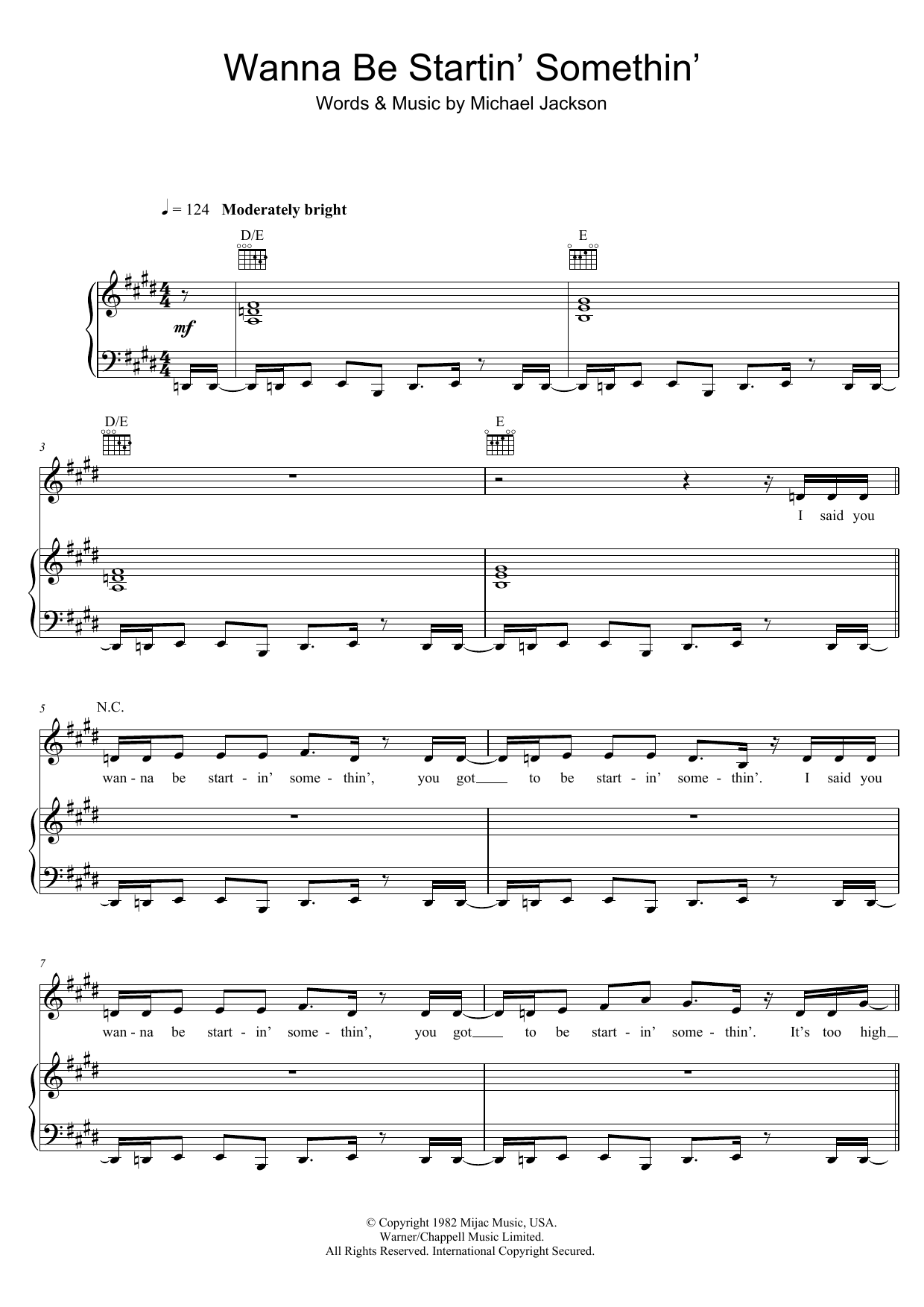
If you’ve ever found yourself screaming "Ma-ma-se, ma-ma-sa, ma-ma-ko-ssa" at the top of your lungs in a crowded bar or at a wedding, you’re not alone. Most people do. But if you actually look at the you wanna be startin somethin lyrics, you’ll realize this isn't just a fun dance track. It’s actually a pretty paranoid, aggressive, and deeply personal venting session from Michael Jackson.
Released in 1983 as the opening track for Thriller, this song sets a weird tone. It’s funky, sure. But the words? They’re biting. Michael was dealing with the sudden, suffocating weight of global superstardom, and he decided to put his frustrations with the press and the rumor mill directly into the groove.
The Chaos Behind the Rhythm
People usually get lost in the bassline. I get it. Quincy Jones and Michael crafted a beat that’s basically impossible to sit still to. However, when you dig into the you wanna be startin somethin lyrics, the theme is gossip. Pure, toxic gossip.
The song kicks off with a warning. He’s talking to someone who is constantly stirring the pot. He mentions "tellin' lies" and how "your tongue is like a razor." It’s a direct shot at the people in his life—and the media—who were trying to profit off his name. By 1982, the press was already starting to scrutinize his changing appearance and his private life. This song was his first real "leave me alone" anthem, long before he actually wrote a song called "Leave Me Alone."
Think about the line: "You're a vegetable, you're a vegetable / They'll eat off of you, you're a vegetable."
That is dark. It’s a metaphor for being a commodity. If you’re a vegetable, you’re just sitting there, helpless, while people pick at you for sustenance. Michael felt like the world was eating him alive. He wasn't just singing about a random person at a club; he was singing about his own survival in the industry.
Billie Jean and the Family Drama
One of the most fascinating parts of the you wanna be startin somethin lyrics is the bridge. He actually references "Billie Jean."
"Billie Jean is always talkin' / When nobody else is talkin' / Tellin' lies and rubbin' it in / So let it begin."
This creates a shared universe between the songs on Thriller. It suggests that the woman claiming he was the father of her child (the central theme of the track "Billie Jean") was part of a larger network of people trying to bring him down. He’s essentially saying that the drama doesn't stop with one person; it’s a systemic issue.
There’s also a lot of talk about family. "You got my baby mentionin' / You're tryin' to get a kiss on it." It’s chaotic. It feels like a frantic phone call or a private argument caught on tape. Michael often wrote about the pressure of his family life, and while he remained loyal to the Jackson name, the lyrics hint at the friction that comes when everyone wants a piece of the success.
The Soul of the Chant: Manu Dibango and the Makossa
You can't talk about these lyrics without addressing the "Ma-ma-se" part. For decades, fans sang whatever they thought they heard. "Mama say mama sa mama coo-sah."
It sounds like gibberish to the untrained ear, but it’s actually a lifted and modified chant from the 1972 song "Soul Makossa" by Cameroonian saxophonist Manu Dibango. The original line is "Makossa," which means "dance" in the Duala language.
Michael didn't initially clear this with Dibango. It led to a massive legal headache. Dibango eventually sued, and they settled out of court. Decades later, Rihanna sampled the same line in "Don't Stop the Music," and Dibango sued again because she had cleared it with Michael’s estate but not with him. The history of those five words is as complicated as the rest of the song's lyrics.
When Michael sings it, it’s a release. The tension of the verses—the talk of razors, vegetables, and lies—all breaks down into this rhythmic, tribal-style chant. It’s where the paranoia turns into power.
Why the Lyrics Still Hit Different
Social media has made this song more relevant than it was in the eighties. Honestly.
Back then, you had to be a superstar to feel the "tongue like a razor." Now? Anyone with a Twitter account or a TikTok profile understands what it’s like to have people "startin' somethin'" for no reason. The "vegetable" metaphor applies to anyone whose life is being consumed by an audience.
Michael was writing about a specific type of celebrity trap, but he accidentally wrote the anthem for the digital age. "Too high to get over / Too low to get under" is a classic line about being stuck in a situation where there’s no easy exit. You’re trapped in the middle of the "somethin'" that’s been started.
The song is over six minutes long on the album. That’s a long time for a pop song. But it needs that time to work through the anxiety of the lyrics. By the time the horns come in for the big finale, the lyrics have moved from complaining about gossip to a sort of spiritual endurance test.
Practical Takeaways for Jackson Fans
If you’re looking to truly appreciate the song beyond just the beat, here’s how to approach it:
- Listen for the "Billie Jean" connection. Notice how he connects his various antagonists into one "plot" against him.
- Watch the live performances. Michael usually performed this as the opener for his solo tours. Look at his face during the "vegetable" lines—there’s a genuine intensity there that isn't just "acting."
- Check out "Soul Makossa." To understand the DNA of the you wanna be startin somethin lyrics, you have to hear where that chant came from. It puts the global influence of the track into perspective.
- Analyze the structure. The song doesn't have a traditional chorus-verse-chorus feel; it’s a building crescendo. It mirrors a panic attack that turns into a celebration.
The song ends with a plea: "Help me sing it." He doesn't want to be in the drama alone. He wants the audience to carry the weight of the "Ma-ma-se" chant with him. It’s an invitation to turn the noise of the world into music. Next time you hear it, remember it’s not just a party song—it’s a survival guide.
To dive deeper into the technical side of the production, look into Bruce Swedien’s "Acusonic" recording process used on Thriller. It explains why the percussion sounds like it’s happening right inside your ears, making the lyrics feel even more urgent and intimate. You can also explore the 2008 Thriller 25 remix featuring Akon, which tried to modernize the lyrics for a new generation, though many purists argue it lost the raw "razor-tongue" edge of the 1982 original.



