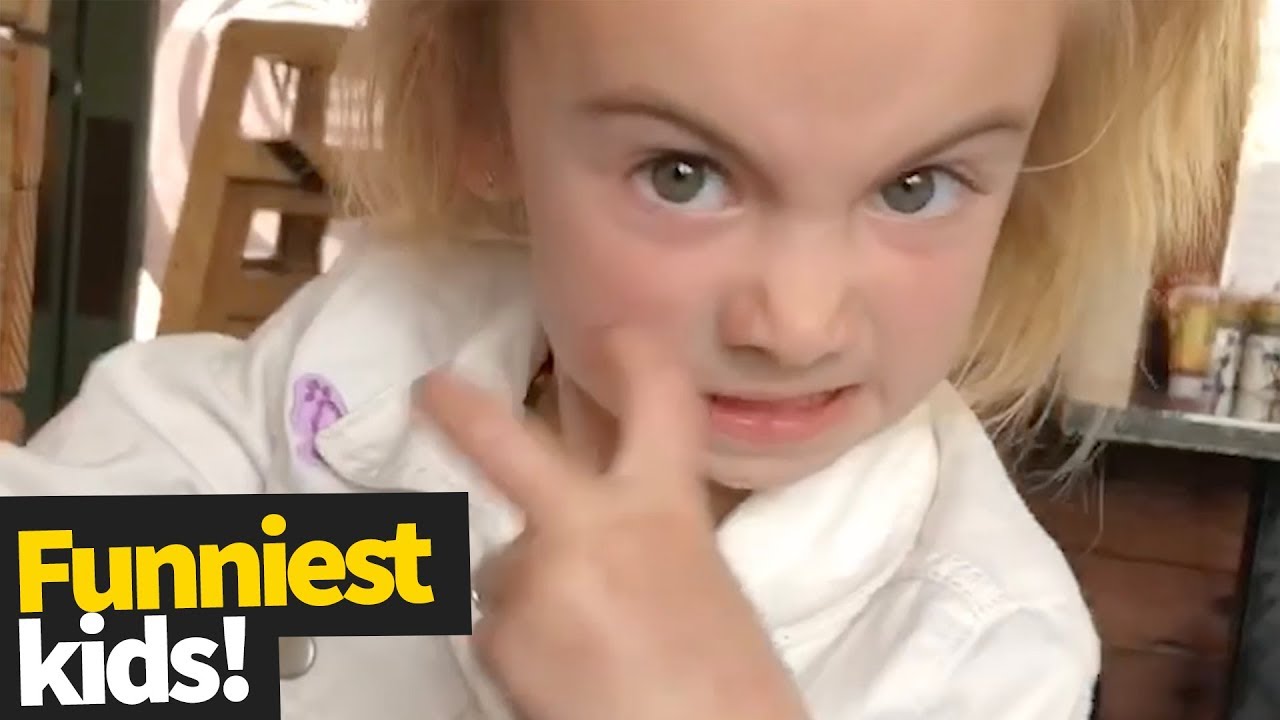
It happens at almost every family gathering. You’re sitting there, maybe nursing a drink or checking your phone, and your aunt leans over to remind everyone that you used to be the funniest little kid. She isn’t just being nice. She’s recalling a version of you that was unfiltered, physically reckless, and possessed a comedic timing that you couldn’t replicate now if your life depended on it.
Why does that sting?
It’s because we know it’s true. Kids are naturally hilarious. They don’t have a "bit." They don't have a brand. They just have a complete lack of shame and a brain that hasn't yet been crushed by the weight of social expectations or professional decorum. We lose that. We exchange our "class clown" energy for LinkedIn endorsements and "per my last email" professionalism.
The Science of Why You Used To Be The Funniest Little Kid
To understand why your comedic peak happened at age six, you have to look at how a child’s brain actually functions. According to research from the Association for Psychological Science, children don't have a fully developed prefrontal cortex—the part of the brain responsible for impulse control and social monitoring.
Think about that.
Essentially, a kid is a tiny, walking "Yes, And" machine. When you were little, you didn't overthink the punchline. You just did the weird dance. You said the blunt truth about how the neighbor’s hair looked like a bird's nest. You were funny because you were honest.
Adults, conversely, are terrified of being "cringe." Dr. Robert Provine, a neuroscientist who spent decades studying laughter, famously noted that most adult laughter isn't even about jokes—it's about social bonding and signaling. We laugh to fit in. Kids laugh because something is genuinely absurd. When people say you used to be the funniest little kid, they are mourning the loss of your authenticity.
The Benign Violation Theory in Action
Peter McGraw, a professor at the University of Colorado Boulder and founder of the Humor Research Lab (HuRL), developed the "Benign Violation Theory." It suggests that humor occurs when something seems wrong, unsettling, or threatening (a violation), but is actually safe (benign).
Kids are the masters of this.
A toddler wearing their dad's giant work boots is a violation of the "correct" way to dress, but it's benign because it's a cute baby. A five-year-old asking a priest why he’s wearing a "dress" is a social violation, but it’s benign because the child doesn’t know better. As you grew up, the "benign" window shrank. Now, if you do something weird, people just think you're having a breakdown.
Where the Funny Went: The Socialization Trap
School is basically a twelve-year program designed to make you less funny.
Think about it.
You’re told to sit still. You’re told to stop "disrupting the class." You’re graded on your ability to follow instructions, not your ability to find the absurdity in a geometry proof. By the time you hit high school, humor becomes a defense mechanism rather than a pure expression of joy. You start using sarcasm to protect yourself.
The transition is subtle. You stop being the kid who does a silly voice just to hear how it sounds and start being the adult who only makes jokes that they know will "land." You become a curator of your own personality. Honestly, it's exhausting.
The Impact of "Professionalism"
In the modern workplace, humor is often treated like a liability. We've all seen the HR training videos. We know that one misstep can lead to a meeting in a glass-walled office. So, we play it safe. We use "corporate speak." We send emojis instead of taking actual risks.
But here’s the kicker: people who keep that "funniest little kid" energy actually do better. A study published in the Harvard Business Review found that leaders with a sense of humor are 27% more motivating than those who are purely "serious." Being funny isn't just about being a clown; it’s about being human.
How to Reclaim Your Title as the Funniest Person in the Room
If you're tired of hearing that you used to be the funniest little kid, it’s time to stop trying so hard. You don't need to take a stand-up comedy class (unless you want to, but those can be hit or miss). You just need to de-program.
1. Re-embrace the Absurd
Kids find the world weird because it is weird. We’ve just grown accustomed to it. Look at the mundane details of your life—the way we all stand in elevators staring at the floor, the strange phrases we use in meetings—and acknowledge how bizarre they are.
2. Lower the Stakes
The reason you were funny at seven was that you didn't care if the joke failed. If you fell over and no one laughed, you just got up and tried something else. Adult humor is often paralyzed by the fear of a "tough crowd." Stop caring.
3. Lean Into "Low-Status" Humor
High-status humor is about mocking others. Low-status humor is about mocking yourself. Kids are naturally low-status because they are small and don't know anything. When you can laugh at your own mistakes or your own "uncool" tendencies, you bridge the gap between your adult self and that kid you used to be.
The Physicality of Childhood Humor
We often forget how much of childhood humor was physical. It wasn't about witty wordplay; it was about the "funny walk" or the sudden, dramatic fall.
As we age, we become disconnected from our bodies. We sit in chairs for eight hours. We move in straight lines. To be funny again, you have to move again. You don't have to do a pratfall in the grocery store, but allowing yourself to be expressive with your gestures and facial expressions goes a long way.
Why Gen Z is Bringing the "Little Kid" Energy Back
There’s a reason "brain rot" humor and surrealist TikToks are so popular right now. They mimic the chaotic, nonsensical energy of a child's imagination. It's a rejection of the polished, "perfect" millennial aesthetic. It’s loud, it’s weird, and it doesn’t always make sense.
If you want to be funny again, look at how the younger generations use humor. They aren't afraid to look "stupid." They embrace the "cringe." That is exactly what you did when you were the kid everyone thought was hilarious.
The Real Value of Being the "Funniest Little Kid"
Ultimately, being "the funny kid" wasn't about the laughs. It was about connection. It was about making the people around you feel lighter.
When your family tells you that you used to be the funniest little kid, they are telling you they miss your spark. They miss the version of you that wasn't worried about taxes or politics or whether their hair looked okay in the Zoom preview.
Reclaiming that doesn't mean you stop being an adult. It just means you stop being a boring one.
Actionable Steps to Rediscover Your Humor
To move forward, stop looking at humor as a skill and start looking at it as a mindset. Here is how you can start today:
- Audit your "Professional Voice": Look at your last five emails or texts. How much of that is "you" and how much of it is a script? Try adding one sentence of genuine, human personality to your next interaction.
- Consume Different Comedy: If you only watch one type of stand-up, you'll start to mimic that formula. Watch something completely out of your wheelhouse—silent comedies, international physical humor, or even just old home videos of yourself.
- Practice Active Observation: Carry a small notebook or use a notes app. Don't write down "jokes." Write down things that made you go "Wait, why do we do that?"
- Play More: Whether it's a board game, a sport, or just playing with a pet, "play" is the sandbox where humor is born. You cannot be funny if you are constantly in "productive" mode.
The funniest version of you isn't dead. It's just buried under several layers of "adulthood." You don't have to dig very deep to find it again. Just remember the kid who wore the bucket on their head and thought they were a king. That kid is still in there, waiting for you to stop taking everything so seriously.
Next Steps for Your Personal Growth:
- Recall Your "Greatest Hits": Sit down and write out the three funniest things you did as a child. Ask your parents or siblings if you can't remember. Identifying these themes (was it physical? was it wordplay?) helps you see your natural comedic "voice."
- The "No-Filter" Hour: Once a week, spend one hour with someone you trust where you agree to say exactly what you're thinking (within reason) without polishing it for social acceptance. It’s like a workout for your authenticity.
- Physical De-Conditioning: Take a movement class—improv, dance, or even just stretching. Reconnecting with how your body moves helps break the rigid physical patterns that stifle spontaneous humor.
By deliberately practicing these shifts, you move away from being the person who "used to be" funny and start becoming the person who is funny, right now. Humor is a muscle. If you don't use it, it atrophies, but the "muscle memory" from your childhood is still there.
Stop trying to be clever. Start trying to be real. The laughs will follow naturally.



