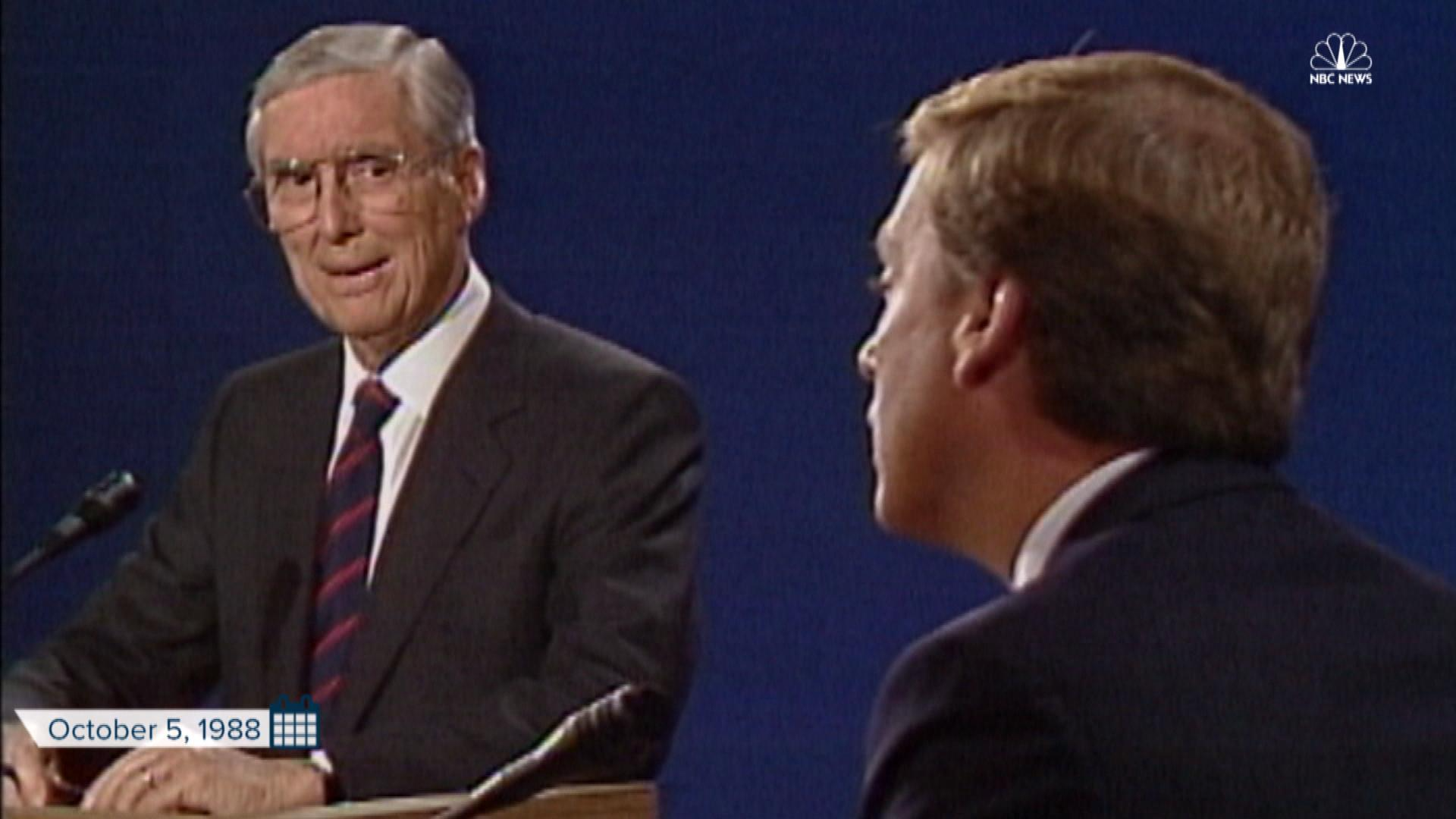
It was October 5, 1988. Omaha, Nebraska. The air inside the Civic Auditorium was thick with the kind of tension you only get when two people who genuinely dislike each other are forced to stand six feet apart and pretend to be polite.
Lloyd Bentsen, the seasoned Senator from Texas, sat on one side. Dan Quayle, the young, boyish Senator from Indiana, sat on the other.
Quayle was under fire. People thought he was too young. Too green. Throughout the campaign, he had been trying to swat away these concerns by comparing his experience level to that of John F. Kennedy when JFK ran for president in 1960. It was a calculated move, but it was also a massive gamble.
Then it happened.
The moderator asked about his qualifications. Quayle gave his rehearsed answer. He mentioned Jack Kennedy. Bentsen didn't even wait for him to finish before he leaned in, his voice dripping with a mix of practiced calm and genuine disdain.
"Senator, I served with Jack Kennedy. I knew Jack Kennedy. Jack Kennedy was a friend of mine."
He paused. The timing was lethal.
"Senator, you sir are no jack kennedy."
The crowd erupted. It wasn't just a burn; it was a political execution on live television. Even decades later, that single sentence remains the gold standard for how to dismantle an opponent without raising your voice.
Why the Kennedy Comparison Backfired So Badly
Quayle wasn't technically wrong about the numbers. When Kennedy ran, he had about the same amount of time in Congress as Quayle did in 1988. But politics isn't about math. It's about optics and "the feel."
By 1988, JFK wasn't just a former president; he was a martyr and a legend. He was the "Camelot" era personified. For a 41-year-old Quayle to put himself in that same bracket felt arrogant to a lot of voters. It felt unearned.
Bentsen knew this. He was 67 years old. He actually did know Kennedy. He had that "elder statesman" gravity that Quayle simply couldn't manufacture with a haircut and a suit.
The Setup and the Sting
If you watch the footage today, you can see Quayle’s face drop. He looks like a student who just got scolded by the principal in front of the whole school. He tried to reclaim the high ground by saying Bentsen's remark was "uncalled for," but the damage was done.
The soundbite was played on every news cycle for weeks. It became a meme before memes existed. It was the ultimate "sit down, kid" moment in American history.
The Anatomy of a Perfect Political Takedown
What makes you sir are no jack kennedy so effective? It’s the simplicity.
Most politicians use ten words when one would do. They couch their insults in "my esteemed colleague" or "with all due respect." Bentsen went for the jugular. He used a three-part rhetorical structure—often called a tricolon—to build the pressure before releasing the final blow.
- I served with Jack Kennedy. (Establishing Authority)
- I knew Jack Kennedy. (Establishing Personal Connection)
- Jack Kennedy was a friend of mine. (The Emotional Anchor)
By the time he got to the punchline, the audience was already primed. It felt like a verdict rather than an opinion.
Kinda makes you wonder how today's politicians would handle it. Honestly, in the age of Twitter (X) and TikTok, a line like that would have 100 million views before the debate even ended. But back then, it had to travel through the nightly news, which arguably gave it more staying power. It wasn't just a fleeting viral moment; it became part of the cultural fabric.
Did it Actually Change the Election?
Here is the weird part that most people forget: George H.W. Bush and Dan Quayle actually won the 1988 election. Big time.
They took 40 states.
So, while Bentsen won the debate, his ticket (with Michael Dukakis) lost the war. This teaches us something pretty vital about political debates. A "knockout blow" is great for the history books, but it rarely flips a massive lead. Bush was already ahead in the polls because the economy was doing okay and people generally liked the Reagan years.
However, the quote defined Dan Quayle for the rest of his career. He became a punchline for late-night talk show hosts. Every mistake he made after that—like the infamous "potatoe" incident at a spelling bee—was viewed through the lens of being "unqualified."
Once you are labeled as "no Jack Kennedy," it’s hard to ever be seen as a heavyweight again.
The Long Shadow of Omaha
We see echoes of this moment in every modern debate. When Kamala Harris went after Joe Biden in the 2019 primaries regarding busing, or when Reagan joked about his opponent's "youth and inexperience" in 1984, they were all chasing that Bentsen magic.
But you can't force it.
If Bentsen had missed his mark, or if his voice had cracked, he would have looked like a mean old man. Instead, he looked like the adult in the room.
Lessons for Communicators
There is a lot to learn here, even if you aren't running for Vice President.
- Know your standing: Don't compare yourself to giants unless you are ready for the blowback.
- Wait for the opening: Bentsen didn't interrupt; he waited for the specific word "Kennedy" to leave Quayle's mouth.
- Brevity is power: The longer the sentence, the weaker the insult.
What Most People Get Wrong About the Quote
People often think Bentsen was being spontaneous. He wasn't.
His campaign team knew Quayle had been using the JFK line on the stump for weeks. They had literally rehearsed a response. Bentsen was waiting for it. He had the "spontaneous" retort tucked in his pocket like a hidden ace.
That’s the secret of great debating. The best "unscripted" moments are almost always the result of intense preparation and understanding your opponent's patterns.
Actionable Takeaways from the Bentsen-Quayle Moment
If you want to apply the "Bentsen Method" to your own high-stakes conversations or public speaking, keep these things in mind:
Identify the "Comparison Trap" Whenever an opponent or competitor compares themselves to a gold standard, they are creating a vulnerability. If they say "We are the Apple of our industry," and they aren't, that is your opening. You don't need to be mean, but pointing out the gap in reality is incredibly effective.
Master the Power of the Pause Bentsen’s delivery was successful because of the silence. He let the "friend of mine" line hang in the air for just a second too long. It made the room go quiet. Use silence to emphasize your most important points.
Focus on Ethos The quote worked because Bentsen had the "ethos" (credibility). If a younger, less experienced person had said it, it wouldn't have landed. Always speak from your own area of authority. Bentsen spoke as a contemporary of JFK, which gave him the "right" to protect Kennedy's legacy.
Prepare for the Predictable Pay attention to the stories your "opponent" (whether a business rival or a debating partner) tells repeatedly. If they have a go-to anecdote, craft a counter-narrative for it. Don't let them use their favorite weapon twice.
The "No-Go" Zone Notice that Bentsen didn't attack Quayle's family or his character directly. He attacked his comparison. It’s a subtle difference, but it’s why the line is remembered as "tough but fair" rather than "dirty." Keeping your critiques focused on the argument rather than the person (ad hominem) keeps the audience on your side.
Next time you're in a situation where someone is overreaching or trying to claim a status they haven't earned, remember the 1988 Vice Presidential debate. You don't need a 20-minute presentation to win an argument. You just need the right ten words at the exact right moment.