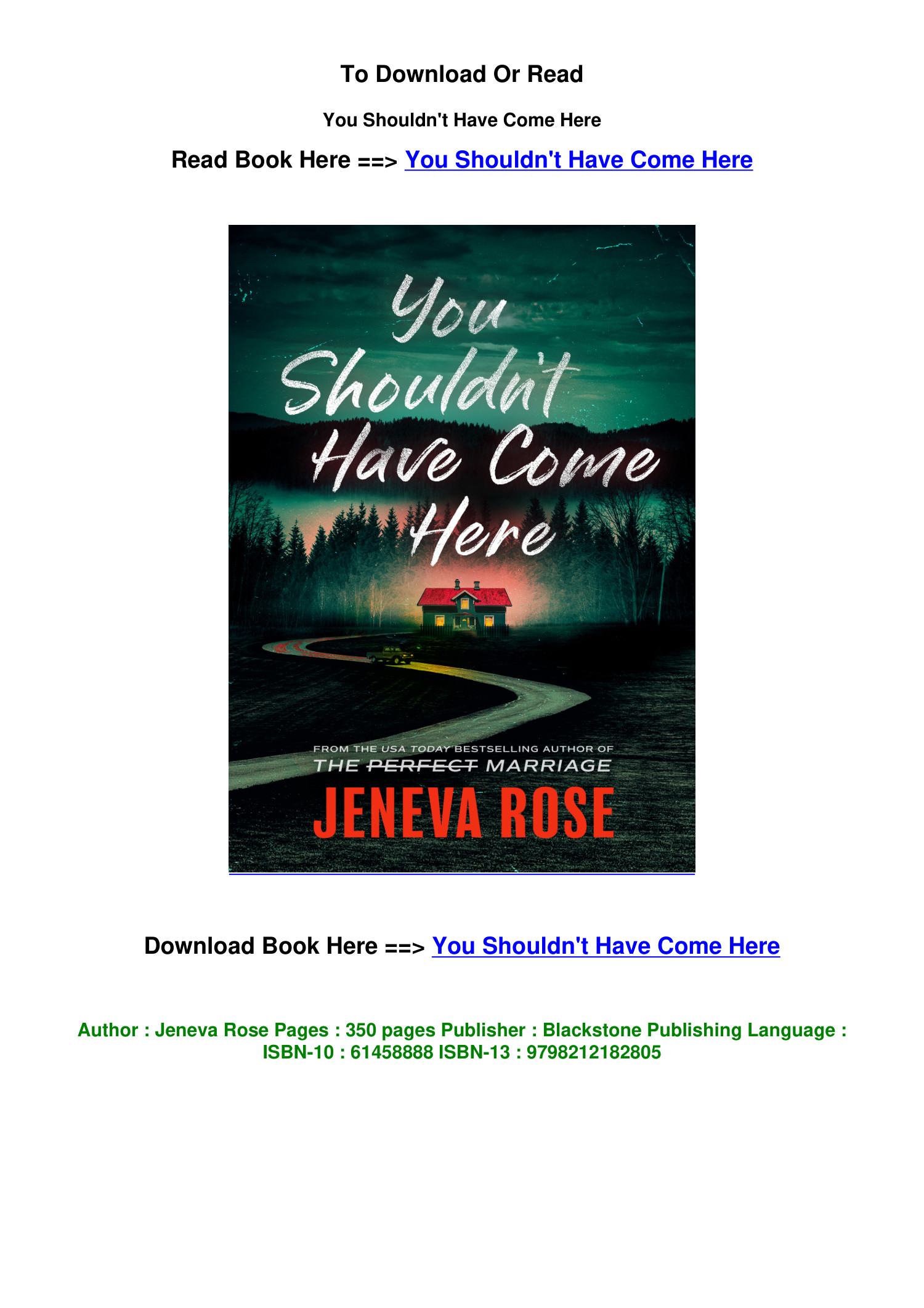
You hear it, and you know you're in trouble. It’s usually delivered by a ragged local at a gas station that shouldn't exist, or perhaps whispered by a ghost in a hallway that stretches just a little too far. You shouldn't have come here isn't just a line of dialogue. It’s a structural pivot point in storytelling. It marks the exact moment the protagonist—and the audience—realizes the door has locked behind them.
Honestly, it’s kind of a cliché at this point. But it works. Every single time.
Why? Because it taps into a primal human fear: the realization of a massive, irreversible mistake. We've all felt that sinking pit in our stomach when we realize we’ve walked into a situation we aren't equipped to handle. In movies, books, and video games, this phrase serves as the verbal equivalent of a "Point of No Return" sign. It shifts the narrative from exploration to survival.
The Mechanics of a Warning
Most people think this line is just lazy writing. I'd argue it's actually a masterclass in tension if used correctly. Take The Texas Chain Saw Massacre (1974) or even modern iterations like Resident Evil 7. The warning often comes from someone who is already a victim of the location. They aren't threatening you; they are mourning you.
That’s the nuance.
When a villain says "you shouldn't have come here," it’s a boast. It’s an assertion of power. But when a terrified NPC or a side character says it, it’s a eulogy. It implies that the environment itself is the predator. The location is no longer a backdrop—it’s the antagonist. Think about the "Old Man" trope in horror cinema. This character, often referred to as the "Harbinger" by scholars like Carol Clover (who famously coined the term "Final Girl"), exists solely to deliver the you shouldn't have come here sentiment.
They provide the audience with dramatic irony. We know the danger. The protagonist doesn't. We watch them walk into the trap anyway.
Why the Human Brain Craves This Conflict
There is a psychological reason we keep coming back to stories built around this premise. It’s called "benign masochism." We enjoy the controlled experience of threat. When a character is told they shouldn't have come to a specific place, it triggers our sympathetic nervous system. Our heart rate climbs. Our palms get sweaty.
But we’re safe on our couch.
Evolutionarily, we are wired to pay attention to warnings. If a member of the tribe returned from a cave and said, "Don't go there," you listened. Survival depended on it. In fiction, when a character ignores the you shouldn't have come here warning, it creates a "Darwin Award" effect. We feel superior to the character, yet we're also terrified for them because we recognize the hubris. It’s a weird mix of emotions.
Common Variations of the Trope
- "Turn back while you still can." (The Classic)
- "This place is cursed/hallowed ground." (The Supernatural Twist)
- "We don't like outsiders." (The Folk Horror Special)
- "I told you to leave." (The "I-told-you-so" Villain)
Breaking Down the "You Shouldn't Have Come Here" Impact in Gaming
Video games handle this better than movies sometimes. In a movie, you're a passive observer. In a game like Skyrim or Dark Souls, you are the one who walked into the room.
When an NPC yells "You shouldn't have come here!" right before attacking, it serves a mechanical purpose. It's a combat bark. It’s meant to startle you. But in environmental storytelling, it’s more subtle. You might find a bloody note on a desk that simply reads: I shouldn't have come here. That hits different.
It forces the player to wonder what the previous person saw. It turns the player's curiosity into a liability. In games like Amnesia: The Dark Descent, the entire game is a slow-burn realization that your presence in the castle is the very thing causing the horror. You are the catalyst. You shouldn't have come here, but you did, and now the world is breaking because of it.
The Folk Horror Revival
We're seeing a massive resurgence of this trope in "Folk Horror." Think of movies like Midsommar or The Ritual. These stories rely heavily on the idea of the "Outsider."
The Outsider enters a closed ecosystem. A village, a cult, a hidden valley. The residents have their own rules. The phrase you shouldn't have come here is often subverted in these films. Instead of saying it out loud, the locals might be incredibly welcoming. Too welcoming. The warning is silent. It’s in the way they look at the protagonist.
The audience is screaming the line at the screen, but the character is busy eating elderflower jam.
It’s Not Just Horror: The Action Twist
Believe it or not, this phrase shows up in action cinema constantly. But the power dynamic is flipped. When John Wick walks into a room and someone says "You shouldn't have come here," the irony is that the speaker is the one in danger.
It’s a trope that measures the "Threat Level" of a character. If a low-level thug says it to a legendary assassin, it tells the audience the thug is overconfident and about to die. It’s a tool for establishing stakes. It sets the ceiling for the upcoming conflict.
How to Write This Without Being Cringe
If you’re a writer, you might be worried that using this line makes you look like a hack. Sorta true, but only if you use it literally.
Expert writers use the subtext of the phrase without actually saying the words. Instead of a character saying "You shouldn't have come here," they might show the protagonist finding a pair of shoes that look exactly like theirs—already worn and abandoned by a previous "visitor."
Show, don't tell.
The most effective version of this trope is when the protagonist says it to themselves. That moment of self-reflection—"I shouldn't have come here"—is where true character growth (or collapse) happens. It’s the admission of regret. It’s the moment the hero realizes they aren't the hero; they’re just another person who made a bad choice.
Real-World Psychology: The "Trespasser" Feeling
Have you ever accidentally walked into a private event? Or maybe you wandered into a part of a city where you felt out of place? That instinctual "I shouldn't be here" is one of our strongest social and survival cues.
Sociologists call this "situational awareness." It's the ability to read the room. Horror stories take this everyday anxiety and amplify it. They take that feeling of being a "trespasser" and add a supernatural or violent consequence to it.
The reason you shouldn't have come here resonates so deeply is that it touches on our social anxiety as much as our fear of death. We hate being somewhere we aren't wanted. We hate being the "other."
The Evolution of the Warning
Back in the 80s, these warnings were literal. Think of the "Crazy Ralph" character in Friday the 13th. He literally stops the kids to tell them they're doomed.
Modern audiences are more cynical. We need the warning to be baked into the atmosphere. Look at The Last of Us. The warning isn't always spoken. It’s in the overgrown vines, the spores in the air, and the silence of a city that should be loud. The environment screams "you shouldn't have come here" through visual design alone.
This is the peak of the trope. When the world itself rejects the protagonist.
Applying This to Your Creative Work
If you want to use the you shouldn't have come here energy in your own projects, focus on the "Lag Time." That’s the gap between the character realizing they're in danger and the danger actually arriving.
The best tension lives in that gap.
Don't have the monster jump out immediately after the warning. Let the character sit with the realization. Let them try to leave and find the exit blocked. Let them wonder if the warning was a joke—until it clearly isn't.
Actionable Insights for Storytellers:
- Subvert the Messenger: Don't use a creepy old man. Have a child or a person in a position of authority deliver the warning. It's more jarring.
- Change the Timing: Don't give the warning at the entrance. Give it when the character is already deep inside, making the escape feel impossible.
- Use Visual Cues: A "Keep Out" sign is boring. A row of abandoned cars with the keys still in the ignition is a much louder way of saying you shouldn't have come here.
- Internalize the Warning: Make the protagonist realize they've brought the danger with them. The location isn't the problem; they are.
The phrase is a legacy. It’s a bridge between the campfire stories of our ancestors and the high-budget horror of today. It reminds us that there are still places in the world—and in our minds—that remain off-limits.
Next time you're watching a movie and someone says it, don't roll your eyes. Pay attention to what happens next. The story is about to actually begin.
Next Steps for Deepening Your Understanding:
To truly master the use of suspense and the "Outsider" narrative, analyze the first 20 minutes of The Ritual (2017). Observe how the forest environment slowly communicates the "you shouldn't have come here" message through sound design and shifting geography long before any dialogue confirms it.
Study the "Harbinger" trope in literary criticism to understand why we need these characters to validate our fear. Read The Philosophy of Horror by Noël Carroll. It explains why we find these specific types of "forbidden" narratives so compelling despite our natural aversion to danger.
Finally, practice "Atmospheric Writing." Try to write a scene where a character realizes they are in danger without using a single line of dialogue or a direct threat. Use only the objects in the room and the character's internal sensory reactions to convey the fact that they have made a terrible mistake by entering.



