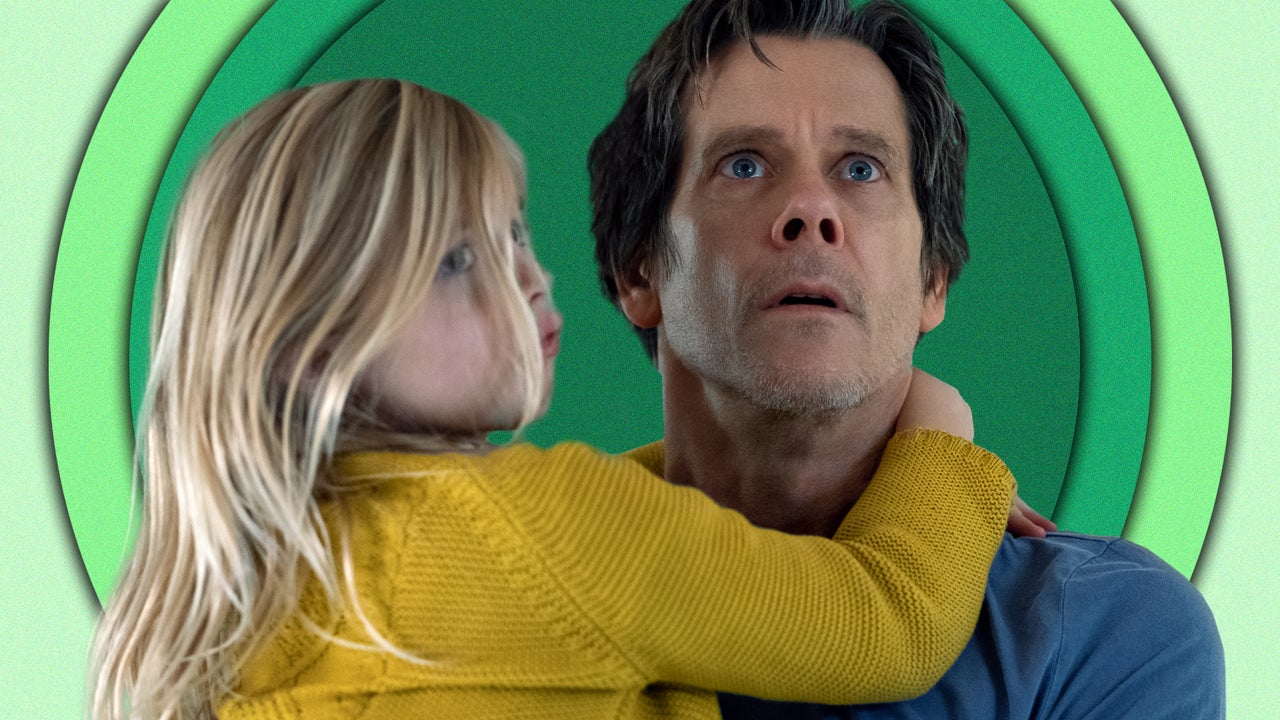
You know that feeling when you walk into a room and completely forget why you’re there? Now, imagine that feeling, but the room itself is shifting six inches to the left every time you blink. That’s the core anxiety of You Should Have Left, the 2020 Blumhouse flick that reunited Kevin Bacon with director David Koepp decades after Stir of Echoes. It didn't get a massive theatrical run because of the pandemic, which is honestly a shame. It’s a movie that rewards a second watch, mostly because it plays with space and guilt in ways that feel way more personal than your average "spooky house" jump-scare marathon.
The plot is deceptively simple. Theo Conroy, played by Bacon, is a wealthy guy with a much younger wife, Susanna (Amanda Seyfried), and a cute daughter named Ella. They’re rich, but they’re miserable. Theo has this massive, dark cloud hanging over him—a past legal scandal involving his first wife’s death. To "fix" things, they rent a stunning, minimalist vacation home in the Welsh countryside. It looks like something out of an architectural magazine. Cold stone, sharp angles, huge windows. But the house is... wrong. It’s bigger on the inside than the outside. Literally.
The Architecture of Guilt in You Should Have Left
Most horror movies use ghosts to explain away the weirdness. A lady in a white dress or a guy with an axe. You Should Have Left does something different. The house isn't just haunted; it's a physical manifestation of Theo’s refusal to face himself. David Koepp, who also wrote the screenplay based on Daniel Kehlmann’s novella, leans heavily into the "uncanny valley" of architecture.
Have you ever measured a wall and found out it doesn't match the one on the other side? Theo does. He discovers a five-foot discrepancy. That’s where the dread starts. It’s not a monster under the bed; it’s the realization that the reality you’re standing on is structurally impossible. It makes you feel nauseous.
The house is a trap. It feeds on the fact that Theo is a "dry drunk" who hasn't actually dealt with his internal rot. Amanda Seyfried’s character, Susanna, provides the perfect foil. She's vibrant, young, and keeping her own secrets—specifically a second phone—but she’s not the one the house wants. The house wants Theo. It wants him because he's already built a prison in his own mind, and the Welsh retreat is just the physical version of that.
Why the "Bigger on the Inside" Trope Works Here
Usually, we see the "infinite house" trope in creepypastas or experimental films like Skinamarink. In You Should Have Left, the impossible geometry is used to isolate the characters. There’s a scene where Theo and Ella are trying to find the exit, and they just keep ending up back in the same hallway. It’s repetitive. It’s frustrating. It mirrors the way Theo keeps replaying the trial in his head.
- The shadows don't fall where they should.
- Light switches operate lights in rooms that shouldn't exist.
- The house literally adds rooms as Theo’s secrets come out.
It’s subtle. Well, at first. Eventually, it gets pretty overt with the "Stetler" character, a mysterious figure who seems to be the landlord or maybe just a version of Theo himself.
Kevin Bacon and the "Complicated Protagonist" Problem
Let's be real: Kevin Bacon is great at playing guys you aren't sure you should like. In You Should Have Left, he’s playing a man who was acquitted of murder but is clearly still "guilty" in the court of public opinion—and his own conscience. You spend half the movie wondering if he’s going to snap.
The chemistry between Bacon and Seyfried is intentionally awkward. There's a massive age gap that the movie doesn't ignore. It uses it. Theo is insecure. He’s checking her iPad, he’s watching her film sets, he’s hovering. He’s a man trying to hold onto a life that’s slipping through his fingers, which makes the house's shifting walls a perfect metaphor. If you can’t trust your wife, and you can’t trust the floor beneath your feet, what do you have left?
Interestingly, critics were divided on this. Some felt the "guilty man in a weird house" thing was a bit cliché. But if you look at the psychological nuances, it's more about the inevitability of consequence. The title isn't just a suggestion; it's a past-tense condemnation. By the time you realize you should have left, you’re already part of the floorboards.
Comparing the Movie to Daniel Kehlmann’s Book
If you haven't read the original novella by Daniel Kehlmann, you're missing out on some even weirder vibes. The book is written as a journal. It’s fragmented. It feels like a descent into madness.
The movie changes a lot. In the book, the protagonist is a screenwriter trying to write a sequel to a comedy. In the film, he’s a retired guy with a dark past. This change makes the stakes feel heavier in the movie, though the book is much more successful at making you feel like the narrator is losing his mind.
The film opts for a more literal interpretation of the "devil's bargain" elements. We see the shadowy figure of Stetler. We see the physical transformations of the house. While the book leaves you wondering if it’s all a mental breakdown, the movie confirms that the house is a supernatural entity. It’s a portal or a purgatory. Or maybe it’s just a place that waits for people who have nowhere else to go.
The Ending Explained (Sort Of)
People always ask about the ending of You Should Have Left. Without spoiling every single beat, it comes down to a choice. Theo realizes he can’t leave. Not because the door is locked, but because he’s the reason the house is acting up.
It’s about self-sacrifice. Or maybe it’s about finally accepting a sentence that he dodged in the real world. When he tells Susanna and Ella to go, he’s finally doing something selfless. It’s the first honest thing he’s done in years. The house stops being a maze for them because the "weight" has been removed. Theo stays because he is the house's business. He belongs there.
Practical Takeaways for Horror Fans
If you're planning to watch—or rewatch—this one, pay attention to the sound design. It’s incredibly dry. There’s a lot of silence. The lack of a swelling orchestral score makes the "creaks" of the house feel much more threatening.
Also, look at the lighting. The house transitions from being bathed in beautiful, natural Welsh sunlight to being a dark, oppressive void. It happens so slowly you almost don't notice the transition until it’s pitch black.
How to Get the Most Out of Your Viewing
- Watch it in the dark. This sounds obvious, but the movie relies on "corner of the eye" movements. If your room is bright, you’ll miss half the scares.
- Look at the background. The filmmakers hid subtle changes in the rooms. Chairs move. Doorways appear where there were solid walls. It’s a bit like a "spot the difference" game that ends with your soul being trapped in Wales.
- Think about the "Stetler" notes. The notes Theo finds aren't just spooky messages. They are warnings he essentially wrote to himself across time.
You Should Have Left isn't the kind of movie that’s going to redefine the genre like Hereditary or Get Out. It’s a tight, 90-minute character study that uses horror as a scalpel. It’s about the fact that we can run halfway across the world to a beautiful house in the mountains, but we’re still bringing all our baggage with us. And sometimes, that baggage is heavy enough to warp the very walls of the place we're staying.
If you’re looking for a film that explores the intersection of architecture and psychology, this is a solid pick. It’s a reminder that the scariest place isn't a basement or a graveyard—it’s the inside of your own head when you’ve done something you can’t take back.
Actionable Next Steps
To truly appreciate the "geospatial horror" subgenre that You Should Have Left occupies, your next moves should be:
- Watch The Night House (2020): It deals with similar themes of architectural anomalies and grief, providing a more supernatural/occult perspective compared to the psychological focus of Bacon's film.
- Read House of Leaves by Mark Z. Danielewski: If the "bigger on the inside" concept fascinated you, this novel is the gold standard for impossible geometry and the mental toll it takes on a person.
- Analyze the "Liminal Spaces" aesthetic: Research why hallways and empty modern houses trigger "Type 2 Fun" (fear that is enjoyable) to understand why the Welsh house in the movie feels so inherently threatening despite being expensive and clean.
- Re-examine Kevin Bacon’s horror filmography: Pair this with Stir of Echoes to see how the actor’s portrayal of a man losing his grip on reality has evolved over twenty years.



