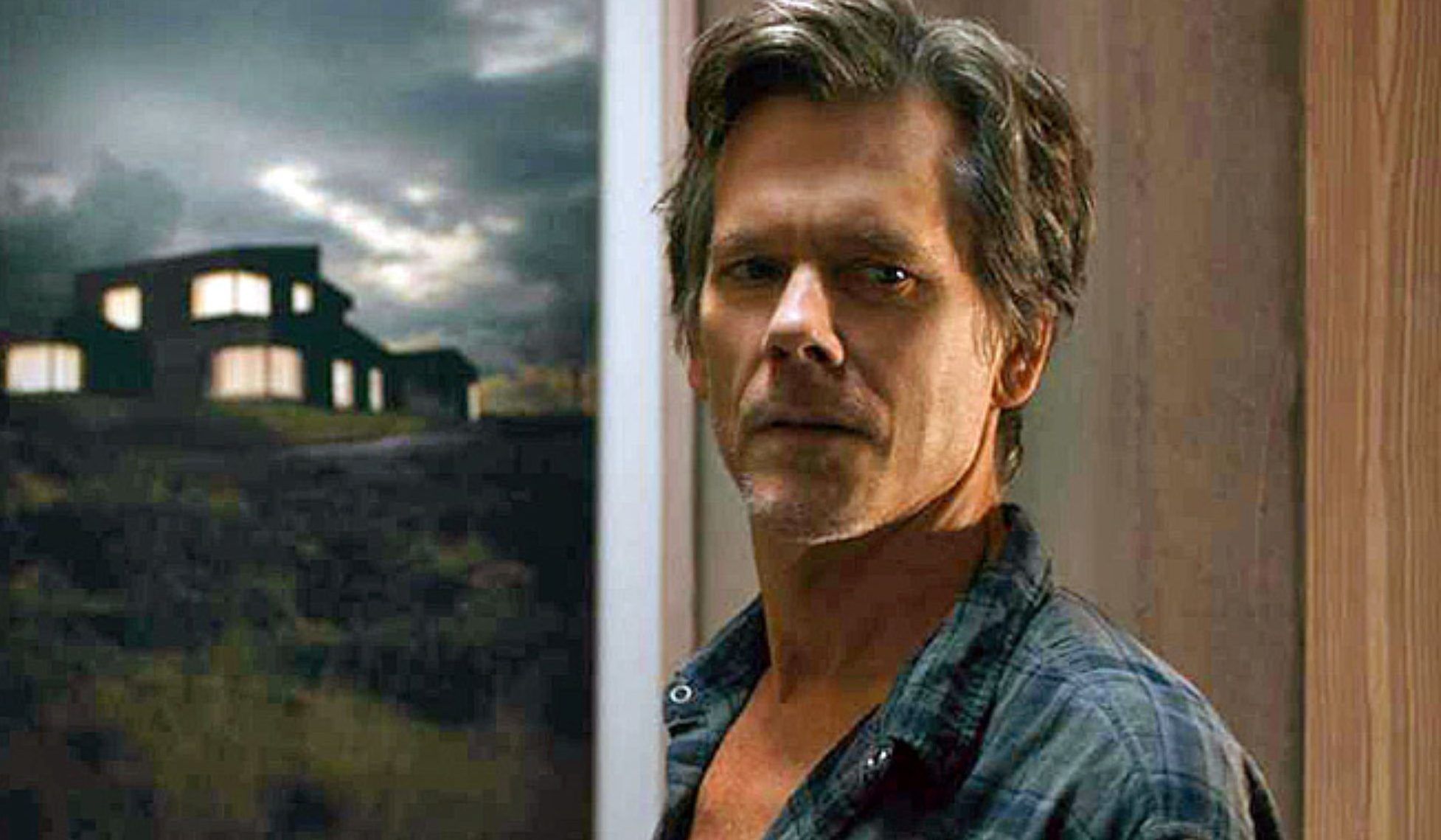
You know that feeling when you're in a house that just doesn't sit right? The hallway looks a bit too long. The door you thought you closed is now slightly ajar. David Koepp’s You Should Have Left takes that specific, skin-crawling anxiety and stretches it into a feature-length nightmare.
It’s a weird one.
Released in 2020, right when everyone was actually trapped in their own houses, it stars Kevin Bacon and Amanda Seyfried. On the surface, it’s a Blumhouse thriller about a family retreating to the Welsh countryside to fix their marriage. But honestly, it’s more about the architecture of guilt than it is about ghosts. If you've ever felt like your past was catching up to you, this movie hits a little too close to home.
The plot follows Theo Conroy, a wealthy man with a dark cloud over his head. People think he killed his first wife. He didn't—or did he? He brings his younger, actress wife Susanna and their daughter Ella to this stunning, minimalist concrete mansion in Wales. It’s the kind of house that looks great on Instagram but feels cold enough to freeze your soul.
The Geometry of a Nightmare in You Should Have Left
Most haunted house movies rely on creaky floorboards and Victorian lace. You Should Have Left throws that out the window. It uses modernism.
The house is the antagonist.
Think about the math for a second. Theo starts measuring the rooms because things feel... off. He discovers that the interior dimensions of the house are larger than the exterior. That is a terrifying concept. It’s called non-Euclidean geometry, and it’s a staple of Lovecraftian horror, but seeing it applied to a sleek, modern kitchen is jarring.
The shadows don't fall where they should.
In one of the most effective scenes, Theo is wandering the halls at night. He finds a light switch, flips it, and the light comes on in a room three doors down. It’s subtle stuff. It’s not a jump scare with a loud violin screech; it’s the quiet realization that the physical world is lying to you.
David Koepp, who wrote the screenplay based on Daniel Kehlmann’s novel, understands that the scariest thing isn't a monster under the bed. It’s the idea that you can’t trust your own senses. Kevin Bacon plays Theo with this jittery, repressed energy that makes you wonder if the house is actually changing or if he’s just losing his mind.
Why the Age Gap Actually Matters
A lot of critics pointed out the massive age gap between Bacon and Seyfried. He was 61; she was 34. Usually, in Hollywood, we just ignore that. Here? It’s the point.
The movie lean into the discomfort. Theo is deeply insecure. He’s constantly checking Susanna’s phone. He’s listening to her film her sex scenes for a movie, and you can see the rot of jealousy eating him alive. This isn't just "filler" drama. The house feeds on this.
It’s a psychological feedback loop. The more Theo doubts his marriage and himself, the more the house twists its corridors. The house is a physical manifestation of his conscience.
That Ending and the Meaning of the Staircase
If you’ve seen the film, you know the ending isn't a "happily ever after." It’s heavy.
Without spoiling the absolute final beat for those who haven't caught it on streaming yet, let’s talk about the cyclical nature of the story. The title itself—You Should Have Left—is a warning Theo finds written in his own journal. But he didn't write it. Or he hasn't written it yet.
Time isn't linear in that house.
The staircase acts as a literal spiral into Theo’s past. There’s a moment where he finds himself in a different version of the house, facing the version of himself that first walked through the door. It’s a reckoning. The movie suggests that some sins are so heavy they create their own gravity. You don't just walk away from a life of secrets; you eventually have to live inside them.
Critics were somewhat split on the film. Some felt it was too slow. Others, like me, think the slow burn is exactly why it works. It doesn't give you the release of a big monster reveal. It just leaves you with a cold, sinking feeling in your stomach.
Production Details and the Welsh Setting
The movie was filmed primarily in Wales, and the landscape plays a huge role. Those rolling, desolate hills make the house look like an island.
- Director: David Koepp (who also wrote Jurassic Park and Panic Room).
- Source Material: The 2017 novella by Daniel Kehlmann.
- The House: The exterior is actually a place called Life House (Ty Bywyd) in Llanbister, Wales. It was designed by architect John Pawson.
Interestingly, Pawson’s architecture is famous for "minimalism as a philosophy." In real life, the house is meant to be a place of calm and reflection. Koepp took that zen-like simplicity and turned it into a sterile, inescapable void. It’s a brilliant bit of subversion.
How to Watch It Without Getting Totally Lost
If you're planning to watch You Should Have Left tonight, pay attention to the reflections.
The movie uses mirrors and glass constantly. There are moments where characters are looking at their reflections, and the reflection doesn't quite match their movement. It’s "blink and you’ll miss it" horror.
Also, watch the lighting. As the film progresses, the natural light from the Welsh hills disappears, replaced by the artificial, sickly yellow glow of the house’s interior. It’s a visual representation of Theo being cut off from the real world.
Honestly, the film works best if you view it as a companion piece to The Shining. While Jack Torrance was driven mad by a sprawling, old hotel, Theo Conroy is dismantled by a tiny, modern box. Both are stories about men who are their own worst enemies.
Actionable Insights for Horror Fans
If you enjoyed the vibe of this movie, there are a few things you should do to dive deeper into this specific sub-genre of "architectural horror."
First, read the original book by Daniel Kehlmann. It’s written as a series of notebook entries, and it’s even more experimental than the movie. It plays with the idea of the narrator losing his grip on language itself as the house changes.
Second, look into the concept of "The Uncanny." Sigmund Freud wrote about this—the idea of something being "unhomely" (unheimlich). It’s when something familiar becomes strange. You Should Have Left is a masterclass in the uncanny.
Finally, if you’re looking for similar films, check out The Night House (2020) or Vivarium. Both deal with impossible spaces and the psychological toll of being trapped in a place that shouldn't exist.
The takeaway from You Should Have Left is pretty simple but haunting: You can move to the middle of nowhere, you can buy a house with no neighbors, and you can lock every door. But you're still bringing yourself into the house. And if you don't like who you are, no amount of square footage is going to save you.
Go back and watch the scene where Theo measures the kitchen again. Count the steps. Then go measure your own living room. If the numbers don't match, well... you should have left.



