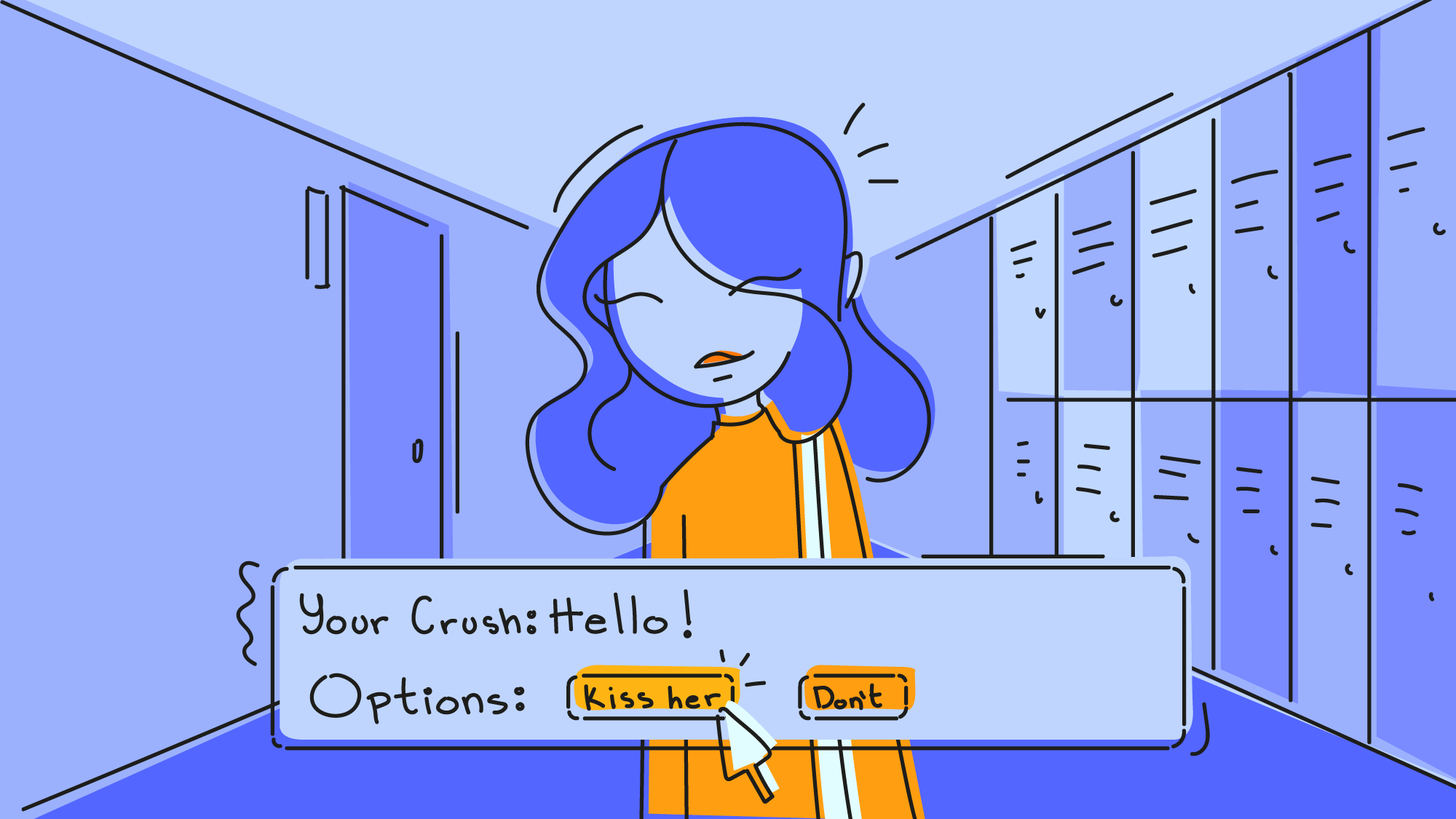
Timing is a fickle thing. We've all been there—sitting in a parked car, walking to a front door, or standing on a subway platform where the air suddenly feels heavy with everything that isn't being said. You feel the pull. They feel it too. But then the moment passes. The door closes. You walk away. Later, usually at 2:00 AM when your brain refuses to shut up, you're hit with that nagging, persistent thought: you should have kissed me. It’s not just a line from a song or a trope from a rom-com; it is a profound psychological anchor that can keep people stuck for years.
The Science of the "Almost" Moment
Why does this specific phrase carry so much weight? Honestly, it’s because humans are wired to hate open loops. In psychology, this is known as the Zeigarnik Effect. This principle suggests that we remember uncompleted or interrupted tasks much better than completed ones. When a romantic tension builds but never breaks, your brain keeps it on a high-priority tab.
You don't ruminate on the bad dates that ended with a polite handshake. You ruminate on the "almosts."
Think about the work of Dr. Helen Fisher, a biological anthropologist who has spent decades studying the brain in love. When we are in that state of high-stakes attraction, our brains are flooded with dopamine and norepinephrine. It’s an intoxicant. When you expect a physical escalation—like a kiss—and it doesn't happen, the dopamine drop is jarring. It creates a "frustration-attraction" loop. Basically, the fact that it didn't happen makes you want it ten times more.
What People Get Wrong About Missed Signals
Most people think a missed kiss is about cowardice. It's usually not. Usually, it's about a massive miscalibration of social cues.
A famous study published in Psychological Science explored the concept of "signal amplification bias." This is a fancy way of saying that we think our internal feelings are way more obvious to others than they actually are. You might think you were practically screaming "kiss me" with your eyes, while the other person was internally panicking, worried they were misreading the vibe and didn't want to overstep a boundary.
Social psychologist Heidi Grant Halvorson has written extensively about how we are "terrible mind readers." We assume we are transparent. We aren't. If you’re sitting there thinking you should have kissed me, there is a 50/50 chance the other person is at home thinking, "I really wanted to kiss them, but I wasn't sure if they wanted me to."
The Fear of the "Ick"
In the modern dating landscape of 2026, people are more hyper-aware of consent and boundaries than ever before. This is objectively a good thing. However, it has also led to an increase in "hesitation culture." No one wants to be the person who makes a move that isn't wanted. The fear of causing discomfort—or worse, being perceived as predatory—often outweighs the potential reward of a romantic connection.
So, we wait for the "perfect" signal. But perfect signals rarely exist. Romance is messy and inherently risky.
The Cultural Impact of the Missed Connection
Pop culture has fed this fire for decades. If you look at the discography of artists like Taylor Swift, Carly Rae Jepsen, or even country stars like Brett Eldredge, the theme of "what if" is a gold mine. Eldredge actually has a hit titled "You Should Have Kissed Me," which perfectly captures that specific brand of nighttime regret.
The song describes a scene on a pier, the lights reflecting off the water, the perfect atmosphere—and the missed opportunity. It resonates because it’s a universal experience. We’ve all lived that bridge.
- The setting: Low light, quiet voices.
- The tension: Lingering eye contact that lasts a second too long.
- The failure: The "see you later" that feels like a defeat.
But there’s a darker side to this nostalgia. Sometimes we use the phrase you should have kissed me to romanticize someone who isn't actually good for us. We fall in love with the potential of the moment rather than the reality of the person. It’s easier to pine for a "what if" than to deal with the complexities of a "what is."
Is It Too Late to Say It?
Kinda. But also, maybe not.
If you're still thinking about a specific moment from three weeks ago, you have a choice. You can let it sit in the Zeigarnik loop forever, or you can address it. We live in an era where "radical transparency" is becoming a dating trend.
Honesty is a shortcut. Telling someone, "Hey, I really wanted to kiss you the other night," does two things immediately:
- It removes the guesswork for the other person.
- It forces a "yes" or "no" reality, which kills the agonizing "maybe."
Research on regret by Thomas Gilovich from Cornell University shows that in the long run, we tend to regret the things we didn't do much more than the things we did. We regret the "inactions." A rejected kiss is a sting that lasts a day; a missed kiss is a "what if" that can haunt you for years.
Why Body Language Often Fails
We think we're being subtle and alluring. In reality, we're often just acting awkward.
- The Lean: You think you're leaning in. They think you're just adjusting your seat.
- The Lip Glance: You look at their mouth. They think you're checking to see if they have spinach in their teeth.
- The Silence: You're creating "a moment." They think the conversation has died and it's time to go home.
Unless you are a professional actor, your "signals" are probably muddy. This is why the missed kiss is the most common casualty of early dating.
Moving Past the Regret
If you are the one left thinking you should have kissed me, you need to audit the situation. Was the chemistry real, or was it just the atmosphere? Sometimes a sunset and a glass of wine can trick your brain into feeling a connection that isn't actually supported by a foundation of shared values or genuine interest.
If the connection is real, don't wait for them to "get the hint" next time. The best way to avoid this specific regret is to take agency. If the moment feels right, you can ask. "I really want to kiss you right now" is one of the most effective, respectful, and high-tension sentences in the English language. It removes the "should have" and turns it into a "did."
Actionable Insights for the "Almost" Romantic
Stop letting these moments slip into the graveyard of "what ifs." If you find yourself frequently thinking you should have kissed me, try these shifts in perspective:
- Audit the "Signal": Did you actually give them an opening, or were you closed off because of your own nerves? Self-reflection here is key.
- The 24-Hour Rule: If you felt a missed connection, send a text within 24 hours. Keep it light. "I had a great time last night. I'm still thinking about that moment at the end." It re-opens the door.
- Embrace the Risk: Accept that a "no" is better than a "maybe." A "no" allows you to move on. A "maybe" keeps you checking their Instagram stories at 3:00 AM.
- Clarify Your Intent: Sometimes we want the kiss because we want the person. Sometimes we just want the validation. Know which one it is before you start spiraling.
The phrase you should have kissed me is ultimately a lesson in missed timing and the beauty of human vulnerability. It reminds us that we are all just trying to figure out how to connect without getting our hearts broken. But usually, the risk of a little embarrassment is a small price to pay for a life without "what ifs."
Next time, don't wait for the perfect moment. It doesn't exist. Just take the step.