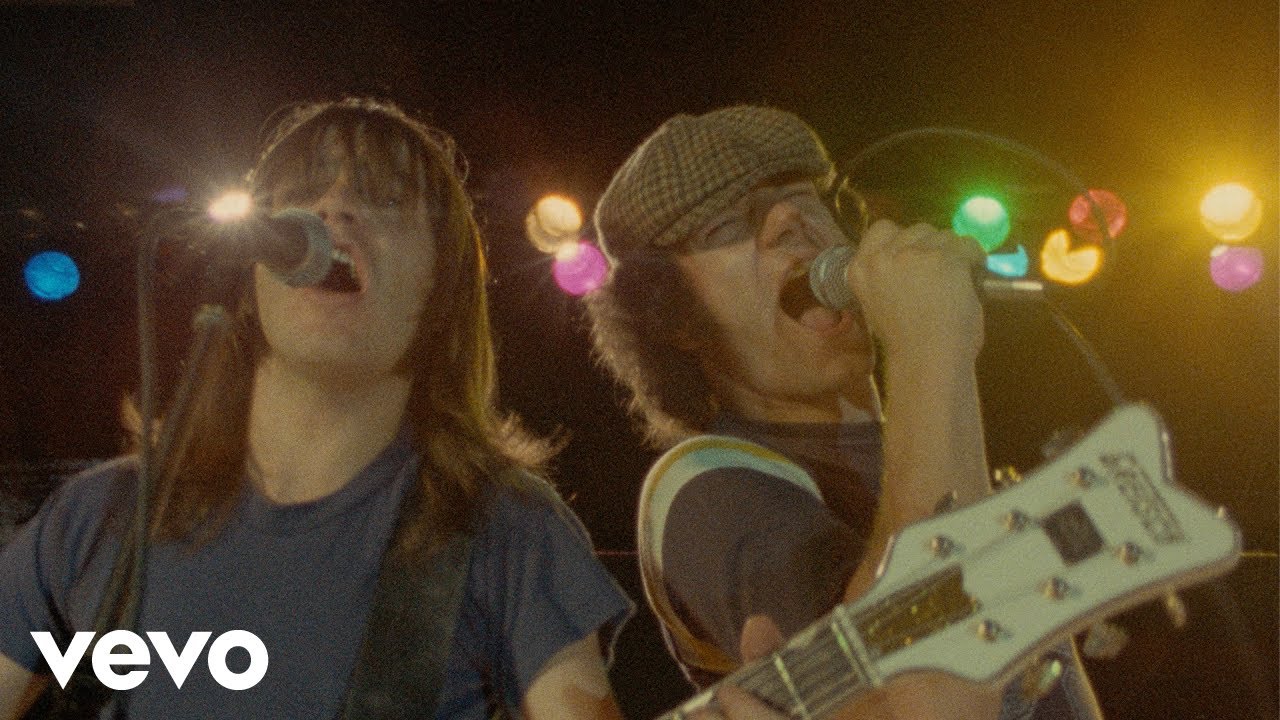
That opening G-major chord is basically a Pavlovian trigger. You hear it, and suddenly you're at a dive bar, a wedding reception, or a stadium with 50,000 other people screaming about American thighs. It's weird when you think about it. You Shook Me All Night Long isn't just a song; it's a permanent fixture of the human experience at this point.
But back in 1980, the stakes were terrifyingly high. AC/DC was staring into the abyss. Their charismatic frontman, Bon Scott, had just passed away. The band was at a crossroads that usually ends in a "where are they now" documentary. Instead, they flew to the Bahamas, hooked up with a guy nicknamed "Mutt," and recorded Back in Black. The rest is literally history, but the story of this specific track is a bit more nuanced than just "rock band makes hit."
The Brian Johnson Baptism by Fire
Imagine being Brian Johnson. You're a guy from Newcastle who used to fix roofs and sing in a band called Geordie. Suddenly, you’re in Compass Point Studios with the Young brothers, and you have to prove you aren't just a replacement—you're the next chapter.
Johnson has often recounted how the lyrics for You Shook Me All Night Long came together. He was feeling the pressure. He actually credits the tropical environment and a bit of "divine" inspiration (or maybe just the pressure of the moment) for the imagery. The line about "working double time on the seduction line" wasn't some calculated marketing move. It was just raw, gritty rock and roll poetry.
The recording process under producer Robert John "Mutt" Lange was grueling. Lange was a perfectionist. He didn't want the sloppy, loose blues-rock of the 70s. He wanted precision. He wanted every snare hit to sound like a cannon. This tension between the band’s natural dirtiness and Lange’s obsession with sonic clarity is why the song still sounds fresh on 2026 digital streaming platforms. It doesn't sound dated because it was engineered to be timeless.
The Mystery of the Lyrics
For years, fans have debated the "American thighs" line. Why American? The band is Australian. The singer is British.
Some say it was a nod to their burgeoning success in the States. Others think it just fit the meter of the song perfectly. Honestly, it probably just sounded cool. Rock and roll rarely rewards over-analysis. The song thrives on double entendres. It’s suggestive without being pornographic, which is why it somehow passes the "wedding DJ" test every single time.
Why the Solo is a Masterclass in Restraint
Angus Young is known for his schoolboy outfit and frantic energy, but his work on You Shook Me All Night Long is surprisingly disciplined.
The solo is a melodic masterpiece. You can hum it. That’s the secret sauce. Most shredders want to show off how many notes they can cram into a measure, but Angus plays for the song. He starts with those soulful bends and builds into a climax that mirrors the vocal intensity. It's blues-based, but it’s got that pop sensibility that made AC/DC more than just a metal band.
Malcolm Young, the rhythm king, provides the heartbeat. Without Malcolm’s rock-solid G-C-D progression, the song falls apart. It’s a lesson in "less is more." If you’re a guitar player starting out, this is the track you learn to understand timing.
- The tempo stays a steady 127 BPM.
- The swing is subtle but essential.
- The backing vocals in the chorus use "The Mutt Lange Method"—layered tracks that sound like a football terrace chanting along.
The Cultural Dominance That Won't Quit
You see it in movies. You hear it in commercials. You hear it when a sports team wins a championship.
Why? Because it’s an equalizer. It’s one of the few songs that a boomer and a Gen Z kid can both agree on. According to RIAA data, Back in Black is one of the best-selling albums of all time, certified 25x Platinum. This track is the crown jewel of that record.
There was a brief moment in the early 2000s where people thought rock was dying. Then, digital downloads and later, streaming, showed that the "classics" were being consumed more than ever. You Shook Me All Night Long is a staple on every "Greatest Rock Songs" list for a reason. It bridges the gap between the hard rock of the 70s and the glossy production of the 80s.
Common Misconceptions
People often think this was the first song Brian Johnson wrote with the band. It wasn't necessarily the first chronologically in the studio, but it was the one that solidified his place.
Another myth: that Bon Scott wrote the lyrics before he died. While there’s always conspiracy theories in rock, the band and the Scott estate have been pretty clear. This was Brian’s moment. He had to step out of a massive shadow, and he did it by leaning into his own style rather than trying to mimic Bon's cheeky, street-poet vibe.
The Engineering Behind the Sound
If you listen to the track on a high-end system today, the separation is incredible.
The kick drum is dry. The guitars are panned wide. There’s almost no reverb on the vocals, which makes Brian Johnson sound like he’s standing three inches from your ear. This "dry" sound was a rebellion against the swampy, echo-heavy production of the era. It made the song sound "loud" even when played at a low volume.
Mutt Lange famously made the band do hundreds of takes. It wasn't about getting it right; it was about getting it perfect. The backing vocals, those "Yeah, you! Shook me!" parts, are actually dozens of vocal tracks stacked on top of each other to create a wall of sound. It’s a technique Lange later used with Def Leppard, but it arguably never sounded better than it did here.
The Legacy in 2026
We're decades removed from the release of Back in Black, and the song hasn't lost an ounce of its punch. It’s been covered by everyone from Celine Dion (yes, really) to Shania Twain to bluegrass bands.
The song's endurance proves that simplicity is the ultimate sophistication. It doesn't have a complex bridge. It doesn't have weird time signatures. It’s four chords and the truth about a memorable night.
If you're looking to capture that AC/DC energy in your own life—whether you're a musician or just a fan—there are a few things to take away from this track's history.
- Focus on the Hook: Everything in the song serves the chorus.
- Don't Overplay: Angus Young’s restraint is what makes the solo iconic.
- Production Matters: The "dry" sound of the 80s is why this track doesn't feel like a period piece.
Actionable Takeaways for Rock Fans and Musicians
- Study the Rhythm: If you’re a guitarist, don’t just learn the solo. Record yourself playing the rhythm part for four minutes straight. If you can’t keep it perfectly steady without getting bored, you haven't mastered it.
- Vocal Texture: Brian Johnson doesn't just "scream." He uses his diaphragm to create a rasp that still has pitch. It’s a controlled burn.
- Playlist Strategy: When building a high-energy playlist, use this track as a "peak" song. It’s a natural energy booster because of its mid-tempo stomp.
- Appreciate the Engineering: Listen to the "Stems" or an isolated vocal track if you can find one. You’ll hear the sheer amount of work that went into the backing vocals—it’s a choir of rock.
The song isn't just a relic of the past. It’s a blueprint for how to create something that lasts. You don't need a thousand tracks or a symphony. Sometimes, you just need a couple of brothers from Australia, a new singer with a point to prove, and a producer who refuses to settle for "good enough."



