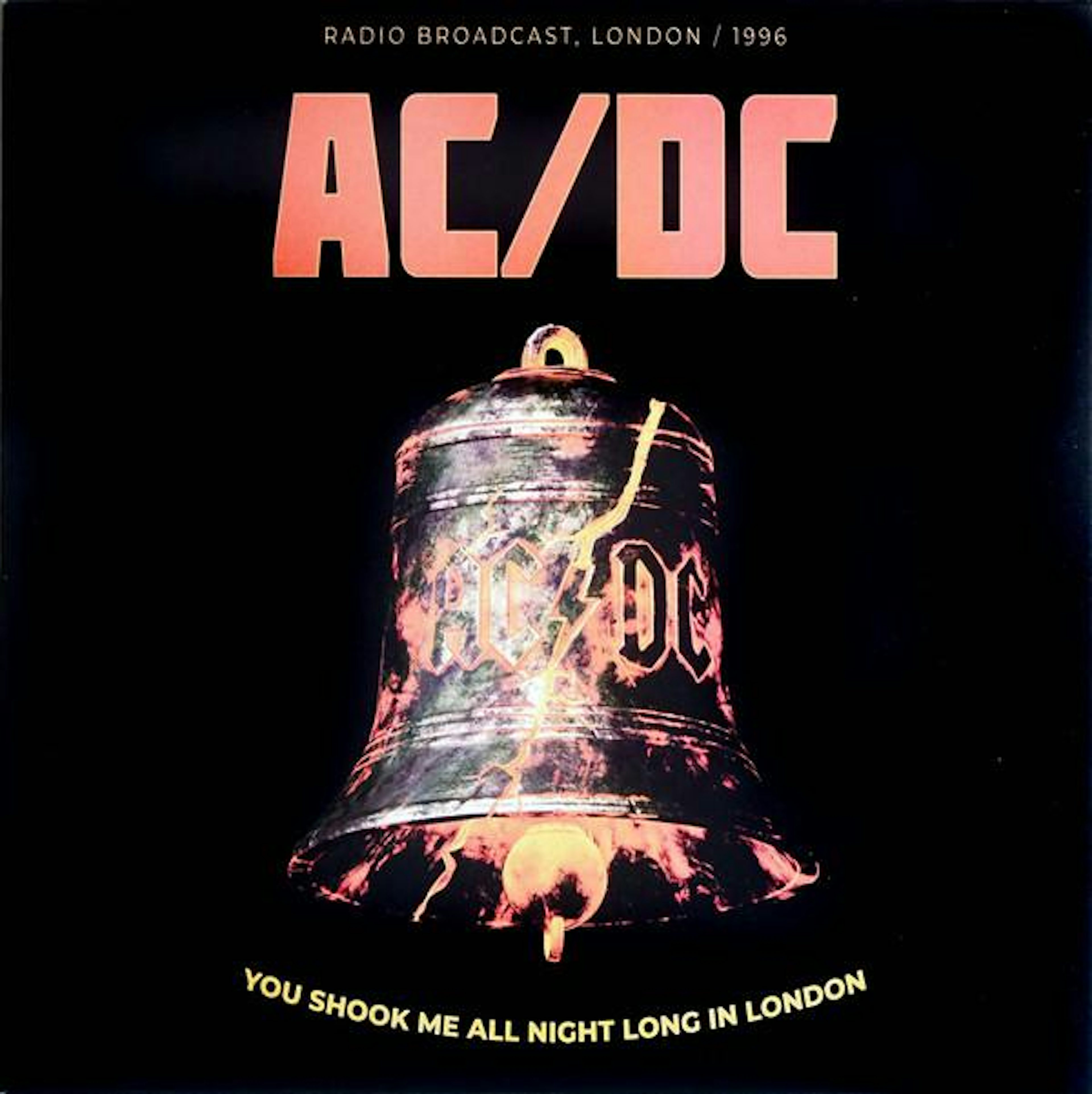
It starts with that G-chord. You know the one. It’s clean, it’s loud, and it feels like a literal bolt of electricity hitting a lightning rod. Honestly, if you grew up anywhere near a radio, a bar, or a wedding reception in the last forty years, You Shook Me All Night Long isn't just a song. It’s a foundational memory. It is the definitive AC/DC track for a lot of people, even though the die-hards might argue for "It's a Long Way to the Top" or "Riff Raff."
But there is something different about this one.
When Back in Black dropped in 1980, the stakes couldn't have been higher. The band was grieving. Bon Scott, their charismatic and legendary frontman, had died just months earlier. Most bands would have folded. AC/DC didn't. They found Brian Johnson, headed to the Bahamas, and recorded an album that basically became the blueprint for hard rock. "You Shook Me All Night Long" was the first single with Brian, and it changed everything. It wasn't just heavy; it was catchy. It was a "pop" song disguised as a sledgehammer.
The Story Behind the Riff
Angus Young has always been a master of simplicity. He’s often joked that he doesn't play the guitar; he just hits it until it does what he wants. The main riff of You Shook Me All Night Long is a masterclass in space. You have these big, ringing chords followed by silence. That silence is where the groove lives. If you overplay it, the song dies.
Robert John "Mutt" Lange produced the record, and his influence is all over this track. Lange is the guy who later did Def Leppard’s Hysteria and Shania Twain’s biggest hits. He’s obsessed with perfection. He pushed the band to focus on the melody. He wanted the backing vocals to sound like a gang of guys in a pub, but a very, very harmonious gang. It’s that polished grit that makes the song work. It’s dirty enough for a biker bar but clean enough for a stadium.
Brian Johnson wrote the lyrics. He was under immense pressure to fill Bon’s shoes. He’s told stories about sitting in the Bahamas, watching the tropical storms roll in, and trying to find the right words. The "American thighs" line? That’s legendary. It’s a nod to the band’s growing success in the States. The whole song is basically one long, clever double entendre. It’s suggestive, sure, but it has a playfulness that keeps it from being too dark or aggressive. It’s about having a good time. Simple as that.
Why the Solo is Perfect
Let’s talk about that solo. Seriously.
Angus Young usually goes for the throat with high-speed blues licks. But on You Shook Me All Night Long, he plays something incredibly melodic. You can actually sing along to the guitar solo. That is the hallmark of a great rock song. He starts low, builds the tension, and then hits those high bends that feel like they’re screaming. It’s not about how many notes he can play; it’s about the right notes.
The rhythm section—Malcolm Young, Phil Rudd, and Cliff Williams—is a machine. Phil Rudd’s drumming on this track is often used by drum teachers to show what "playing for the song" looks like. He doesn't do a single fancy fill. He just hits the snare so hard it feels like a gunshot. Malcolm, the true heart of AC/DC, holds down the rhythm with a precision that most metronomes would envy. Without Malcolm’s rock-solid foundation, Angus wouldn't have the freedom to fly.
The Cultural Impact and That 1986 Music Video
The song didn't actually hit Number 1 on the charts when it came out. It peaked at 35 on the Billboard Hot 100. That sounds crazy now, right? But AC/DC was never a "singles" band in the traditional sense. They were a slow burn. The song grew through MTV and constant touring.
Speaking of MTV, the music video most people remember isn't from 1980. It’s the 1986 version released to promote the Who Made Who album (the soundtrack to the Stephen King movie Maximum Overdrive). It features Brian Johnson in a hat, Angus doing his schoolboy strut, and a whole lot of 80s camp. It’s goofy. It’s fun. It’s exactly what the song is.
What’s wild is how this track bridges generations. You go to a sporting event today—doesn't matter if it's the NFL or a local hockey game—and they play this song to get the crowd moving. It has this universal energy. It’s one of the few songs that a 20-year-old and a 70-year-old will both agree is a "banger."
Debunking the Myths
One common misconception is that Bon Scott wrote the lyrics before he died. People love a good conspiracy theory. They claim the "American thighs" line was Bon’s style. However, the band and the producers have consistently stated that Brian wrote the lyrics from scratch. He wanted to prove himself, and he did. If you look at the lyrics to "You Shook Me All Night Long" compared to Bon’s writing, Brian’s stuff is a bit more literal and grounded in that specific 80s rock aesthetic.
Another myth is that the song is "easy" to play. Ask any cover band guitarist. It’s easy to play the notes. It’s incredibly hard to get the swing. AC/DC isn't just loud; they have a very specific, bluesy swing that most people miss because they’re too busy turning their amps up to ten.
Technical Breakdown for the Nerds
If you’re a musician, you know the tuning is slightly off. It’s not quite A=440Hz. It’s a little sharp. This was common back in the day of tape machines, but it gives the song a bright, urgent feeling that you can’t quite replicate if you tune perfectly to a digital tuner.
The gear used:
- Angus: 1968 Gibson SG Standard through Marshall JMP heads.
- Malcolm: 1963 Gretsch Jet Firebird (The Beast) with the neck and middle pickups ripped out.
- The secret sauce: Very little distortion. Most people think AC/DC is high-gain. It’s not. It’s just loud, clean-ish amps being pushed to the limit. That’s why you can hear every single string ring out.
Actionable Insights for Fans and Musicians
If you want to truly appreciate You Shook Me All Night Long beyond just hearing it at a bar, try these steps:
For the Listeners: Listen to the Back in Black version on a high-quality pair of headphones. Ignore the vocals for a second. Just follow the bass line. Cliff Williams plays the exact same note for almost the entire song, but his timing is so locked in with Phil Rudd’s kick drum that it creates a pulse you can feel in your chest. That is the "secret" of the AC/DC sound.
For the Guitarists: Stop using so much distortion. Turn your gain down to about 4 or 5 and turn your volume up. Use a bridge humbucker and hit the strings hard. The "crunch" should come from your hands, not a pedal. To get the intro right, let those G, C, and D chords ring out fully. Don't rush it. The song breathes.
For the History Buffs: Check out the Who Made Who DVD or find the 1981 live footage from Landover, Maryland. Seeing the band perform this song shortly after the album’s release shows the raw energy they had. Brian was still finding his footing as a frontman, but his vocal power was undeniable.
The legacy of the track is pretty simple: it’s the perfect rock song. It doesn't try to be deep. It doesn't try to change the world. It just wants to make you move. And forty-plus years later, it’s still doing exactly that.
Next Steps to Deepen Your AC/DC Knowledge:
- Analyze the "Back in Black" album sequence: Listen to the tracks immediately before and after "You Shook Me All Night Long" ("Giving the Dog a Bone" and "Have a Drink on Me"). Notice how the production remains consistent, yet "You Shook Me" stands out because of its melodic hook.
- Compare live versions: Watch the 1991 Donington Park performance. Compare the tempo to the original studio recording. You’ll notice the band often played it faster live, which changes the "swing" into more of a "drive."
- Explore the "Mutt" Lange production style: Listen to "Photograph" by Def Leppard right after this. You will hear the same precision in the drum layering and the backing vocal stacks, proving how much a producer can shape a band's legacy.



