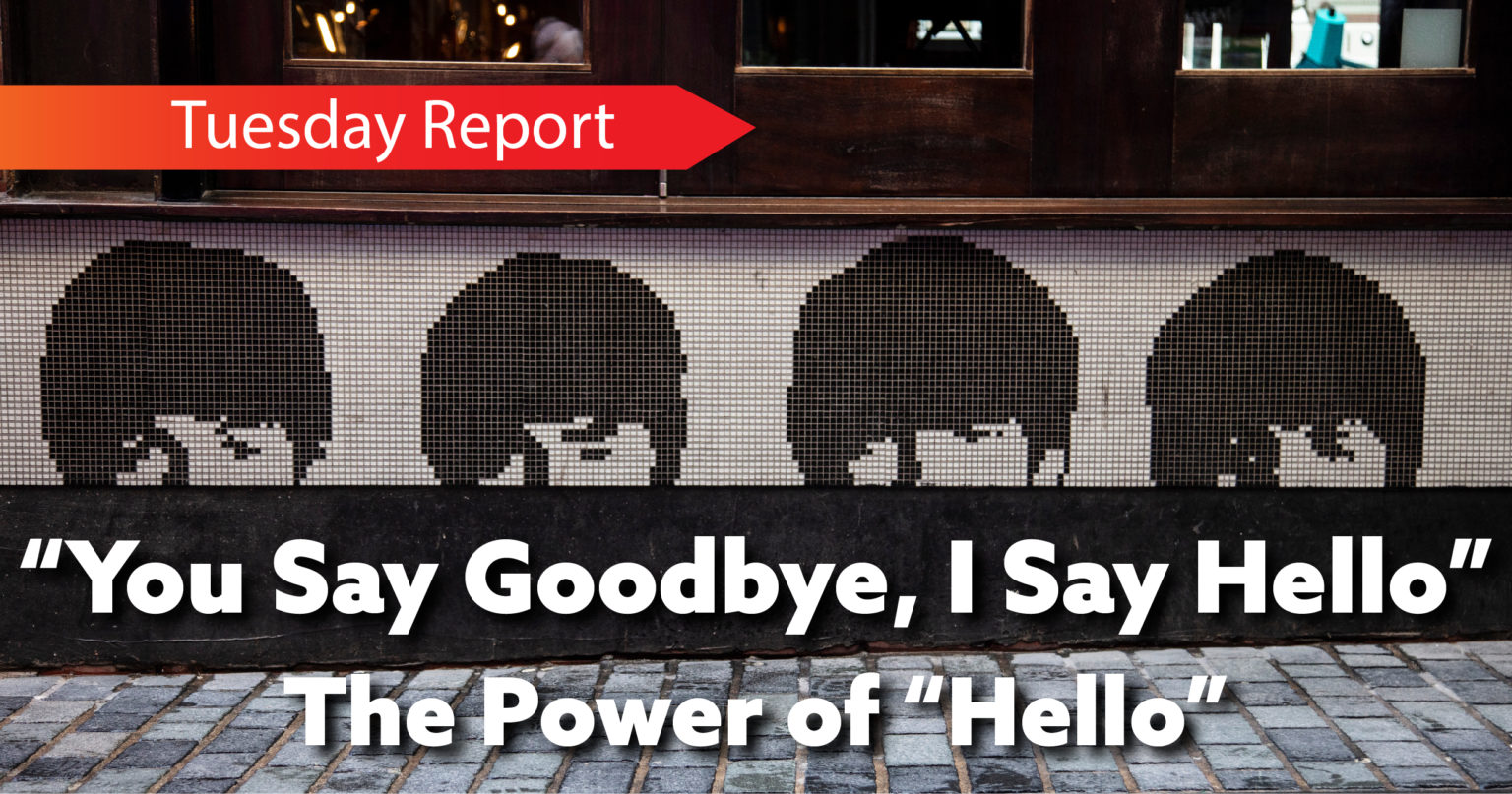
"Hello, Goodbye" is a weird one. Honestly, it’s the kind of song that makes some music critics roll their eyes while the rest of the world just starts dancing. It’s famously repetitive. Paul McCartney basically took a bunch of opposites—hot and cold, high and low, yes and no—and slapped them over a driving beat. You say goodbye and i say hello. It sounds like a nursery rhyme on steroids, doesn’t it? But if you look at the messy, chaotic, and high-pressure world of 1967, this track wasn’t just a simple pop ditty. It was a masterclass in how to win the charts while your band is secretly falling apart at the seams.
Most people don't realize that this song was the first thing The Beatles released after the death of their manager, Brian Epstein. That's a huge deal. They were rudderless. John Lennon wanted the A-side of their next single to be "I Am the Walrus," which is a psychedelic nightmare of a song (in a good way). Paul pushed for "Hello, Goodbye." Paul won. John was, unsurprisingly, pretty annoyed about it. He later called it "three minutes of contradictions and meaningless juxtapositions."
Maybe he was right. But maybe that’s exactly why it worked.
The Secret Logic of Opposites
So, why does a song with such basic lyrics still get stuck in your head sixty years later? It’s the arrangement. Alistair Taylor, who worked for NEMS (the Beatles' management company), once asked Paul how he wrote songs. Paul sat him down at a harmonium and told him to shout out the opposite of whatever he said.
Black? White. Yes? No. Goodbye? Hello.
It was an exercise in spontaneity. It wasn't meant to be War and Peace. It was meant to be a vibration. Musically, the track is way more complex than the lyrics suggest. You’ve got those descending piano chords and that iconic, bubbling bass line that only Paul could pull off. If you listen closely to the bridge, there’s this weird tension where the instruments seem to be pushing against the vocal melody. It’s a sonic tug-of-war.
The song was recorded at Abbey Road (Studio Two, for the nerds out there) during the Magical Mystery Tour sessions. What’s wild is that they used a lot of tracks just for the backing vocals. By the time they got to the "Maori finale"—that "Hela, heba, helloa" part at the end—they were just improvising in the studio. It wasn't planned. They just didn't want the song to end, so they kept the tape rolling and started chanting.
Why the Music Video Caused a Scandal (Seriously)
You'd think a song about "hello" and "goodbye" would be safe, right? Nope. The BBC banned the promotional film.
Back then, the British Musicians' Union had a strict rule against "miming." They wanted musicians to play live so that TV stations wouldn't put session players out of work. The Beatles, being the biggest stars on the planet, didn't care. They filmed three different versions at the Saville Theatre in London, wearing their Sgt. Pepper costumes. They weren't even trying to look like they were playing. At one point, they’re just waving at the camera and doing silly dances.
The BBC took one look at it and said, "Absolutely not."
This actually mattered because it meant the most famous band in the world couldn't appear on the most famous music show, Top of the Pops. It didn't stop the song from hitting number one for seven weeks in the UK, but it showed the growing rift between the old-school establishment and the counter-culture the Beatles were now leading.
The Friction Between John and Paul
If you want to understand why the Beatles eventually broke up, you have to look at "Hello, Goodbye" versus "I Am the Walrus."
John was moving toward the avant-garde. He wanted to challenge the listener. He wanted to be "the Eggman." Paul, meanwhile, was the king of the "granny music" (as John called it) and the perfect pop hook. Paul knew that after the heavy, trippy vibes of Sgt. Pepper, the world needed something light. Something universal.
When Paul's song was chosen as the A-side, it signaled a shift in the band's power dynamic. Paul was becoming the director. He was the one organizing the sessions, picking the singles, and driving the creative bus. John started to feel like a sideman in his own band. You can hear that tension in the recording sessions. While the song sounds happy, the atmosphere in the studio was reportedly getting a bit chilly.
Beyond the Surface: Is it Deep or Just Catchy?
Some fans argue that the song is actually a philosophical statement. It’s about the duality of man. It’s about how we can’t have light without dark, or a beginning without an ending.
Personally? I think that’s overthinking it.
The brilliance of "Hello, Goodbye" is that it doesn’t demand anything from you. It’s an invitation to just be. In 1967, the Summer of Love was ending. Things were getting heavy. The Vietnam War was escalating. Protests were everywhere. In the middle of all that noise, four guys from Liverpool sang about how "it's so easy." It was a moment of pure, unadulterated pop escapism.
How to Listen Like a Pro
Next time this song comes on the radio or your shuffle, don't just tune it out. Try this:
- Follow the Bass: Ignore the "hello, hellos" for a minute and just listen to what Paul is doing on his Rickenbacker. He’s playing a lead melody on a bass guitar. It’s insane.
- Wait for the Coda: That ending "Maori" chant is actually a separate piece of music. Notice how the drums change. Ringo switches to a more tribal, driving beat that feels totally different from the rest of the song.
- Check the Stereo Mix: If you have the original 1967 stereo mix, the vocals are panned weirdly. The 2017 Giles Martin remix cleans this up and makes the drums sound like they’re in the room with you. It changes the whole vibe.
Actionable Takeaways for Music Lovers
If you’re a songwriter or just a fan of pop history, there are a few things to learn from the "Hello, Goodbye" era:
- Simplicity is a Strength: You don't need a thesaurus to write a hit. Sometimes the most basic human concepts are the ones that resonate deepest.
- Contrast Creates Interest: The song works because of the "stop/go" nature of the lyrics. It creates a rhythmic tension that resolves every time they hit the chorus.
- Visuals Matter: Even though it got banned, the Sgt. Pepper outfits in the video defined the band's image for a generation. How you look is often as important as how you sound.
- Trust the Improvisation: The best part of the song (the ending) wasn't even in the script. When you're creating something, leave room for the mistakes.
The legacy of "Hello, Goodbye" isn't in its deep lyrics or its complex metaphors. It's in the fact that it's impossible to hate. It’s a piece of sonic sunshine that reminds us that even when things are complicated, sometimes the answer is just to say hello.