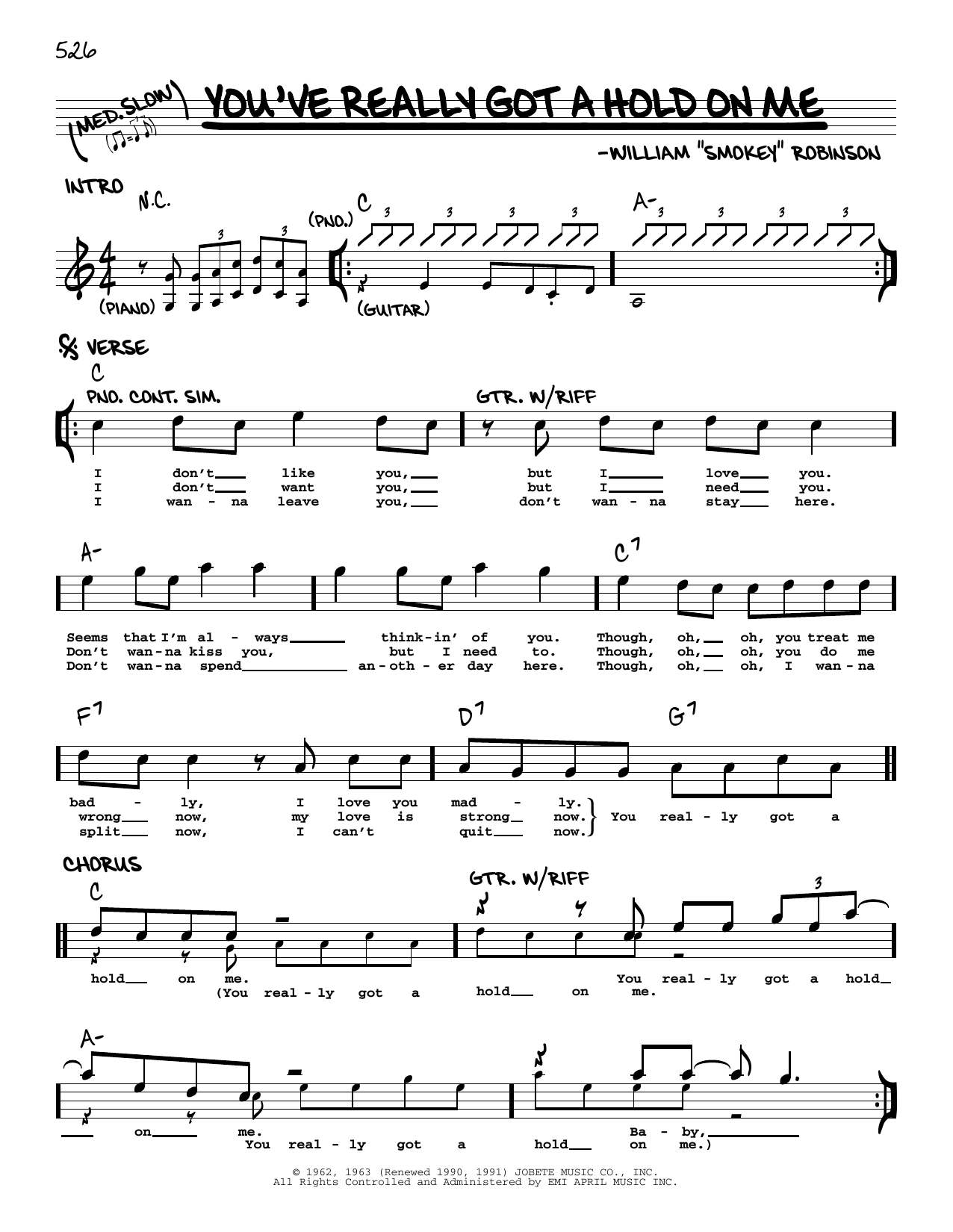
Smokey Robinson was stuck. It was 1962, and he was in a New York City hotel room on business for Motown. Instead of focusing on the meeting he’d just left, his brain was looping a Sam Cooke song. specifically, "Bring It On Home to Me."
He wanted that flavor. That raw, soulful, slightly painful yearning.
Most people don’t realize that one of the greatest soul records ever written started as a hungry executive ordering room service and trying to outdo his idol. Smokey didn’t just write a love song; he wrote a song about a toxic, addictive, "I hate that I love you" kind of relationship that shouldn't have worked in the polite early 60s.
And then, Motown almost buried it.
The B-Side That Wouldn’t Die
When You Really Got a Hold on Me was first pressed, it wasn't the star. Motown’s Tamla label released it on November 9, 1962, as the B-side to a track called "Happy Landing."
The logic was simple: "Happy Landing" was upbeat. It was safe. But the DJs—those gatekeepers of the airwaves who actually listened to the plastic they were sent—knew better. They flipped the record over. They heard that opening piano riff, that gritty vocal interplay between Smokey and Bobby Rogers, and they stopped playing the "hit."
Basically, the public forced Motown’s hand.
By the winter of 1962–63, the song didn't just climb the charts; it dominated them. It hit number one on the Billboard R&B chart and cracked the Top 10 on the Pop chart. It was The Miracles' second million-seller, proving that the success of "Shop Around" wasn't a fluke.
The Sam Cooke Connection
Smokey has never been shy about where the DNA of this track came from. He loved Sam Cooke. Honestly, who didn't? Cooke would sometimes sing at Smokey’s church in Detroit with the Soul Stirrers.
When Robinson heard "Bring It On Home to Me," he was struck by the "call and response" feel and the emotional weight. But Smokey added a psychological twist. While Cooke was asking for a girl to come back, Smokey’s lyrics portrayed a man who knew he was being treated poorly but couldn't leave.
"I don't like you, but I love you."
That first line is a punch in the gut. It’s messy. It’s human. Most pop songs of that era were about holding hands or "true love." Smokey went for the jugular with a sentiment that felt more like an addiction than a romance.
Inside the Studio: 6/8 Time and The Funk Brothers
If you listen closely to the recording from October 16, 1962, at Studio A (Hitsville U.S.A.), you can hear the magic of the Funk Brothers.
The song is in 6/8 time—a triplet feel that gives it a slow, thumping heartbeat. Marv Tarplin and Eddie Willis handled the guitars, creating that shimmering, bluesy texture that sits right under Smokey’s high tenor.
One of the coolest parts? The co-lead vocal.
Bobby Rogers, the Miracles' second tenor, isn't just a background singer here. He’s right there in the trenches with Smokey, providing a rougher, gospel-inflected harmony that mirrors the way Lou Rawls sang with Sam Cooke. It gives the track a "live" feel, like two guys commiserating over a drink about the same woman.
The Beatles and the British Invasion
Fast forward to 1963. A little band from Liverpool is scouring American R&B records for material.
The Beatles didn't just like Smokey Robinson; they were obsessed. John Lennon famously called Smokey's voice "perfect." When they went in to record their second album, With The Beatles, You Really Got a Hold on Me was the very first track they tackled.
Lennon took the lead, and you can hear him straining, trying to match the soulfulness of the original. Smokey later said he was thrilled. He credited The Beatles with breaking down the doors for Black artists in America by being the first major white band to openly admit their influences.
Think about that. Without Smokey’s hotel-room epiphany, we might not have the soulful edge that John Lennon brought to the early British Invasion.
Why it Still Works in 2026
You might think a song from 1962 would feel like a museum piece. It doesn't.
It has this timeless, "dark" quality. Artists like Eddie Money, The Zombies, and even Mickey Gilley (who took it to number two on the Country charts in the 80s) have all tried to capture that specific lightning in a bottle.
Even the Wailers—yes, Bob Marley's group—adapted it into "Rude Boy Prayer," showing how the song’s themes of being "hooked" could be twisted into something even more ominous.
How to Listen Like an Expert
If you want to really appreciate what Smokey did here, don't just put it on as background music. Do these three things:
- Listen to the "Hold Me" breaks: In the refrain, notice how the music completely stops. That "suspended animation" creates tension that makes the resolution feel so much better.
- Compare the Mono vs. Stereo: The original 1962 mono mix has a punchiness in the drums and bass that the early stereo mixes often lost.
- Track the "Baby" overdub: Listen for the excited "baby!" shout toward the end. It was an overdub the group insisted on because they felt the take needed more energy.
Smokey Robinson didn't just write a hit; he defined the "Motown Sound" before anyone even knew what that was. He proved that you could be a high-ranking executive and still have the soul of a poet.
Next time you're building a playlist, don't just grab the "Greatest Hits." Look for the live version recorded at the Apollo Theater in 1963. You can hear the screams of the crowd every time Smokey hits those high notes, proving that even back then, he really did have a hold on everyone.



