Music hits different when it feels personal. You know that feeling when a lyric just punches you in the gut? That is exactly what happens with the phrase you paid it all. It is a heavy sentiment. It’s about debt, sacrifice, and that weird, uncomfortable relief that comes when someone else picks up a tab you couldn't afford.
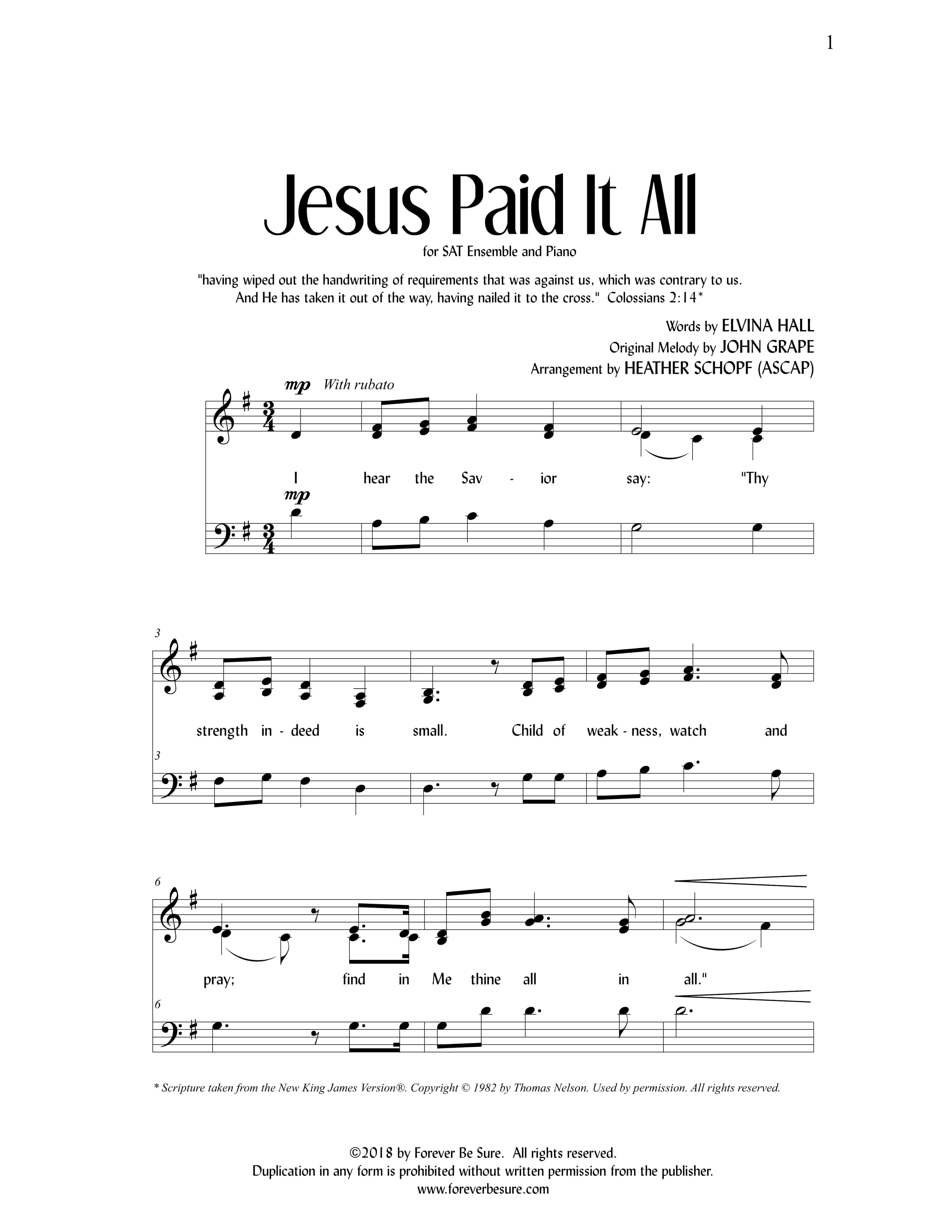
Most people hear those words and immediately think of Sunday morning pews and old-school hymns. And they aren't wrong. The roots are deep in the 1865 classic "Jesus Paid It All" by Elvina Hall. But honestly, the concept has morphed into something much bigger in 2026. It has leaked into pop culture, secular songwriting, and even the way we talk about burnout and emotional labor.
The Viral Staying Power of Sacrifice
Why does this specific phrase keep trending? It's simple. We are living in an era of "debt." Not just the kind you see on a bank statement, though that’s part of it. We are talking about emotional debt. When a songwriter screams or whispers that you paid it all, they are tapping into a universal human desire to be debt-free. To be clear of the weight.
I remember watching a live performance of a contemporary cover of the traditional hymn. The room was electric. Not because everyone there was religious, but because the idea of a "clean slate" is the ultimate human fantasy. We’re all carrying something. Maybe it’s a mistake from five years ago. Maybe it’s the pressure to perform.
Hall wrote those lyrics on the fly while she was supposed to be listening to a sermon. She scribbled them on the flyleaf of a choir book. That’s why it feels so raw. It wasn't a calculated marketing move. It was a "brain dump" of someone feeling overwhelmed by the idea of grace.
It’s Not Just About the Hymnal Anymore
If you look at modern R&B or even indie folk, you see variations of this theme everywhere. Artists like Maverick City Music or even secular performers who lean into "gospel-adjacent" sounds have revitalized the "paid it all" narrative. They’ve moved it from a dusty book to a stadium anthem.
Let’s look at the mechanics.
The phrase functions as a climax. In music theory, you usually build tension through the verse and pre-chorus. When you hit the line "Jesus paid it all" or any variation like "you gave everything," that is the release. It is the resolution of the chord and the resolution of the emotional conflict.
But there is a darker side to this too. In a secular context, you paid it all can be a tragic line. Think about a relationship where one person gives until they have nothing left. They "paid" with their mental health. They "paid" with their time. When we use this language in 2026, we are often acknowledging the high cost of existing in a high-pressure society.
Breaking Down the "Debt" Meta
We should probably talk about why this language is so sticky in a digital world. We are constantly "transactional." Every like, every follow, every interaction feels like a micro-transaction.
- We "pay" attention.
- We "spend" time.
- We "invest" in people.
When someone says you paid it all, they are effectively breaking the transaction. They are saying the account is closed. There is nothing left to owe. This is why the phrase is so popular in recovery communities and mental health circles. It represents the end of a cycle.
I’ve spoken with folks in the music industry who say that "redemption songs" are the most consistent sellers. People don't want to hear about being perfect. They want to hear about being broke—spiritually or financially—and being bailed out.
The Cultural Shift in 2026
Honestly, the way we view sacrifice has changed. We used to lionize the person who suffered in silence. Now, we are more interested in the person who acknowledges the cost.
When an artist sings you paid it all, they aren't just talking about a historical or religious figure anymore. They are often talking to a parent, a mentor, or even a past version of themselves. It’s a recognition of the "invisible labor" that keeps the world spinning.
Take the 2024 resurgence of folk-gospel. We saw a massive spike in "unplugged" versions of these songs. No auto-tune. No massive light shows. Just a raw voice and a guitar. Why? Because the message of you paid it all loses its teeth if it sounds too manufactured. It has to sound like it cost something to say it.
What Most People Get Wrong About the Lyrics
A common misconception is that this phrase is about weakness. People think saying "I couldn't pay it" is an admission of failure.
It’s actually the opposite.
Acknowledging a debt you can't pay is a massive flex of self-awareness. It’s the ultimate ego-death. In the context of the original hymn, the line "Sin had left a crimson stain / He washed it white as snow" is about transformation, not just forgiveness.
The Evolution of the Sound
If you listen to the 19th-century version, it’s a bit dirge-like. Very formal. Very "don't move in your seat."
Compare that to the 2006 Passion version by Kristian Stanfill. That version basically redefined the song for a generation. It added a bridge. "O praise the one who paid my debt / And raised this life up from the dead." It turned a quiet prayer into a victory lap.
Then you have the lo-fi remixes and the TikTok covers. These versions strip away the "churchy" feel and leave only the core emotion. It's fascinating how a phrase from the American Civil War era can fit perfectly over a trap beat or a synth-wave track.
The Psychological Impact of the "Paid" Narrative
Psychologically, the idea of a "paid debt" triggers a massive dopamine release. It’s the "Zeigarnik Effect" in reverse. The Zeigarnik Effect says we remember uncompleted tasks better than completed ones. An unpaid debt is an uncompleted task. It sits in the back of the brain, humming, causing low-level stress.
When you internalize the message that you paid it all, you are effectively "closing the loop." Your brain stops looping the "I owe/I am not enough" script. This is why music therapy often utilizes songs with themes of completion and grace.
Why Gen Z and Gen Alpha are Tuning In
You might think younger generations would reject this kind of language. But the "cancel culture" environment is actually very "debt-heavy." If you make a mistake, you owe a debt to the public. You have to "pay" for it.
In that high-stakes environment, the concept of someone else "paying it all" is incredibly radical. It is the ultimate "counter-culture" move. It suggests that grace is more powerful than the ledger.
Actionable Takeaways for Your Playlist (And Your Headspace)
If you're looking to dive deeper into this theme or just want to understand the hype, here is how to approach it.
First, listen to the different versions. Don't just stick to one genre. Listen to the Elvina Hall original (or a traditional choral version), then jump to the Kristian Stanfill/Passion version. Then, look for the indie covers on YouTube or Spotify. Notice how the "weight" of the song changes depending on the tempo.
Second, think about where you are applying "transactional" logic to your own life. Are you holding a "debt" over yourself? The power of the phrase you paid it all is that it applies to the person saying it as much as the person it's directed toward.
Third, acknowledge the cost. Whether you view it through a religious lens or a secular one, the message only works if you recognize that "paying it all" isn't cheap. It costs time, energy, and often, ego.
Finally, use this as a prompt for reflection. In 2026, we are bombarded with things we "must do" to be successful or liked. The "paid it all" narrative is a reminder that sometimes, the most important work is already done. You don't always have to be the one holding the check.
Stop trying to settle scores that have already been cleared. Whether it's a spiritual belief or a mental health practice, finding your "paid in full" moment is the key to actually moving forward instead of just running in place.
Check out the most recent live recordings of these anthems if you want to see this in action. There is a reason these songs are still filling stadiums 160 years later. It’s not just the melody. It’s the relief.



