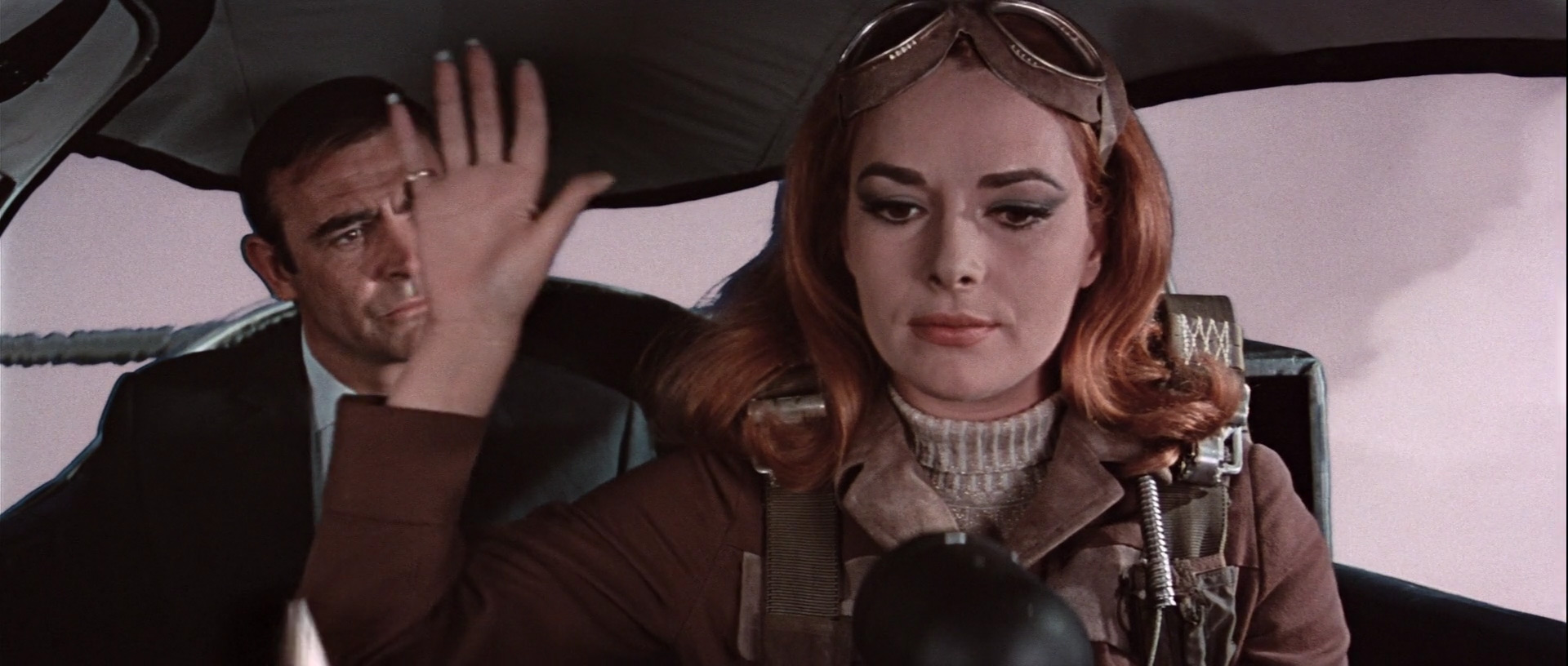
Sean Connery was tired. You can see it in his eyes during the 1967 release of You Only Live Twice. He’d played 007 five times in six years, and the pressure of "Bondmania" was basically suffocating him. Yet, despite a lead actor who was halfway out the door, this film became the blueprint for every action blockbuster we watch today. It’s got the volcano lair. It’s got the piranhas. It’s got the first real face-to-face meeting with Ernst Stavro Blofeld. Honestly, if you want to understand why the James Bond franchise survived for six decades, you have to look at this specific moment in history.
It’s weird. You Only Live Twice is both a masterpiece of production design and a total mess of 1960s cultural tropes. It’s the movie where Bond "becomes" Japanese—a plot point that has aged about as well as milk in a hot car—yet it also features some of the most breathtaking practical cinematography ever put to film. We’re talking about a time before CGI. When you see a helicopter battle in this movie, those are real pilots, real machines, and real danger.
The Roald Dahl Connection You Probably Didn't Know
Most people don't realize that the screenplay for You Only Live Twice was written by Roald Dahl. Yeah, the Charlie and the Chocolate Factory guy. He was close friends with Ian Fleming, the creator of Bond. However, Dahl famously hated Fleming’s original novel. He thought the book was more of a travelogue than a spy thriller. So, he basically threw the book out the window. He kept the title, the Japanese setting, and the villain, but he invented a plot about space capsules being swallowed by a giant rocket.
It was a wild gamble. The Cold War was peaking. People were terrified of nuclear war and obsessed with the Space Race. Dahl tapped into that anxiety. He turned Bond from a detective into a sci-fi superhero. It worked. But it also set the stage for the "gadget-heavy" era that eventually led to some of the sillier entries in the series.
That Insane Volcano Lair
Ken Adam is the unsung hero here. He was the production designer. When they couldn't find a natural location that looked "villainous" enough, he convinced the producers to spend $1 million—which was a fortune in 1966—to build a set at Pinewood Studios. It was a full-scale volcano interior. It had a working monorail. It had a retractable roof.
It was so big that it could be seen from miles away.
Lighting that set was a nightmare. The Director of Photography, Freddie Young, had to use every single piece of lighting equipment available in the UK at the time. If you look closely at the action sequences inside the volcano, the scale is genuinely dizzying. There are hundreds of extras rappelling from the ceiling. It’s pure spectacle. This set defined what a "villain’s base" should look like. Without this, we don't get Austin Powers parodying Dr. Evil, and we definitely don't get the over-the-top sets in modern Marvel movies.
Little Nellie: The Miniature Badass
One of the most iconic parts of You Only Live Twice is "Little Nellie." It’s a tiny, one-man autogyro. It looks like a lawnmower with a propeller. In the movie, it's packed with rockets, mines, and flame-throwers. The crazy part? It was a real aircraft.
Ken Wallis, a former RAF Wing Commander, actually built and flew the thing. He did 85 sorties for the film. There’s a famous story where they were filming the aerial battle over Mount Aso, and the cameraman almost lost a leg because the other helicopters were flying so close. It wasn't "movie magic." It was just dangerous. That’s the vibe of this entire production. It was ambitious, slightly reckless, and visually stunning.
The Blofeld Reveal and the Connery Problem
For years, Eon Productions teased Blofeld. You only saw his hands or the back of his head. Finally, in You Only Live Twice, we see him. Donald Pleasence took the role, and his performance—with the scarred eye and the white cat—became the definitive version of a global terrorist. It’s iconic. But here’s a hot take: Pleasence wasn't the first choice. They actually started filming with another actor, Jan Werich, but the producers realized he looked too much like a "nice Santa Claus" and didn't feel threatening. They fired him and brought in Pleasence mid-shoot.
Meanwhile, Connery was miserable. Japan was experiencing Bond-fever to an extent that no one expected. Photographers were following him into bathrooms. He was being mobbed every time he left his hotel. You can sort of see that detachment in his performance. He’s still Bond—cool, collected, dangerous—but the spark that was in Goldfinger is starting to flicker. He announced his retirement from the role during the filming. Of course, he’d eventually come back (twice), but at the time, this felt like the end of an era.
A Controversial Legacy
We have to talk about the "Bond becomes Japanese" subplot. In the movie, Bond goes undercover as a Japanese fisherman. They give him a wig and some makeup. It’s... uncomfortable to watch today. It’s a reminder that Bond is a product of his time, reflecting the colonial attitudes of the 1950s and 60s. Fans often debate whether this ruins the movie. Some say it's a product of the era and should be viewed as a historical artifact. Others find it too cringey to sit through.
Despite this, the film remains a favorite among purists because of its pacing. It doesn't drag. From the "death" of Bond in the opening credits to the final explosion in the volcano, it moves like a freight train.
Why You Should Re-watch It Right Now
If you haven't seen it in a while, or if you've only seen the newer Daniel Craig versions, You Only Live Twice offers something the modern films often lack: pure, unadulterated fun. It doesn't take itself too seriously. It knows it's a "movie-movie." The score by John Barry is arguably the best in the entire series. The title song, sung by Nancy Sinatra, is haunting and elegant.
It’s a masterclass in 1960s pop culture. It captures a moment when the world felt both incredibly small and terrifyingly large.
Key Takeaways for Your Next Watch:
- Watch the background: The cinematography in the Japanese countryside is gorgeous.
- Listen to the music: John Barry’s use of Japanese-inspired strings is subtle and brilliant.
- Notice the stunts: Look for the rooftop fight in Kobe. It’s one long, sweeping shot. That’s real choreography, not jump-cuts.
How to Experience the Bond Legacy Today
To really appreciate what went into this film, you need to go beyond just streaming it. There are a few things you can do to get the full picture.
First, track down the "Making of" documentaries. There’s some incredible footage of Ken Adam building that volcano set. It puts modern green-screen sets to shame. Second, read the Roald Dahl screenplay if you can find it. It’s fascinating to see his "twisted" sense of humor peeking through the Bond tropes.
Lastly, look at the 1960s Japanese cinema of the same era. Bond wasn't just influencing the West; it was heavily influenced by the Japanese "Pinky Violence" and Yakuza films of the time. Actors like Tetsuro Tamba (who played Tiger Tanaka) were huge stars in Japan. Watching their other work gives you a much deeper appreciation for the casting in this movie.
Stop thinking of it as just "another Bond movie." It’s the peak of the 60s spectacle. It’s the moment Bond became a myth. Even with its flaws, it’s a ride worth taking.
If you're planning a marathon, watch this right after Thunderball and before On Her Majesty's Secret Service. You’ll see the jarring transition from Connery's burnout to George Lazenby's fresh (and very different) take on the character. It’s the pivot point of the whole franchise. Take note of the set design specifically—it never got this big again until the Roger Moore years. Enjoy the sheer scale of it. It’s a type of filmmaking that literally doesn't exist anymore.



