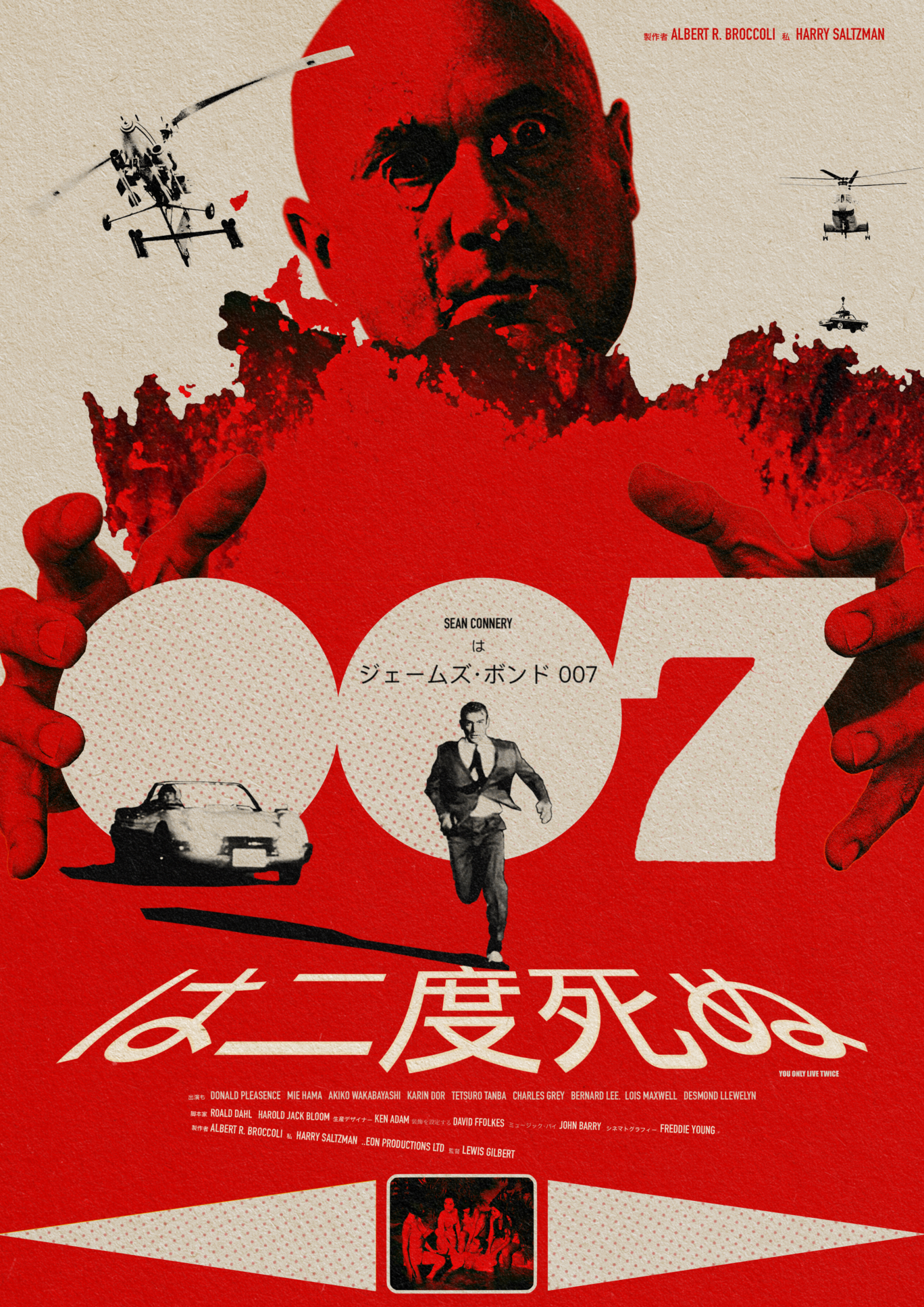
Sean Connery was done. He was tired, grumpy, and sick of being the world's most famous spy. By the time production began on the 1967 James Bond film You Only Live Twice, the Scottish actor wasn’t just looking for the exit—he was practically sprinting toward it. The pressure was insane. Fans were literally following him into bathrooms in Japan.
It was a mess.
But somehow, through the chaos of a script that ignored the source material and a budget that spiraled out of control, we got the most "Bond" movie to ever Bond. You know the tropes. The volcano lair? This movie. The scars on Blofeld’s face? This movie. The idea that a secret agent could "turn Japanese" through a bit of makeup and a wig? Yeah, that’s here too, though it hasn't aged particularly well.
Honestly, it’s a miracle the movie is even watchable, let alone a classic.
The Roald Dahl Connection You Probably Didn't Expect
Most people think of Charlie and the Chocolate Factory when they hear the name Roald Dahl. They don't usually think of piranha tanks and space capsules. But Dahl was a close friend of Ian Fleming, and when the producers needed someone to salvage a script that was falling apart, they called him.
Dahl hated the original novel. He thought it was Fleming’s worst book—basically a travelogue with no plot. So, he did something radical. He threw the book in the trash. He kept the title, the Japanese setting, and the characters, but he built the plot from scratch.
He followed a formula. Bond meets girl. Bond loses girl. Bond finds another girl. Bond kills the bad guy. It sounds reductive because it is, but Dahl understood the "formula" before anyone else even realized there was one. He turned the James Bond film You Only Live Twice into a blueprint for the next fifty years of action cinema.
That Volcano Lair Cost a Fortune
If you want to talk about the sheer scale of 1960s filmmaking, you have to talk about Ken Adam. He was the production designer, and he was a madman. He didn't want a matte painting of a volcano. He wanted to build one.
At Pinewood Studios, they constructed a $1 million set. In 1967 money, that was basically the entire budget of a normal movie. It was massive. It had a working monorail, a retractable roof, and enough space to house a full-scale battle between "ninjas" and SPECTRE guards.
It was dangerous.
During filming, the pyrotechnics were so intense they nearly suffocated the crew. One cameraman actually lost a leg during a different aerial sequence involving "Little Nellie," the gyrocopter. This wasn't green-screen fluff. This was high-stakes, "we might actually die today" filmmaking. That tension is visible on screen. It gives the movie a weight that modern CGI simply cannot replicate.
Little Nellie and the Aerial Combat
Ken Wallis, a real-life Wing Commander, flew the autogyro in the film. The production actually got into a bit of trouble because they were flying an experimental aircraft in ways it wasn't exactly designed for.
- Five different autogyros were used.
- They flew over 80 sorties.
- The battle over Mount Aso took weeks to film.
It’s one of the few times a gadget in a Bond film felt like a legitimate piece of military hardware rather than a toy designed to sell action figures.
The "Japanese" Transformation and Modern Cringe
We have to talk about it. Bond goes undercover as a Japanese fisherman. In 1967, audiences might have blinked and moved on, but today? It’s tough to watch. The makeup, the chest hair trimming, the attempt to make Sean Connery—a man who is quintessentially Scottish—look like a local villager is absurd.
It’s the film's biggest flaw.
But if you look past the prosthetic eyelids, you see a movie that was genuinely obsessed with Japanese culture. This wasn't just a studio backlot. They filmed on location at the Akasaka Prince Hotel, the New Otani Tokyo, and the Kirishima mountains. The cinematography by Freddie Young is breathtaking. He’s the guy who did Lawrence of Arabia, and he treats the Japanese landscape with the same reverence he gave the desert.
The movie captured a Japan that was rapidly transitioning from post-war recovery to a global tech powerhouse.
Connery vs. The Press
Sean Connery was miserable during the shoot. He had reached a level of fame that was basically toxic. In Japan, the "Bond-mania" was at its peak. Photographers were hiding in the rafters of the sets.
There’s a famous story where a journalist followed him into a public restroom to get a quote. Connery snapped. He reportedly told producers he was done with the character right then and there. You can see it in his performance. He’s a bit stiffer than he was in Goldfinger. He looks tired.
Despite his personal frustration, he still delivers that dry, cynical wit that defined the era. When he says, "I think I will enjoy very much," while being offered a massage, he’s leaning into the playboy persona that the world demanded of him, even if he secretly wanted to be on a golf course in Marbella.
Donald Pleasence: The Definitive Blofeld
Until this movie, Ernst Stavro Blofeld was a voice and a hand stroking a white cat. He was a shadow. Then Donald Pleasence stepped onto the screen with that scar and that monotone delivery.
It changed everything.
Every villain parody—from Dr. Evil to whatever they’re doing in modern cartoons—starts here. Pleasence wasn't the first choice. They originally hired Jan Werich, but after a few days of filming, the producers realized he looked too much like "a nice Santa Claus" and didn't have the menace required for a world-dominating psychopath.
Pleasence brought a cold, clinical detachment to the role. He wasn't screaming; he was observing. That’s much scarier.
The Legacy of the 1967 James Bond film You Only Live Twice
If you watch a movie like The Spy Who Loved Me or Moonraker, you’re basically watching a remake of this film. It established the "Mega-Bond" era. The stakes moved from stopping a gold heist to preventing World War III.
It’s a pivot point.
Before this, Bond was a spy. After this, Bond was a superhero. The film’s influence is everywhere. The theme song by Nancy Sinatra remains one of the best in the franchise—haunting, melodic, and strangely melancholic. It captures the "you only live twice" sentiment perfectly: one life for yourself, and one for your dreams.
Actionable Takeaways for Bond Fans
If you’re revisiting the James Bond film You Only Live Twice or watching it for the first time, keep these points in mind to get the most out of the experience:
- Watch the background: The New Otani Tokyo hotel, which served as the Osato Chemicals exterior, is still standing. It’s a landmark of 1960s brutalist-adjacent architecture.
- Compare the book: Read the Ian Fleming novel afterward. It’s a dark, psychological story about grief and revenge that has almost nothing to do with the movie. It provides a fascinating look at what the film could have been.
- Listen to the score: John Barry’s music here is his peak. The "Space March" track redefined what sci-fi music sounded like before Star Wars ever existed.
- Look for the stuntmen: Many of the "ninjas" in the final battle were actually local martial arts experts. The choreography is more authentic than the "karate chops" seen in earlier films.
The movie isn't perfect. It's bloated, occasionally offensive, and Sean Connery clearly has one foot out the door. But as a piece of spectacle? It’s unmatched. It’s the moment the 007 franchise decided to stop being a series of spy movies and start being a global phenomenon.
To truly understand Bond, you have to understand the volcano. You have to understand the piranhas. You have to understand why a man would risk his life in a tiny gyrocopter just to get a better look at a mountain. That's the magic of 1967.
Next Steps for Your Bond Marathon:
- Compare the "volcano raid" in this film to the ending of The Spy Who Loved Me to see how Lewis Gilbert (who directed both) recycled his best ideas.
- Research the "lost" footage of Jan Werich as Blofeld; small clips and stills exist online that show a very different version of the villain.
- Check out the 1960s Japanese "Pinky Violence" or "Nikkatsu Noir" films from the same era to see the cinematic context Bond was playing in.



