James Bond was never supposed to be a cartoon. But then came 1967. Most people remember You Only Live Twice as the one where Sean Connery wears heavy eye makeup to "become Japanese" or the one with the volcano lair. It’s a bizarre movie. Honestly, it’s the exact moment the 007 franchise stopped being a gritty spy series and started being a global brand of spectacle. If you watch it today, the pacing feels off, the cultural choices are cringey, and yet, it is arguably the most influential action movie ever made.
You can see its DNA in everything from Austin Powers to The Incredibles.
Roald Dahl wrote the screenplay. Yes, the guy who wrote Charlie and the Chocolate Factory. That explains a lot about the giant piranha tanks and the space capsules being swallowed by larger space capsules. Dahl hated the original Ian Fleming novel, which was actually a dark, depressing meditation on grief. Instead, he just took the title and the location and built a fever dream.
The Problem with the "Japanese" Transformation
We have to talk about it. There is no way around the fact that a large chunk of the plot involves James Bond—a 6'2" Scotsman—undergoing "surgery" and wearing a wig to blend into a local fishing village. It’s uncomfortable. In 1967, producers thought this was a clever way to integrate the character into the setting. Today? It’s a glaring example of how much the world has changed.
The movie treats Japan like a giant playground. You’ve got ninjas training in a high-tech school, sumo wrestling matches that serve as plot points, and endless shots of the gorgeous landscape. It’s a travelogue disguised as a thriller. While the cultural sensitivity is non-existent by modern standards, the cinematography by Freddie Young is genuinely stunning. He’s the guy who shot Lawrence of Arabia, so he knew how to make a frame look expensive.
It's weird because the film is simultaneously very respectful of Japanese martial arts and totally dismissive of the reality of Japanese people. The local agents, like Tiger Tanaka and Aki, are actually way more competent than Bond is for most of the runtime. Aki, played by Akiko Wakabayashi, is a standout Bond girl who drives a customized Toyota 2000GT. She saves Bond's life multiple times before she's killed off in a scene that still feels surprisingly cruel.
Blofeld and the Birth of the Supervillain Trope
Before this movie, Ernst Stavro Blofeld was a voice and a pair of hands stroking a cat. In You Only Live Twice, we finally see his face. Donald Pleasence is the definitive Blofeld. The scar, the Nehru jacket, the cold stare—this is the blueprint for every movie villain for the next fifty years.
He lives in a volcano.
Let that sink in. He didn't just have a hideout; he had a hollowed-out extinct volcano with a retractable roof and a private monorail. This set, designed by Ken Adam, cost $1 million at the time. That was roughly the budget of an entire film back then. It was so big it could be seen from miles away and used real materials, not just painted plywood. It’s the peak of practical effects. When the ninjas rappel down from the ceiling during the climax, those are real stuntmen on real ropes in a real, massive structure. No CGI. No green screen. Just pure, dangerous ambition.
Why the pacing feels so different
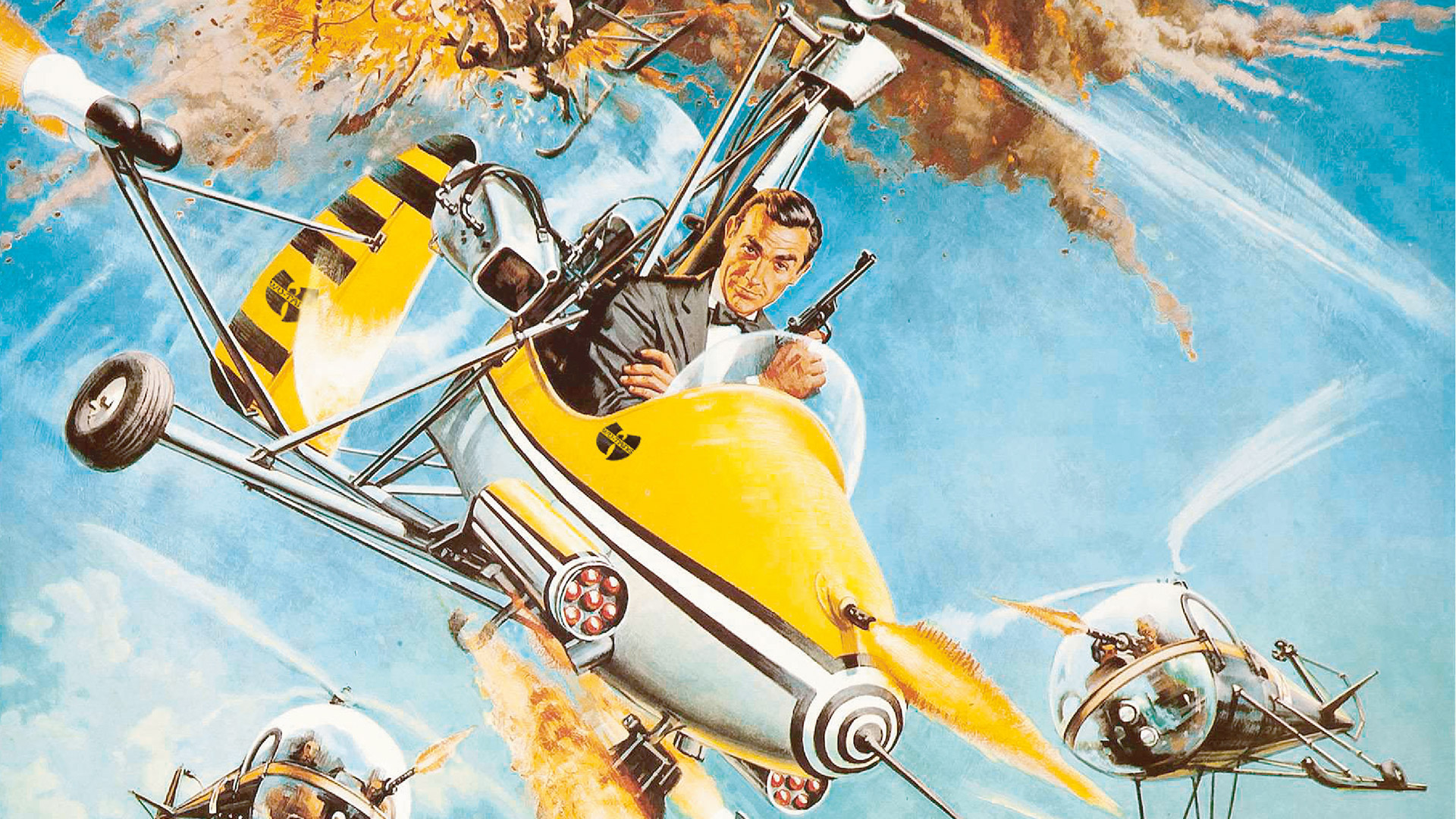
Modern movies are fast. You Only Live Twice is... not. It lingers on things. There is a long sequence where Bond is flown over the Japanese countryside in a tiny, one-man helicopter called "Little Nellie." It goes on for a while. You get to see the landscape, the gadgets, and the dogfights in a way that feels slow but strangely immersive.
- The score by John Barry does a lot of the heavy lifting.
- The title song, sung by Nancy Sinatra, is one of the best in the series.
- The tension relies more on the Cold War threat of nuclear annihilation than on hand-to-hand combat.
The stakes were high. The US and the USSR were on the brink of war because someone was stealing their space capsules. It was timely. The Space Race was the biggest story in the world, and Bond was right in the middle of it.
The Sean Connery Fatigue
You can see it in his eyes. Sean Connery was done. By the time production started on You Only Live Twice, he was the most famous man on the planet, and he hated it. Fans in Japan were literally following him into the bathroom. He was bored with the character, and it shows in some of his line deliveries. He’s still Bond—cool, capable, and slightly mean—but the spark from From Russia with Love is flickering out.
He actually quit the role after this film (though he famously came back for Diamonds Are Forever after George Lazenby’s one-off). This fatigue actually works for the movie in a strange way. Bond feels like a man who has seen too much, which fits the title’s theme of faking his own death to start a new mission.
The production was a nightmare. A cameraman lost a leg during the helicopter shoot. A stuntman was injured. The director, Lewis Gilbert, was constantly dealing with script changes. Yet, somehow, they caught lightning in a bottle. It shouldn't work. The plot is thin, the pacing is wonky, and the lead actor wants to go home. But the sheer scale of the vision carries it across the finish line.
Beyond the Volcano: The Legacy
If you want to understand why Bond is still around, you have to look at this movie. It proved the formula could survive anything. It proved that audiences didn't just want a spy story; they wanted a spectacle. They wanted to see things they had never seen before—like a cigarette that fires a rocket or a car that turns into a boat (okay, that was later, but this set the stage).
You Only Live Twice is the bridge between the 60s and the 70s. It moved the series away from the grounded realism of the early books and into the realm of the "Bond Movie" as a specific genre of cinema. It’s campy, it’s beautiful, it’s offensive, and it’s brilliant.
What to look for on a rewatch
If you haven't seen it in a while, or you're coming to it for the first time, pay attention to the silence. There are long stretches where nobody talks. The film trusts the visual storytelling and the music to carry the weight. Look at the framing of the shots in the volcano. Every angle is designed to make the humans look small and the machinery look god-like.
- The 2000GT: Only two convertibles were ever made, specifically because Connery was too tall for the hardtop.
- The Script: Roald Dahl basically ignored the book because he thought the plot was "boring."
- The Title: It comes from a haiku Bond writes in the novel: "You only live twice: Once when you are born, And once when you look death in the face."
It’s a bit of a mess, but it’s a magnificent mess. It represents a time when movies were allowed to be weird and huge and problematic and exciting all at once.
Actionable Insights for Bond Fans
To truly appreciate the impact of You Only Live Twice, don't just watch it as a standalone film. Compare it to the 2021 film No Time to Die. You'll notice that the modern era of Bond has spent a massive amount of energy trying to deconstruct the tropes that this specific 1967 movie created.
Next Steps for the Viewer:
- Read the book: Ian Fleming’s final completed novel is a totally different experience—much darker and focused on Bond’s mental breakdown after the death of his wife.
- Watch the cinematography: Focus on Freddie Young’s use of 70mm Panavision. It’s why the movie looks so much "bigger" than other films from that year.
- Listen to the Score: John Barry’s use of soaring strings and Japanese-inspired scales set the tone for every "exotic" action movie that followed.
If you’re a film student or a hobbyist, look at the set design sketches by Ken Adam. They are masterpieces of architectural imagination that defined the "villain lair" aesthetic for the rest of history. Understanding this movie is the key to understanding why 007 became a cultural icon rather than just another detective.



