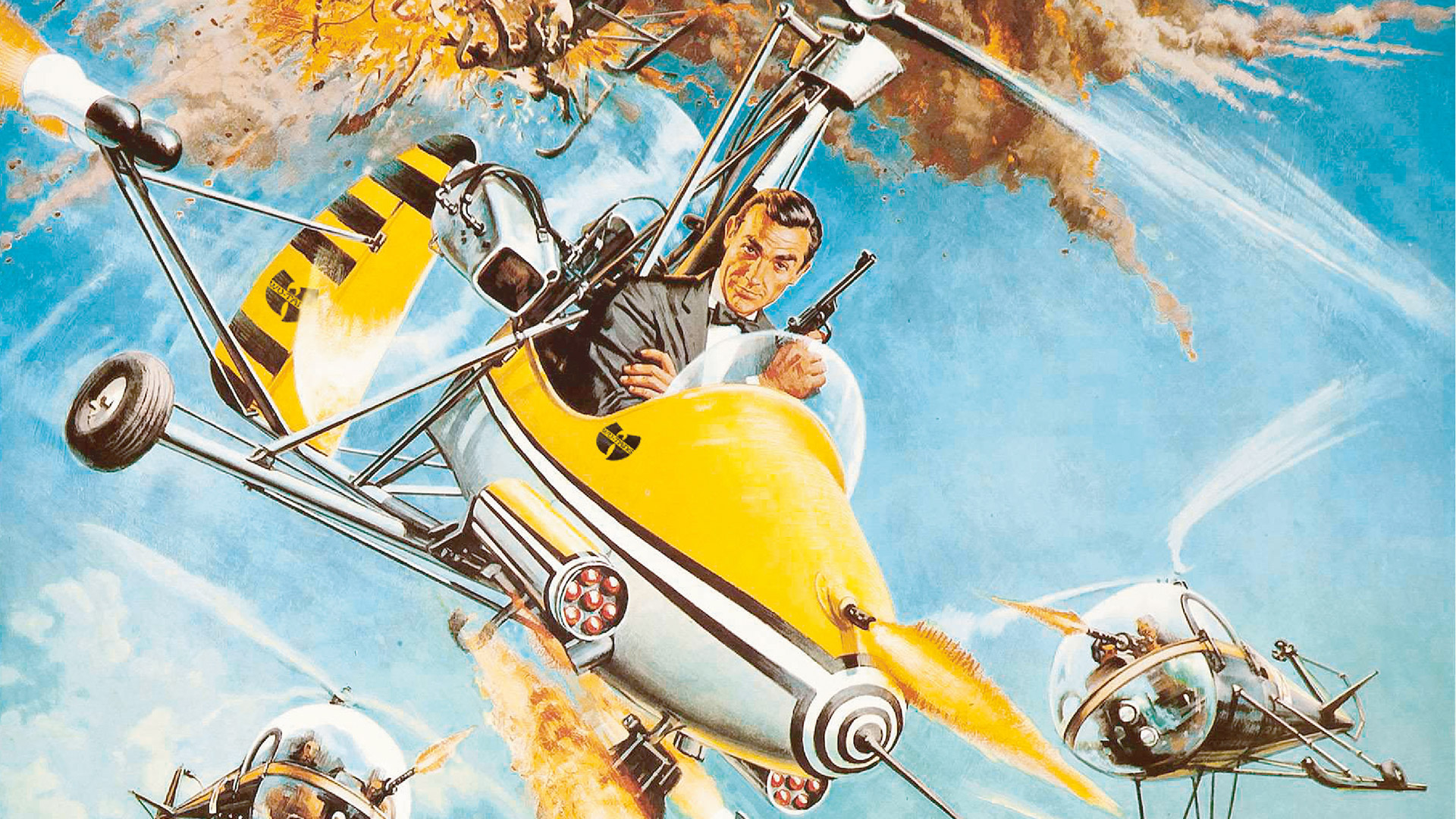
Sean Connery was done. Seriously. By the time the production for the fifth James Bond outing rolled around in 1966, the Scottish star was tired of the wig, tired of the typecasting, and frankly, tired of being mobbed by fans in Tokyo. But while Connery was checking his watch, a massive ensemble of You Only Live Twice actors was busy creating what many consider the first "true" blockbuster Bond.
It wasn't just about the man in the tux. This movie was a weird, beautiful collision of British stoicism and Japanese cinema royalty. You had classically trained Shakespearean actors sharing screen time with sumo wrestlers and professional divers. It was messy. It was expensive. It nearly killed a few people. Yet, the cast remains one of the most eclectic groups ever assembled for a 007 film. If you liked this post, you might want to look at: this related article.
The Man Who Wanted Out
Sean Connery’s performance in this film is a bit polarizing. Some fans think he looks bored; others see a rugged maturity. If he looks a little distracted, it’s because he was. During filming in Japan, he was followed into bathrooms by photographers. He was being asked if he liked "Oriental girls" in every single press conference. It was a circus.
Despite the behind-the-scenes friction, Connery delivered. He had to play a dead man, a fisherman, and a "Japanese" version of himself (which, let’s be honest, the makeup department didn't quite pull off by modern standards). But his chemistry with the local cast was what anchored the film. Without his gravitas, the giant volcano set would have just looked like a cheap toy. For another angle on this story, see the recent update from E! News.
The Villains: Pleasence and the Blofeld Identity
Let's talk about the face. Or the lack of one. For years, Ernst Stavro Blofeld was a voice and a pair of hands stroking a white Persian cat. When it came time to reveal the head of SPECTRE, the producers initially hired Jan Werich. But after a few days of filming, director Lewis Gilbert realized Werich looked like a "benevolent Santa Claus." He wasn't scary.
Enter Donald Pleasence.
Pleasence took the role and made it legendary. He decided Blofeld shouldn't just be a guy in a suit; he needed a physical defect. He suggested the vertical scar across the eye. It became the definitive look for the Bond villain, later parodied into oblivion by Mike Myers as Dr. Evil. Pleasence’s cold, thin voice and creepy stillness made him the standout among the You Only Live Twice actors. He didn't need to yell. He just needed to pet that cat and look at you with one dead eye.
Interestingly, the cat hated the noise on set. During the climactic volcano explosions, the poor feline was terrified and apparently made life quite difficult for Pleasence, scratching him and trying to bolt for the nearest exit.
The Bond Girls: Akiko Wakabayashi and Mie Hama
The casting of the female leads was a saga in itself. Originally, Akiko Wakabayashi was set to play Kissy Suzuki, and Mie Hama was cast as Aki. But there was a problem. Hama was struggling significantly with the English dialogue. The producers were actually going to send her home, which led to a legendary standoff where Hama reportedly threatened to jump from her hotel window because of the loss of "face."
The solution? They swapped the roles.
Wakabayashi became Aki—the more sophisticated, English-speaking agent who drives the white Toyota 2000GT. Hama became Kissy Suzuki, the "ama" diving girl who has much less dialogue. It worked out perfectly. Wakabayashi brought a playful energy to the first half of the film, and her character's sudden death remains one of the few genuinely emotional moments in the early Bond franchise.
Hama, for her part, became a style icon. She was the first Japanese woman to appear on the cover of Playboy, and her presence in the final act—running around a volcano in a white bikini with a knife—is burned into the memory of every 007 fan.
Tetsurō Tanba: The Real Deal
If you want to talk about presence, you have to talk about Tetsurō Tanba. He played Tiger Tanaka, the head of the Japanese Secret Service. In real life, Tanba was a massive star in Japan and a fascinating human being. He eventually became a leading authority on the afterlife, even writing books and directing films about what happens when we die.
On set, he was the only one who could really match Connery's cool. He had this deep, gravelly voice and a natural authority. Whether he was introducing Bond to his private subway system or overseeing ninja training, Tanba made the outlandish plot feel somewhat grounded. He wasn't just a sidekick; he felt like Bond’s equal.
The Supporting Players and Cameos
The depth of the You Only Live Twice actors list goes surprisingly deep.
- Charles Gray: He appears here as Henderson, Bond’s contact in Tokyo. What’s wild is that Gray would return just a few years later in Diamonds Are Forever to play the villain, Blofeld. It’s one of the few times the series reused an actor in such a major way without any explanation.
- Burt Kwouk: Before he was famous as Cato in the Pink Panther movies, Kwouk was a SPECTRE henchman. He had previously appeared in Goldfinger too.
- Lois Maxwell and Bernard Lee: The staples. Money-penny and M. Their scenes on the HMS Tenby (actually filmed in Gibraltar, not Japan) provide that necessary bit of "home" before Bond goes off the rails in the Far East.
- Ronald Rich: He played Hans, Blofeld’s hulking bodyguard. He didn't have many lines, but his fight with Connery at the end of the film is a classic example of the "big guy vs. fast guy" trope.
Why the Casting Worked (and Why It Almost Didn't)
Casting a movie in 1966 Japan wasn't like casting a movie in London or LA today. There were massive cultural barriers. The producers wanted "authentic" Japanese actors, but they also needed people who could handle the rigorous demands of a Bond set.
The production was a beast. The "Bird of Prey" helicopter sequence was dangerous. The volcano set—built by Ken Adam at Pinewood—cost more than the entire budget of the first Bond movie, Dr. No. The actors had to navigate this massive, practical world where real explosions were going off and real ninjas (played by actual martial arts experts) were rappelling from the ceiling.
One often overlooked aspect of the You Only Live Twice actors is the physical toll. Mie Hama had to spend hours in the water. The stunt team, led by Bob Simmons, took some serious hits. This wasn't a movie made in front of a green screen. When you see the sweat on the actors' faces, it's real. They were filming in high temperatures under intense studio lights or in the humid climates of Kagoshima.
The Legacy of the Ensemble
This film changed how Bond movies were cast. It proved that you could take the character out of his European comfort zone and surround him with a totally foreign cast, and the audience would follow. It set the stage for the globe-trotting "event" movies we see now.
Looking back, the chemistry between the You Only Live Twice actors is what saves it from being just a spectacle. You believe the friendship between Bond and Tanaka. You feel the menace of Pleasence's Blofeld. You actually care when Aki dies.
If you’re revisiting the film today, keep an eye on the background. The "ninjas" training at the castle were real members of the Japan Karate Association. The detail is insane. The producers didn't just hire extras; they hired specialists. That’s why the movie feels so dense and lived-in, even when the plot involves a giant space-capsule-eating rocket.
Actionable Insights for Bond Fans
If you're looking to dive deeper into the world of these actors or the film itself, here's how to do it right:
- Watch the Documentary: "Inside You Only Live Twice" is available on most Blu-ray editions. It features rare footage of Jan Werich as Blofeld before he was replaced. Seeing the difference between his performance and Donald Pleasence's is a masterclass in how casting changes a character's DNA.
- Explore Japanese Cinema: If you liked Tetsurō Tanba or Akiko Wakabayashi, look for their work in the Toho "Kaiju" movies or the "yakuza" genre of the 60s. They were icons in their own right, long before Bond came calling.
- Check the Credits: Notice the name Peter Fanene Maivia. He plays one of the henchmen Bond fights in the Osato Chemicals office. He is actually the grandfather of Dwayne "The Rock" Johnson.
- Look at the Locations: Many of the spots where these actors filmed are still there. The New Otani Hotel in Tokyo (Osato’s headquarters) is still a luxury destination. Himeji Castle, where the ninja training happened, is a UNESCO World Heritage site.
The film serves as a time capsule. It captures Sean Connery at the height of his fame, Donald Pleasence at his most sinister, and a group of Japanese actors who brought a level of sophistication and grace to a franchise that was still finding its footing as a global phenomenon.



