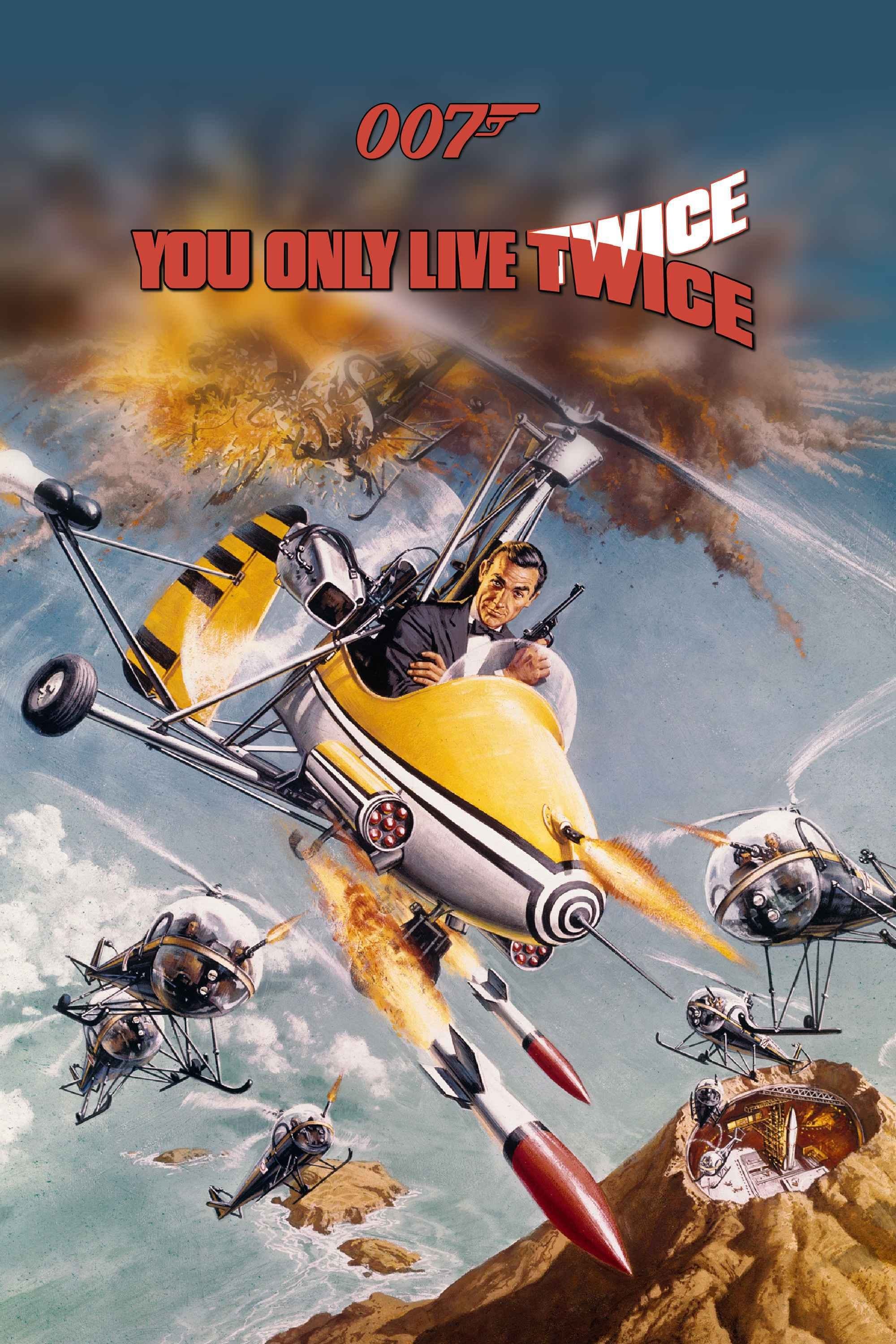
Sean Connery looked tired. Honestly, by the time he started filming the you only live twice 1967 full movie, the man was basically done with 007. He was getting mobbed in Japan. Fans were literally following him into bathrooms with cameras. It was a circus. Yet, despite the behind-the-scenes exhaustion, this specific entry in the franchise changed everything we know about blockbuster cinema. It’s the one with the volcano base. The one with the piranhas. The one where we finally, actually see Blofeld’s face.
If you’re looking to revisit the you only live twice 1967 full movie, you aren’t just watching a spy flick. You’re watching the birth of the modern "event" movie.
The Space Race and the Volcano That Cost a Fortune
People forget how high the stakes were in '67. The Cold War wasn't just about spies in trench coats; it was about the moon. Roald Dahl—yes, the guy who wrote Charlie and the Chocolate Factory—wrote the screenplay. He basically threw Ian Fleming's book out the window. The plot is wild: a mysterious spacecraft is "swallowing" American and Soviet capsules in orbit. The world is on the brink of World War III. Bond has to fake his own death, head to Japan, and find out who’s behind it.
The real star isn't Connery. It’s the set design. Ken Adam, the legendary production designer, built a literal volcano interior at Pinewood Studios. It cost about $1 million at the time. To put that in perspective, that was more than the entire budget of the first Bond movie, Dr. No. It had a working monorail. It had a landing pad for helicopters. It was massive.
When you see the you only live twice 1967 full movie today, that set still looks better than half the CGI we see in Marvel movies. There’s a weight to it. You can feel the heat and the scale. It’s practical effects at their absolute peak.
Sean Connery’s Japan Problem
Japan in the sixties was a vibe. The movie leans hard into it. We get the Ninja training camp, the gadgets, and "Little Nellie"—that tiny autogyro that Bond uses to fight off a fleet of full-sized helicopters. But there’s a weird part of the movie that hasn’t aged particularly well. The "transformation."
To go undercover, Bond "becomes" Japanese. It involves some questionable makeup and a wig. It’s awkward. You’ve gotta view it through a 1967 lens, but even then, it feels like a bizarre detour in an otherwise tight script. Connery himself was reportedly frustrated with the script’s lack of character development. He felt Bond was becoming a "puppet" for the gadgets. He wasn't wrong. This was the turning point where the gadgets started to outshine the man.
Meeting the Man Behind the Cat
We have to talk about Ernst Stavro Blofeld. Specifically, Donald Pleasence. Before this, Blofeld was just a voice and a hand stroking a white Persian cat. When the you only live twice 1967 full movie finally reveals him, it’s iconic. The scar across the eye. The grey suit. The calm, psychotic demeanor.
Pleasence wasn’t actually the first choice. They originally hired Jan Werich, but after a few days of filming, director Lewis Gilbert realized he looked too much like a "nice Santa Claus." He wasn't scary. Pleasence stepped in and created the blueprint for every movie villain for the next fifty years. Dr. Evil from Austin Powers isn’t a parody of Bond; he’s a direct parody of Donald Pleasence in this specific movie.
The Cultural Ripple Effect
Why does this movie still matter in 2026? It’s about the scale. Before this, movies were smaller. This film introduced the idea of the "super-villain lair." It established the trope of the countdown clock.
- The Theme Song: Nancy Sinatra’s "You Only Live Twice" is arguably the best Bond theme ever. That haunting string opening? It’s been sampled by everyone from Robbie Williams to rap producers. It sets a mood of melancholy that the movie doesn't always live up to, but man, it sounds good.
- The Cinematography: Freddie Young, who shot Lawrence of Arabia, did the camerawork here. The aerial shots of the Japanese coastline are stunning. It’s a beautiful film to look at, even if you mute the dialogue.
- The Action: The rooftop fight in Kobe is a masterclass in staging. No quick cuts. No shaky cam. Just clear, brutal choreography.
Finding the You Only Live Twice 1967 Full Movie Today
If you’re trying to track down the you only live twice 1967 full movie for a weekend marathon, you have options. Most people head straight to Amazon Prime or Apple TV. It’s usually available for rent or purchase in 4K.
Streaming rights for Bond movies are like a game of musical chairs. One month it's on MGM+, the next it's on Max. Honestly, the 4K Blu-ray is the way to go if you care about the volcano set. The level of detail in those practical effects is worth the extra bits. You can see the rivets in the steel and the actual smoke from the explosions.
What Most People Get Wrong About the Ending
There’s a common misconception that Bond kills Blofeld at the end of this one. He doesn't. Blofeld escapes. He always escapes. This movie was supposed to be the end for Connery, which is why the title feels so final. But, as we know, money talks. He came back for Diamonds Are Forever after George Lazenby’s one-off stint.
The ending of this movie is actually pretty chaotic. You have hundreds of stuntmen dressed as ninjas rappelling into a volcano while explosions go off everywhere. It’s glorious. It’s the kind of "everything but the kitchen sink" filmmaking that defined the late sixties.
Why You Should Watch It Right Now
Stop scrolling and just put it on. If you want to understand where Mission Impossible or John Wick came from, you have to see this. It’s the DNA of the blockbuster. It’s goofy, sure. The "yellowface" stuff is cringy. But the sheer ambition of the production is something we rarely see anymore. They built a volcano. They flew a tiny helicopter over real mountains. They made a movie that felt like the world was actually ending.
Actionable Insights for Your Re-watch:
- Look at the backgrounds: Pay attention to the lighting in Blofeld's office. It’s meant to look like it’s underwater.
- Listen to the score: John Barry was at his peak here. The "Space March" track is incredible.
- Check the gadgets: Count how many times Bond uses a gadget that would eventually become a real-life technology (like the cigarette rocket).
The you only live twice 1967 full movie isn't just a piece of nostalgia. It’s a time capsule of an era where movies were trying to be bigger than life itself. It succeeded. Go watch the volcano blow up one more time. It’s worth it.
Next Steps for Bond Fans: To get the most out of your viewing, compare the cinematography of this film with On Her Majesty's Secret Service, which followed it. You'll see a massive shift from the "spectacle" of the volcano to the "personal" grit of Lazenby's era. If you’re a technical nerd, look up the "Making of" documentaries regarding Ken Adam's set construction—the engineering required to keep that volcano from collapsing on the actors was almost as complex as the movie's plot itself.



