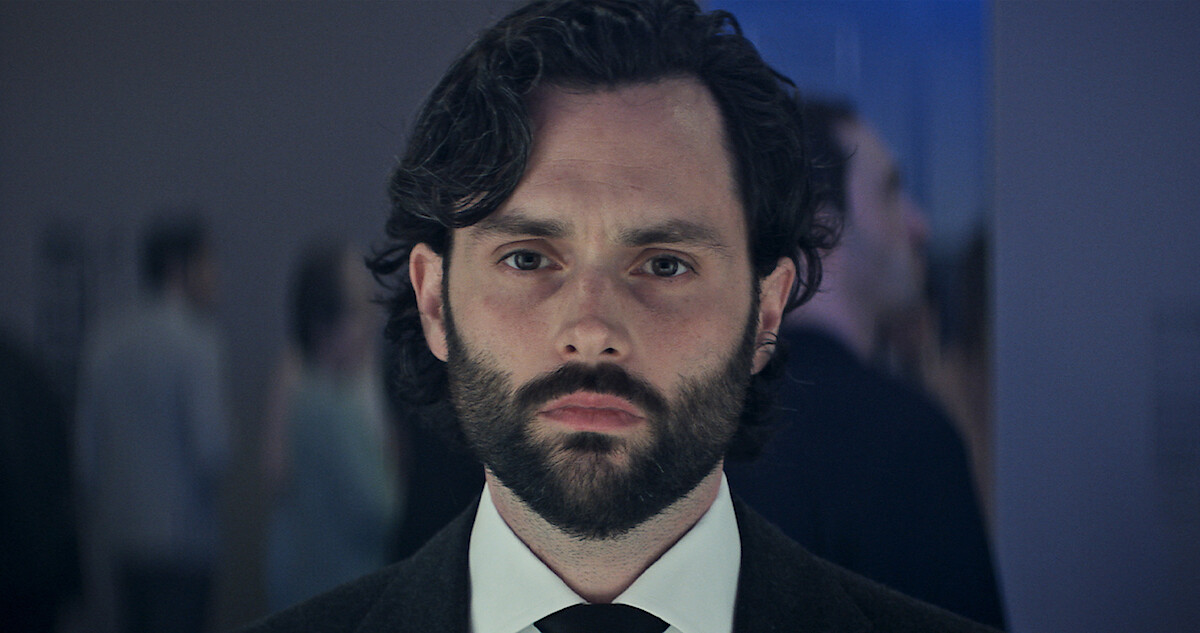
Joe Goldberg is a mess. By the time we hit You Netflix Season 4, the guy has burned down his life in suburban California, faked his own death, and hopped a plane to Europe. He’s looking for Marienne, sure, but what he finds is a total identity crisis.
London looks good on him. Honestly, the change of scenery was exactly what the show needed to avoid becoming a stale repetition of "boy meets girl, boy kills girl." Instead of the usual stalker-predator dynamic, showrunner Sera Gamble flipped the script into a whodunit. It’s basically Glass Onion but with more blood and a much more annoying group of rich people. Joe isn’t the hunter anymore. At least, that's what he wants us to believe. He’s Jonathan Moore now. A university professor. He wears tweed. He has a beard. He drinks tea and tries to blend into the background of a high-society circle that is, frankly, unbearable.
The shift in tone caught a lot of people off guard. Some fans hated it. They missed the gritty, voyeuristic feel of New York or the bright, satirical plastic of Madre Linda. But the London setting serves a specific purpose: it highlights the absurdity of class structures. Joe, who has always viewed himself as a refined outsider, finally meets the "old money" elites. They are terrible. They’re cruel, vacuous, and obsessed with their own legacies. It’s the first time we see Joe as the "moral" one in the room, which is a terrifying trick the writers play on the audience.
The Eat the Rich Killer and the Big Reveal
The first half of the season sets up the "Eat the Rich" killer. Someone is picking off Joe’s new friends one by one. Joe gets these creepy texts on an encrypted app called Evanesce. It’s a classic cat-and-mouse game. Rhys Montrose, played by Ed Speleers, emerges as the primary antagonist. He’s the "common man" who made it big, a candidate for Mayor of London, and seemingly the only person Joe actually likes.
Then Part 2 happens.
Everything we thought we knew about You Netflix Season 4 gets incinerated in the final episodes. The twist isn't just that Joe is the killer—it's that Joe has finally, completely snapped. He’s been hallucinating Rhys the entire time. The "Rhys" he’s been talking to is a manifestation of his own dark impulses, a fractured piece of his psyche that allows him to commit atrocities while maintaining the delusion that he’s a "good man" just trying to solve a mystery.
It's a bold move. It re-contextualizes every single scene from the first five episodes. When Joe thought he was "protecting" people or "investigating" Rhys, he was actually the one doing the stalking. The show forces us to realize that Joe’s internal monologue—the very thing that makes us empathize with him—is a lie. He is an unreliable narrator in the most extreme sense. This isn't just a thriller anymore; it’s a clinical study of a psychopath losing his grip on reality.
Breaking Down the Hallucination
If you go back and re-watch, the clues are everywhere. Rhys never interacts with anyone else when Joe is in the room. He only appears when Joe is alone or in a crowded space where Joe is isolated. It’s a masterful bit of television writing that relies on the audience’s willingness to trust Joe’s perspective. We want to believe Joe is changing. We want to believe he can be a hero. The show rewards that desire with a cold, hard slap in the face.
The basement scenes with Marienne are devastating. Seeing her trapped in the iconic glass cage—transported all the way to a London workshop—is the moment the "Jonathan Moore" facade dies. Tati Gabrielle gives a haunting performance here. Her fear is palpable, and it serves as a necessary grounded contrast to the heightened, almost campy antics of the London socialites. While Joe is playing Sherlock Holmes in his head, a real woman is starving in a box because of him.
Why the Ending Changes Everything for Season 5
The finale of You Netflix Season 4 isn't a reset. It's an evolution. Joe attempts suicide, jumping off a bridge into the Thames, but he survives. In the past, Joe might have seen this as a sign to start over. Instead, he embraces the darkness. With the help of Kate—who has inherited her father’s massive fortune and global influence—Joe returns to New York.
He’s not a secret anymore. He has a powerhouse PR team. He’s a "survivor." He’s a billionaire-adjacent public figure.
This is the most dangerous version of Joe Goldberg we’ve ever seen. In previous seasons, Joe was limited by his lack of resources. He had to hide. He had to work at bookstores or grocery stores. Now? He has the "Get Out of Jail Free" card that only extreme wealth can provide. The season ends with Joe looking in a window and seeing the reflection of "Rhys" staring back at him. He isn't fighting the monster anymore. He’s invited it in for tea.
The Problem with Kate
Kate is a polarizing character. Unlike Love Quinn, who was a mirror to Joe’s violence, or Beck, who was a victim of his obsession, Kate represents a different kind of danger: complicity. She knows who Joe is—mostly—and she chooses to use her power to clean up his mess. It’s a cynical ending. It suggests that if you have enough money and a good enough publicist, you can get away with literally anything. It shifts the show’s critique from individual obsession to systemic corruption.
Common Misconceptions About Season 4
A lot of people think the "Eat the Rich" plot was just a trendy gimmick. It wasn't. It was the necessary bridge to get Joe to his final form. You can't have Joe Goldberg become a global elite without first showing his disdain for that world.
Another big point of confusion is the timeline of the Marienne kidnapping. Because the show is told through Joe’s fractured mind, the sequence of events feels jumbled. In reality, Joe snatched her much earlier than the "detective" plotline suggests. He was living a double life from the moment he stepped foot in London. The "Jonathan Moore" persona wasn't a choice; it was a psychotic break.
Actionable Insights for Fans and Rewatchers
If you're planning on diving back into the series or preparing for the final season, keep these points in mind to truly appreciate the craftsmanship of the London arc:
- Watch the background during Rhys scenes. In the first half of the season, pay close attention to the blocking and staging whenever Rhys Montrose is on screen. You'll notice that he never moves an object or speaks to a third party in a way that Joe doesn't facilitate.
- Track the "Internal Monologue" shifts. Notice how Joe's voiceover changes in tone between Part 1 and Part 2. It becomes sharper, more cynical, and eventually, more honest.
- Research the filming locations. Much of the season was filmed at Royal Holloway, University of London, and around South Kensington. Seeing the real-world prestige of these locations adds another layer to Joe's "imposter syndrome."
- Analyze the literary references. Joe is teaching "The Grave" and discussing whodunits for a reason. The show is constantly telling you exactly what it's doing if you listen to the syllabus.
The legacy of You Netflix Season 4 is that it successfully deconstructed its own lead character. It stripped away the romanticized "stalker-hero" trope and left us with a cold, calculating killer who has finally stopped making excuses. He's back in New York, he's rich, and he's never been more terrifying.
To prepare for the final chapter, re-watch the final ten minutes of the Season 4 finale. Pay attention to Joe's hair, his suit, and his posture. The "boyish" Joe is gone. The predator has fully matured. Understand that the show is no longer about Joe finding love; it's about whether Joe can ever be stopped now that he has the world at his feet.
Keep an eye on official Netflix announcements regarding the production of the fifth and final season. Production schedules have shifted, but the narrative trajectory is clear: Joe Goldberg is going home, and he's bringing a lot of baggage with him. If the London arc taught us anything, it's that the cage is never really gone; it just gets bigger.



