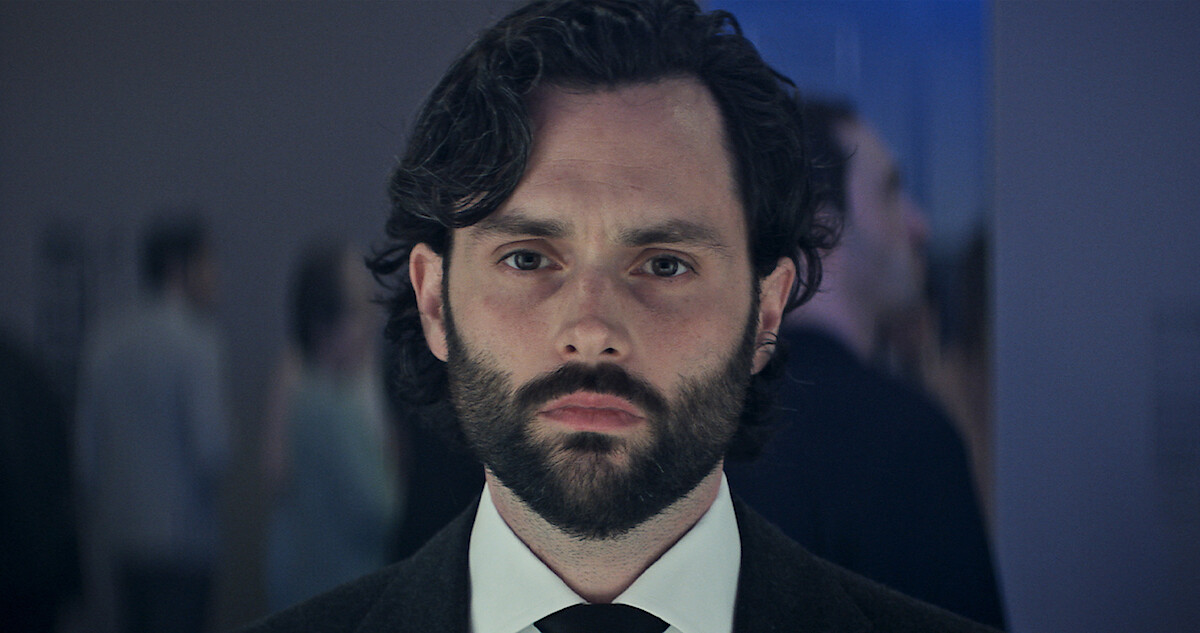
Joe Goldberg is a monster. Honestly, let’s just start there because sometimes we forget. When You Netflix Season 1 first dropped—originally on Lifetime before it blew up globally on the streaming giant—it felt like a massive cultural reset for the psychological thriller genre. We weren't just watching a scary guy in a basement; we were trapped inside his head, listening to his justification for every single creepy thing he did. It’s a jarring experience. One second he’s a charming bibliophile saving a girl from a subway track, and the next, he’s stealing her underwear and murdering her "toxic" friends.
The brilliance of that first season isn't just the shock value. It’s the way it weaponized our own romantic tropes against us. Also making headlines recently: Why Jeremy Clarkson Health Battle Matters More Than Ever.
The Hook That Caught Everyone Off Guard
Think back to the pilot. Joe sees Guinevere Beck. He analyzes her bracelets. He judges her book choices. He decides she wants to be seen. It's classic rom-com stuff, right? The "meet-cute." But Penn Badgley plays it with this unsettling stillness that makes your skin crawl even when he’s being "nice." You Netflix Season 1 took the "sensitive guy" archetype and shredded it.
The showrunners, Greg Berlanti and Sera Gamble, based this on Caroline Kepnes’ 2014 novel. If you’ve read the book, you know it’s even darker. The show softened Joe just enough to make him palatable, which is arguably more dangerous. It forced the audience into a position of accidental complicity. We want him to get away with it because the people he kills—like the insufferable Benji or the manipulative Peach Salinger—are framed as being "worse" for Beck than Joe is. That’s the trick. That’s the trap. Further details into this topic are detailed by Rolling Stone.
Why Season 1 Hits Different Than The Rest
Later seasons go off the rails. They get bigger, weirder, and more satirical. But Season 1 is grounded. It’s set in a gritty, recognizable New York City. The stakes feel intimate.
The cage in the basement of Mooney’s Books is the MVP of the season. It’s a literal physical manifestation of Joe’s psychological grip. When Benji is in there, it’s almost dark comedy. When it’s Beck? The tone shifts into pure horror. Most viewers didn't see the finale coming, or at least they hoped for a different outcome. They wanted the "love conquers all" ending, even though Joe’s version of love is a cage.
The Peach Salinger Factor
Shay Mitchell was a revelation as Peach. She was the only one who saw through Joe, mostly because she was running a similar "obsession" play herself. It was a battle of two predators. Joe won because he was more desperate. He didn't have a reputation to lose; Peach did. Their showdown at the Greenwich estate changed the trajectory of the show. It proved Joe wasn't just a lucky stalker—he was a calculated killer.
Beck, played by Elizabeth Lail, is often criticized by fans for being "annoying" or "messy." That’s a wild take. She’s a human being. She’s a struggling writer in her 20s trying to navigate a city that eats people alive. Joe didn't love Beck; he loved the idea of saving her. When she stopped fitting his narrative, he broke.
Social Media As A Weapon
Let’s talk about the tech. In 2018, when the show peaked, the way Joe used Instagram and Twitter felt like a cautionary tale. He didn't need high-tech hacking tools. He just needed a public profile and a little bit of patience.
- He found her address through a geotag.
- He tracked her schedule via her friends' posts.
- He used her own digital footprint to gaslight her.
It's terrifying because it's easy. We all do it. Not the stalking part, hopefully, but the "deep dive" into a crush’s history. Joe Goldberg is just the logical, horrific conclusion of that behavior. He’s the personification of the "Like" button turned into a blunt force object.
The Reality Of The "Nice Guy" Trope
There’s a specific psychological phenomenon at play here. It’s the "Halo Effect." Because Penn Badgley is attractive and soft-spoken, viewers naturally wanted to find excuses for him. Badgley himself had to go on Twitter (now X) to remind fans that Joe is a murderer. "But he’s so dreamy!" No. He’s a serial killer who happens to like Dan Brown and rare editions of Don Quixote.
The show deconstructs the "Nice Guy" myth. Joe believes he is the hero of a romance novel. He thinks he’s doing the "hard work" of love. This is why the ending of You Netflix Season 1 is so vital. If Beck had lived, the show would have validated Joe’s methods. By having him kill her, the writers forced the audience to reckon with the fact that they’d been rooting for a monster for ten episodes.
Behind The Scenes Of The NYC Aesthetic
The cinematography of the first season is distinctly warm. Lots of amber tones, soft lighting in the bookstore, and cozy sweaters. It looks like a Fall mood board. This was a deliberate choice. It creates a sense of safety that the script constantly violates. The contrast between the beautiful visuals and the sound of Joe’s internal monologue—dry, cynical, and often violent—is what makes the show work.
The production design of Mooney’s Books was actually filmed at Logos Bookstore in Manhattan’s Upper East Side. If you go there today, it still has that vibe. It feels like a place where you’d find a rare book, not a human-sized plexiglass cage.
Impact On The Thriller Genre
Before You, most stalker thrillers were "Lifetime movies of the week"—cheap, predictable, and one-dimensional. This show elevated the material. It introduced a level of meta-commentary that hadn't been seen since Dexter.
It also sparked real conversations about privacy. After the first season aired, there was a measurable uptick in people checking their privacy settings. It made the "invisible" parts of our lives—our cloud backups, our deleted emails—feel vulnerable. Joe Goldberg didn't just break into Beck’s house; he broke into her digital soul.
Moving Forward With The Joe Goldberg Saga
If you’re revisiting the series, pay attention to the minor characters. Paco, the kid next door, represents the "next generation." Joe tries to "save" him too, teaching him the same warped logic he uses to justify his crimes. It’s a cycle of trauma disguised as mentorship.
Season 1 is the purest form of the show. It hasn't become a caricature of itself yet. It’s a tight, claustrophobic study of obsession.
Next Steps For Your Watch (Or Re-Watch):
- Watch the eyes: Notice how Joe’s facial expressions rarely match his internal monologue. It’s a masterclass in "masking."
- Check the background: Throughout the season, Joe is often visible in the background of Beck’s "normal" life. It’s a fun, creepy game to see where he’s hiding in plain sight.
- Compare the ending: Read the final chapters of the book by Caroline Kepnes. The TV show actually kept things slightly cleaner than the original text, which is saying something given how dark the finale is.
- Privacy Audit: Seriously. Check your social media permissions. Turn off "precise location" on your photos. Don't be a Beck.
The legacy of You Netflix Season 1 is its ability to make us uncomfortable with our own consumption of media. We like the drama. We like the thrill. But we have to remember that in the real world, there is no "Inner Monologue" to make a stalker look like a misunderstood poet. They're just the guy in the hat across the street.



