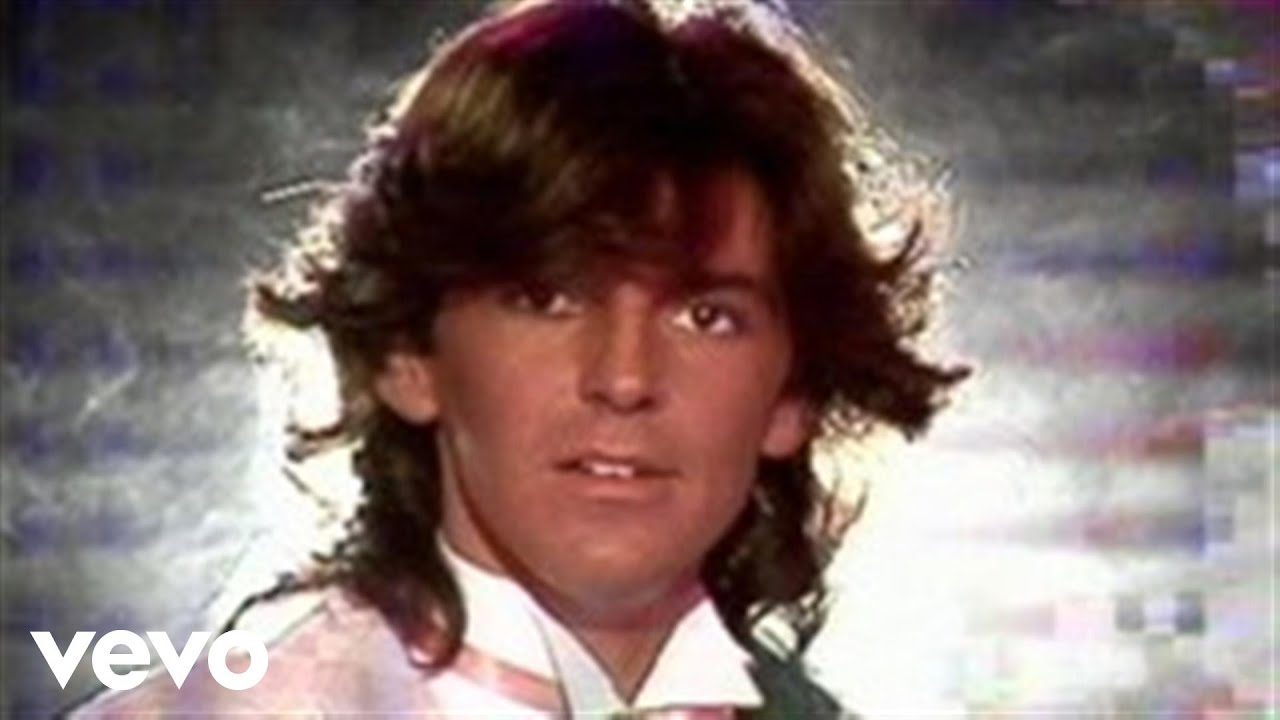
It’s October 1984. A German duo steps into the spotlight with hair so feathered it defies gravity and a synthesizer riff that sounds like the future and the past had a baby. That song was You My Heart You My Soul, and honestly, the music world wasn't ready for how infectious it would be. Thomas Anders had the silky voice. Dieter Bohlen had the vision (and the tracksuits). Together, they created a three-and-a-half-minute slice of Euro-disco heaven that didn't just top the charts—it redefined them.
Most people think of it as just another cheesy eighties track. They're wrong.
There is a specific kind of magic in the way that track opens. That pulsating bassline? It wasn't just catchy; it was engineered for the discotheques of West Germany before exploding across the globe. You've probably heard it at a wedding or a retro night, but the history behind it is way more chaotic than the smooth melody suggests.
The Fluke That Conquered Europe
When Modern Talking You My Heart You My Soul was first released, it didn't do much. It sat there. For weeks, it felt like a dud. Dieter Bohlen, the mastermind behind the production, had been grinding in the industry for years, often under various pseudonyms. He knew the song was a "grower," but even he couldn't have predicted that it would eventually spend six weeks at number one in Germany and crack the top ten in nearly every European country.
The weirdest part? The music video.
If you watch it now, it's a fever dream of smoke machines and soft lighting. Thomas Anders is clutching a microphone like it’s his last lifeline, sporting a "Nora" necklace—a tribute to his then-wife that became a strange piece of pop culture lore. Fans obsessed over that necklace. It was a weird, personal touch in an industry that usually preferred its stars to look single and available.
But the song worked because it bridged a gap. It took the high-energy pulse of Italo-disco and smoothed it out with a pop sensibility that worked on the radio. It wasn't too aggressive for your mom, but it was just "club" enough for the teenagers in Berlin and Munich.
Why the high-pitched chorus actually worked
Let's talk about those "bridge" vocals. You know the ones—the high-pitched, almost Bee-Gees-esque backing vocals that kick in during the chorus.
- It wasn't actually Thomas or Dieter doing the highest notes.
- The "Modern Talking Sound" relied on a group of incredibly talented session singers like Rolf Köhler, Michael Scholz, and Detlef Wiedeke.
- These guys were the secret sauce.
Bohlen understood that human ears love contrast. You have Thomas Anders’ warm, breathy baritone in the verses, and then bam—this wall of falsetto harmony hits you in the chorus. It’s a classic tension-and-release tactic. Without those session singers, the song would have been a flat pop track. With them, it became an anthem.
Modern Talking You My Heart You My Soul: Beyond the 80s
By the time the nineties rolled around, the band had broken up, hated each other, and then decided that money was a pretty good reason to get back together. In 1998, they released "You're My Heart, You're My Soul '98."
It shouldn't have worked. Remakes usually suck.
But somehow, adding a rap verse by Eric Singleton and beefing up the drum machines made it a massive hit all over again. It proved that the core melody was indestructible. Whether it was the slow-burn disco of the eighties or the thumping techno-pop of the late nineties, people just wanted to hear that hook.
The longevity is staggering. You go to countries like Russia, Poland, or Vietnam today, and this song is still played like it was released yesterday. It’s a cultural touchstone in Eastern Europe in a way that American artists often struggle to understand. For many who lived behind the Iron Curtain, Modern Talking represented a glitzy, colorful Western world. It was the sound of freedom, even if the lyrics were just about a guy being really into a girl.
The technical side of the "Bohlen Sound"
Dieter Bohlen wasn't just a songwriter; he was a meticulous architect of sound. He utilized the Roland Juno-60 and the Yamaha DX7—the quintessential synths of the era—to create textures that felt expensive even if the production budget wasn't astronomical.
He focused on the "Ohm" factor. The music had to feel physically vibrating in the room. He famously prioritized the melody above everything else. If you couldn't whistle it after one listen, it went in the trash. That's why You My Heart You My Soul is so sticky. The interval jumps in the melody are mathematically satisfying to the human brain.
What most people get wrong about the lyrics
"You my heart, you my soul." Grammatically? It’s a bit of a mess. But that was the point.
By keeping the English simple—almost "International English"—Modern Talking ensured their music had no borders. You didn't need to be fluent in English to understand the sentiment. It was primal. It was direct.
Some critics at the time mocked the simplicity. They called it "plastic pop." But those critics are mostly forgotten, and the song currently has hundreds of millions of views on YouTube. There's a lesson there about the difference between "intellectual" music and music that actually connects with people on an emotional, rhythmic level.
The 2020s Revival
We are seeing a massive resurgence of the "Synthwave" and "Retrowave" aesthetics. Artists like The Weeknd or Dua Lipa are pulling directly from the sonic palette that Modern Talking helped popularize. When you hear a gated reverb snare or a shimmering synth pad in a modern Top 40 hit, you're hearing the DNA of 1984.
Social media has helped too. TikTok creators have rediscovered the track, using the 1998 version or the original for retro-fashion transitions. It turns out that a 40-year-old song still hits the "vibes" requirement for a generation that wasn't even born when the Berlin Wall was standing.
Actionable Takeaways for Music Lovers and Creators
If you're a fan or a budding producer, there's a lot to learn from the success of this track. It wasn't an accident; it was a blueprint.
- Prioritize the Hook: If your chorus doesn't stick in the first five seconds, keep working. Bohlen spent more time on the four-bar chorus than the rest of the song combined.
- Contrast is King: Use different vocal textures. Pair a deep, husky lead vocal with bright, airy backing tracks to create depth.
- Don't Fear Simplicity: You don't need complex metaphors. "You're my heart, you're my soul" says everything it needs to say.
- Global Appeal: If you want a wide audience, keep your core message accessible. Music is a universal language, so don't let over-complicated lyrics get in the way of a great melody.
To truly appreciate the impact of Modern Talking, go back and listen to the original 1984 12-inch maxi version. Pay attention to the way the bass interacts with the kick drum. It’s a masterclass in minimalist disco production. Then, compare it to the 1998 remix to see how a song can be "upcycled" for a new era without losing its soul. The song remains a testament to the power of a simple idea executed with absolute confidence and a really good synthesizer.



