It was 1995. Madonna was in a weird spot. She’d spent years being the "Material Girl" or the provocateur of Erotica, but suddenly she was fighting tooth and nail to be taken seriously as an actress. Specifically, she wanted to be Eva Perón. But there was a problem: the music for the film Evita was already legendary. Andrew Lloyd Webber and Tim Rice had written the original stage play decades earlier. Yet, the movie needed something fresh. It needed a soul. That’s how You Must Love Me was born. It wasn't just a song; it was a career-defining pivot that changed how people heard her voice.
Honestly, it’s a bit of a miracle the song even exists. Lloyd Webber and Rice hadn't worked together in years. They were like a divorced couple trying to co-parent a masterpiece. But they reunited for this one track, mostly because a movie needs an original song to qualify for an Academy Award. Cynical? Maybe. But the result was a stripped-back, vulnerable prayer that didn't sound like anything else on the radio in 1996.
Why You Must Love Me Still Hits Different
Most Madonna hits are built on a beat. You dance to them. You work out to them. You Must Love Me is different because it’s built on silence and a cello. When you listen to the track, you aren't hearing the "Queen of Pop." You’re hearing a woman who had spent months taking vocal lessons to expand her range for the role of Evita.
The song appears in the film when Eva is dying. She’s realizing that her power is fading, and she’s looking at her husband, Juan Perón, wondering if he actually loves her or just the image of her. It’s incredibly meta if you think about Madonna’s own life at the time. She was constantly under fire from the press. She was being told she couldn't sing the part. She was literally pregnant with her daughter, Lourdes, while filming.
The Technical Shift
Madonna’s voice in the 80s was often thin, almost "Minnie Mouse-ish" in the early days. For You Must Love Me, she used a much more chest-heavy, resonant tone. It’s a masterclass in restraint.
- She stopped using the heavy vibrato common in dance music.
- The arrangement stayed acoustic—piano, cello, and oboe. No synthesizers.
- The lyrics are surprisingly simple. "Where do we go from here?" It’s a question anyone who has ever felt their world collapsing has asked.
The song went on to win the Oscar for Best Original Song. It beat out tracks from The Mirror Has Two Faces and That Thing You Do!. It was a huge moment of vindication. People forget how much the "pre-Evita" public doubted her. They thought she’d turn a Broadway classic into a disco track. Instead, she gave them something that felt like a funeral march and a love letter at the same time.
What Most People Get Wrong About the Recording
There’s a common misconception that the song was just "another pop ballad" thrown onto the soundtrack. It wasn't. The recording sessions were notoriously tense. Alan Parker, the director, wanted something raw. He didn't want the polished, over-produced sound that dominated the 90s.
Madonna has talked about how nervous she was. She recorded it with a live orchestra. That’s a nightmare for most pop stars who are used to fixing every little pitch error in post-production. But you can hear the breathiness. You can hear the slight imperfections. That is exactly what makes You Must Love Me work. It feels human.
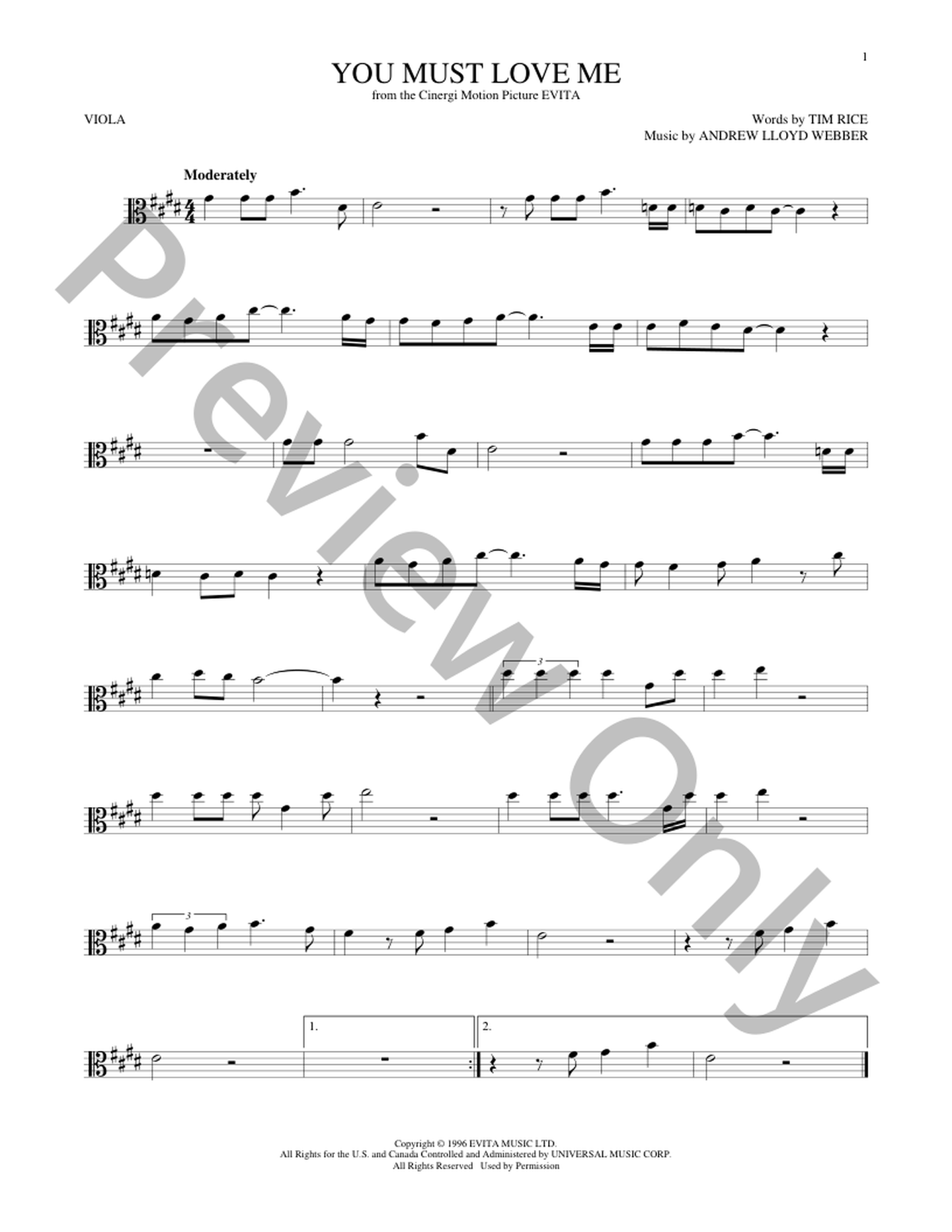
Actually, if you look at the sheet music, the song is deceptively complex. It shifts keys in a way that feels natural but is actually quite difficult to sing without sounding pitchy. It’s a testament to those vocal coaches she hired. She wasn't just faking it; she was becoming a technical singer.
The "New" Tim Rice Lyrics
Tim Rice’s lyrics for the song are some of his most heartbreaking. He’d already written "Don't Cry for Me Argentina" years prior, which is bombastic and theatrical. You Must Love Me is the opposite. It’s a quiet realization. When Eva sings, "I'm not that girl anymore," she’s stripping away the fur coats and the political speeches.
It’s about the fear of being unlovable once the "usefulness" is gone.
The Impact on Madonna's Career
If this song hadn't happened, we might not have gotten Ray of Light. Think about it. You Must Love Me proved to Madonna—and the world—that she didn't need a heavy bassline to hold an audience's attention. It gave her the confidence to experiment with her voice.
- It led to her working with William Orbit.
- It shifted her image from "Sex" era to "Spiritual" era.
- It gave her a seat at the table with "serious" artists.
The song peaked at number 18 on the Billboard Hot 100. By Madonna standards, that’s modest. But its longevity is what matters. It’s become a staple for cabaret performers and musical theater auditions. It’s one of those rare instances where a "movie song" transcends the film it was written for.
Why the Music Video is Often Overlooked
The video is basically just Madonna standing by a piano. It’s brown, sepia-toned, and somewhat drab compared to her usual high-concept stuff like "Bedtime Story" or "Human Nature." But that was the point. She was pregnant during the shoot, and they had to hide her bump behind the piano and clever camera angles.
This forced the focus onto her face. Her expressions. The way she looks directly into the lens. It’s a stark contrast to the massive, sweeping shots of the Evita film. It’s intimate. It feels like she’s singing to you in a small room at 2:00 AM.
A Quick Reality Check on the Stats
- Released: October 1996.
- Awards: Golden Globe and Academy Award for Best Original Song.
- Chart Performance: Top 10 in the UK and several other countries.
- The song was eventually added to the 2006 London revival of the Evita stage musical because it was so popular.
How to Appreciate the Song Today
If you haven't listened to it in a while, do yourself a favor. Put on a good pair of headphones. Ignore the movie visuals for a second. Just listen to the way the cello enters during the second verse. It’s incredibly mournful.
You Must Love Me is a reminder that even the biggest stars in the world have moments of profound insecurity. It’s a song about the thin line between being admired and being loved. There’s a big difference between the two, and this track lives right in that gap.
Actionable Insights for Music Lovers
To really "get" the depth of this track, compare the soundtrack version to the live version Madonna performed during her Sticky & Sweet Tour in 2008. In the live version, she plays guitar and reimagines it with a more Romani/folk influence. It shows the song's versatility. It doesn't have to be a theatrical ballad; it can be a campfire song.
Next time you’re building a playlist of 90s hits, don't just stick to "Vogue" or "Frozen." Throw this in. It’s a palate cleanser. It’s a bit of history. And honestly, it’s one of the most honest things she’s ever put on tape.
Check out the original Evita concept album from 1976 afterward. You'll see just how much the "new" song changed the emotional arc of the story. It turned a cold political drama into something with a beating heart.



