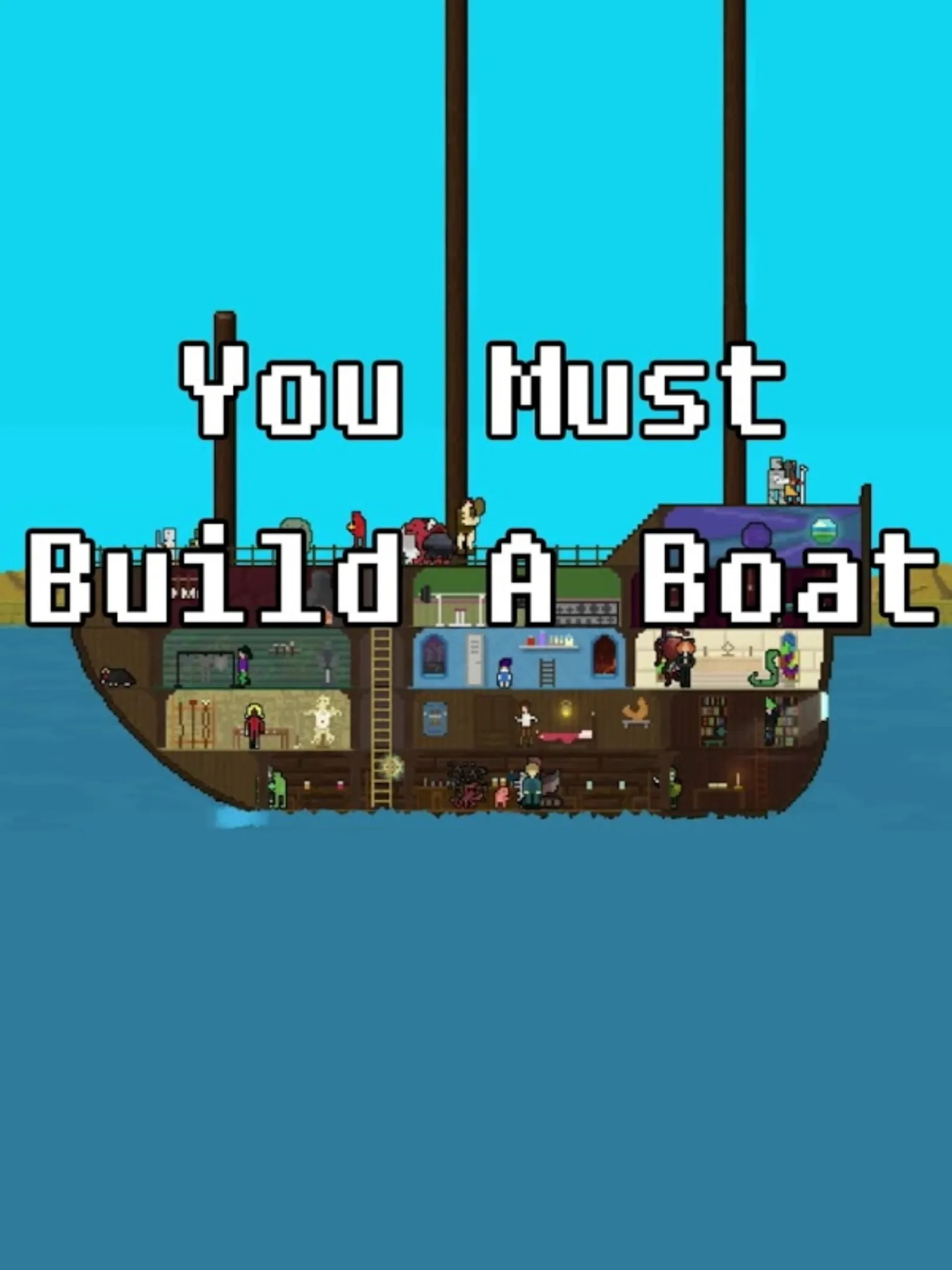
You’re trapped on a tiny, pathetic dinghy. Two skeletons are staring at you. The music is pulsing with this 8-bit urgency that makes your palms sweat before you even touch the screen. This is how You Must Build a Boat starts, and honestly, it doesn’t let up for a second. It’s the 2015 sequel to 10000000, developed by Luca Redwood under the Eightyeight Games banner, and even years later, it remains the gold standard for how to mash up a puzzle game with an RPG without making it feel like a cheap gimmick.
Most mobile games want to waste your time. This one wants to steal your soul.
The premise is exactly what the title says. You start with nothing. You run through dungeons, matching tiles to fight monsters and unlock chests, all to gather resources, gold, and a crew of literal monsters to turn your floating piece of wood into a massive, sprawling vessel. It sounds simple. It isn't.
The Chaos of the Infinite Runner Mechanic
In most match-3 games, you have all the time in the world. You sit there, sip your coffee, and look for the best move. Not here. In You Must Build a Boat, the screen is constantly scrolling to the left. If your character gets pushed off the left edge of the screen because you couldn't kill a physical obstacle or a monster fast enough, the run is over.
That pressure changes everything.
You aren't looking for "good" matches; you are looking for any matches. You need swords to slash, staves to cast magic, and shields to keep from being pushed back. It feels less like Bejeweled and more like frantic plate-spinning. Sometimes you're just sliding tiles like a maniac because you’re half a second away from losing and you need one more key to open a chest before the scroll consumes you.
The game uses a "sliding row and column" mechanic rather than the typical "swap two adjacent tiles" style. It’s tactile. It feels heavy. When you land a massive combo, the screen shakes, the sounds go wild, and your little pixel dude sprints forward like he’s possessed. It’s an endorphin hit that most AAA games wish they could replicate.
Recruiting Your Enemies
One of the weirdest and best parts of the game is the recruitment system. You don't just find items; you find crew members. You go into a dungeon, beat a specific monster, and suddenly that monster is living on your boat.
These aren't just cosmetic. Every creature you "hire" gives you a permanent buff. Maybe the zombie increases your physical damage. Maybe the elemental makes your fire spells hit harder. By the time you’re halfway through the game, your boat is teeming with skeletons, demons, and bizarre creatures, all working for you.
It turns the traditional "monster slaying" trope on its head. You aren't just killing them for XP; you're headhunting. You want them on the team. This creates a really tight loop where you’re constantly checking your boat’s roster to see what you need to upgrade next.
Managing the Boat's Economy
The boat itself acts as your hub. It’s where you spend the gold and "thought" (a secondary currency) you earn during runs. There’s a blacksmith to sharpen your swords, an alchemist for potions, and a library where you can trade in "thought" for permanent perks.
It’s a masterclass in pacing.
Just when you feel like a certain dungeon is getting too hard, you finally scrape together enough gold to upgrade your staff. Suddenly, those armored guards that were stopping you dead in your tracks are melting. You feel powerful. Then, the game throws you into the next zone, and you’re the underdog again.
Honestly, the "Thought" currency is such a clever touch. It represents the knowledge gained from your travels. It forces you to choose between immediate power-ups or long-term investments. Do you want to do 5% more damage now, or do you want to save up so that chests drop better loot later?
Why the Graphics and Sound Matter
Let’s be real: You Must Build a Boat isn't going to win any awards for graphical fidelity. It’s pixel art. Very retro. Very "indie." But it works because the visual clarity is perfect. In a game where you have 0.5 seconds to react, you need to know exactly what a tile is just by its color and shape.
The music, composed by Sean "Screaming Meat" Allen, is the secret sauce. It’s high-tempo, catchy, and slightly stressful. It perfectly matches the frantic nature of the gameplay. When you’re back on the boat, the music chills out. It’s a breather. Then you dive back into a run, and the beat drops, and you’re back in the zone.
It’s also worth noting that this game is a "premium" experience. No microtransactions. No "wait 4 hours for your energy to refill." No "buy 50 gems to skip this level." You buy it once, you own it, and you play it until your fingers cramp. In the current mobile landscape, that feels like a miracle.
The Nuance of the Quest System
You don’t just mindlessly run. You have specific goals.
- Match 50 sword tiles in one run.
- Finish a dungeon without using a potion.
- Recruit a specific type of monster.
These quests give you the "fuel" (metaphorically) to move the boat to the next location. It prevents the game from feeling like a repetitive grind because you’re always chasing a specific objective. You might go into a run knowing you’re going to lose, but as long as you get those 10 ice spell matches, you’ve made progress. It’s rewarding even when you fail.
Technical Nuance: The Strategy Behind the Slide
People think match-3 is luck. In You Must Build a Boat, luck is only about 20% of the equation. The rest is board management.
Advanced players don't just look for matches; they "prep" the board. If you know a chest is coming up, you start stockpiling key tiles at the bottom of the screen. If you see a big physical enemy approaching, you clear out the magic staves to make room for more swords.
It’s about manipulating the RNG to work in your favor. There’s a genuine skill ceiling here. You can watch high-level play and see people clearing rows with a speed that looks like a blur. They aren't just lucky; they’re predicting where tiles will land three moves ahead of time.
Common Misconceptions and Pitfalls
A lot of people jump into this game and get frustrated because they think they need to clear every dungeon on the first try. You won't. You aren't supposed to.
The game is designed around the "incremental gain" philosophy. Every single run, no matter how short, gives you something. Whether it’s a bit of gold or a few points of "thought," you are always stronger than you were three minutes ago.
Another mistake? Ignoring the monsters. Some players focus entirely on weapon upgrades and forget to check their crew buffs. Your crew is often more important than your gear. A fully kitted-out boat with a diverse crew can breeze through areas that a "solo" player would find impossible.
Actionable Insights for New Captains
If you’re just starting your journey or looking to jump back in, keep these tactics in mind. They’ll save you a lot of headache in the later zones.
- Focus on Crate/Chest Tiles First: Getting items during a run (like fireballs or time-stops) is often more valuable than a single tile match. These items can be activated instantly and don't require you to find a match on the board, which is a lifesavers when you’re pinned against the left wall.
- Don’t Over-Upgrade Early Gear: Save some gold for the mid-game. The price of upgrades jumps significantly, and you don’t want to be stuck grinding low-level zones because you spent all your cash on a minor shield buff you didn't really need.
- Match While the Character is Moving: You can actually make matches while your character is running between enemies. Use this "downtime" to clear out useless tiles (like keys when there are no chests) to ensure the board is full of weapons when the next monster appears.
- Prioritize the "Navigator": Once you unlock the ability to choose your dungeon difficulty/rewards, use it. High-risk runs are almost always worth it for the massive gold payouts.
- Check the Tavern: Always look for the quest givers on your boat. Completing their specific tasks is the only way to progress to new regions. If you're just running dungeons without checking your quest log, you're literally going nowhere.
The beauty of the game lies in its momentum. It’s a game about never stopping. Even when the boat gets huge and the dungeons get terrifying, the core loop remains: match, fight, build, repeat. It’s one of the few games that feels perfectly at home on a phone but has the depth of a PC title. Grab your oars. You’ve got a boat to build.
Next Steps for Mastery
- Optimize your Crew: Visit the monster gallery and see which buffs stack. Mixing physical damage buffs with crit-chance monsters can make sword matches devastating.
- Master the "Slide-Hold": Practice holding a tile in place to let others drop around it. This is a pro-strat for setting up 4-way and 5-way matches.
- Clear the "Hell" Difficulty: Once you finish the main story, try the higher difficulty tiers for a real test of your reaction speed and board management.