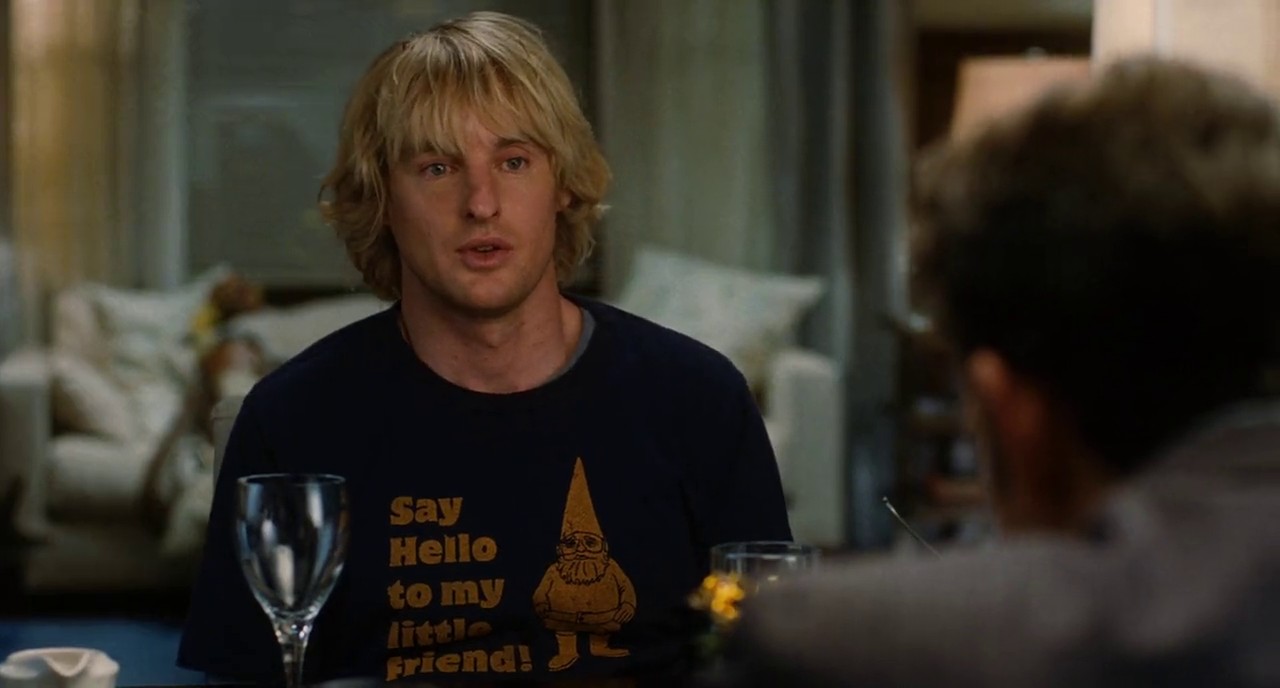
It was the summer of 2006. The world was obsessed with low-rise jeans, Razr flip phones, and the idea that Owen Wilson could basically carry any movie just by saying "wow" and squinting at the camera. Then came You, Me and Dupree.
Critics didn't exactly roll out the red carpet. Rotten Tomatoes currently has it sitting at a fairly dismal 20% from critics, though the audience score is significantly higher. Why? Because while the pros saw a derivative comedy, regular people saw their annoying best friend. Or maybe they saw themselves.
The premise is deceptively simple. Carl (Matt Dillon) and Molly (Kate Hudson) are the perfect newlyweds. Then there’s Dupree. Randy Dupree. Played by Wilson, he’s the guy who loses his job, his car, and his dignity all in one weekend. He ends up on their sofa. He stays there. For a long time.
The Dupree Effect: Why the Character Works (and Irritates)
Most comedies from the mid-2000s—think Wedding Crashers or The Break-Up—relied on high-concept chaos. You, Me and Dupree is different. It’s claustrophobic. It taps into that specific, skin-crawling anxiety of having your personal space invaded by someone you actually love.
Dupree isn't a villain. He’s just... there.
He drinks your expensive milk from the carton. He accidentally sets your bathroom on fire. He becomes best friends with the neighborhood kids and the local librarian while you’re grinding away at a corporate job you hate. This is where the movie actually gets smart. It isn't just about a houseguest from hell; it’s about the death of the "free spirit" in the face of adult responsibilities.
Owen Wilson’s performance is essential. If anyone else played him, Dupree would be a sociopath. With Wilson, he’s a golden retriever who accidentally knocked over a priceless vase. You want to be mad, but he's just so happy to see you.
Breaking Down the Cast Chemistry
- Matt Dillon as Carl: He’s the straight man, and honestly, he’s the most tragic character. He represents the "grind." He’s the guy who followed the rules and is now being punished by the universe via a permanent houseguest.
- Kate Hudson as Molly: She provides the emotional anchor. Her chemistry with Wilson is arguably better than her chemistry with Dillon, which adds a layer of subtle tension to the whole "three's a crowd" dynamic.
- Michael Douglas as Mr. Thompson: This was a weirdly great casting choice. Having an Oscar-winning heavyweight play the intimidating father-in-law gave the movie a weight it didn't deserve but benefited from immensely.
The Controversy You Probably Forgot
Did you know the movie actually got into a bit of a public spat with Steely Dan? Yeah, the jazz-rock legends.
The band’s founders, Donald Fagen and Walter Becker, wrote an open letter to Luke Wilson (Owen's brother, mistakenly) claiming the movie was a "rip-off" of their song "Cousin Dupree." The song is about a creepy guy who crashes on a relative's couch.
They weren't actually suing, but they were definitely poking fun at the movie's lack of originality. They even offered Owen Wilson a chance to come on stage and "apologize" to their fans. It was a bizarre moment in pop culture history that most people have wiped from their memory.
The producers basically ignored it. The movie went on to make over $130 million worldwide. Turns out, the "houseguest who won't leave" trope is universal enough that you don't need a 70s rock song to justify it.
Why We Still Talk About You, Me and Dupree in 2026
We live in the era of the "side hustle" and "digital nomads." In 2006, Dupree was a loser. Today? He’d probably have a TikTok following and a sponsorship deal with a hammock company.
The film explores the tension between "The Man" (represented by Michael Douglas and the corporate world) and "The Person" (Dupree). Carl is desperately trying to be The Man. He changes his name to "Carl Peterson" to sound more professional. He lets his father-in-law walk all over him.
Dupree, meanwhile, is "living the dream," even if that dream involves sleeping on a couch and eating cold pizza. He has "Dupree-isms." He talks about finding your "ish." It’s goofy, sure, but it resonates with anyone who has ever felt like they're losing their identity to a 9-to-5.
The Evolution of the "Man-Child" Genre
This movie hit right at the peak of the Apatow-adjacent comedy boom. While it wasn't produced by Judd Apatow, it shared that DNA of "growing up is hard."
Look at the pacing. It’s uneven. Some scenes feel like they belong in a slapstick silent film—like the bike chase or the aforementioned bathroom fire. Others feel like a genuine marital drama. This jarring shift in tone is actually what makes it feel more "human" than a polished modern rom-com. Life is messy. One minute you're arguing about your mortgage, the next your best friend is naked in your kitchen.
Technical Execution and Direction
The Russo Brothers directed this. Yes, those Russo Brothers. The ones who went on to direct Avengers: Endgame.
You can see flashes of their style here—specifically how they handle large ensemble dynamics and physical space. They make the house feel like a character. As Dupree takes up more room, the walls literally feel like they're closing in on Carl.
The cinematography isn't groundbreaking, but it uses warm, California light to contrast with the cold, sterile office environments where Carl spends his time. It’s a visual shorthand for "freedom vs. prison."
Critical Reception vs. Longevity
Why did it get panned? Probably because it’s "soft." It doesn't have the edge of The Hangover or the heart of The 40-Year-Old Virgin. It occupies a middle ground.
But middle-ground movies often have the longest tail on streaming services. It’s a "comfort watch." You know what’s going to happen. You know Dupree will eventually find his way, and Carl will loosen his tie. There’s a certain peace in that predictability.
Real-World Takeaways from the Dupree Philosophy
If you actually watch the movie for advice (which, maybe don't, but let's pretend), there are some weirdly valid points about work-life balance.
- Protect your "ish." Dupree’s obsession with finding your inner spark is actually a decent metaphor for mental health and hobby-retention in a grueling economy.
- Boundaries matter. The movie is a 108-minute cautionary tale about not saying "yes" to your friends when you really mean "no."
- Communication is key. Most of the conflict could have been solved in ten minutes if Carl and Molly had just talked to each other instead of around Dupree.
If you’re planning a rewatch, pay attention to the background details. The Russo Brothers loaded the film with small visual gags that reward a second look. It’s not a masterpiece, but it’s a fascinating time capsule of a specific moment in American comedy.
To get the most out of You, Me and Dupree, look past the slapstick. Focus on the relationship between Carl and his father-in-law. That’s where the real "horror" of the movie lies. It’s a story about a man losing his soul, and the idiot friend who accidentally helps him find it again.
If you find yourself in a situation where a friend needs a place to stay, set a move-out date on day one. Buy a couch that isn't too comfortable. And for the love of everything, don't let them near your candles.
Next Steps for the Interested Viewer:
- Watch the "Steely Dan" Response: Search for the band's original letter to the Wilson brothers; it's a masterclass in celebrity snark.
- Compare the Russos: Watch a scene from this movie and then a scene from Community (which they also produced/directed). The comedic timing is identical.
- Check the Deleted Scenes: The DVD extras (if you can find them) include several sequences that flesh out Dupree’s "philosophy" even more, making him seem slightly less crazy and slightly more like a misunderstood guru.



