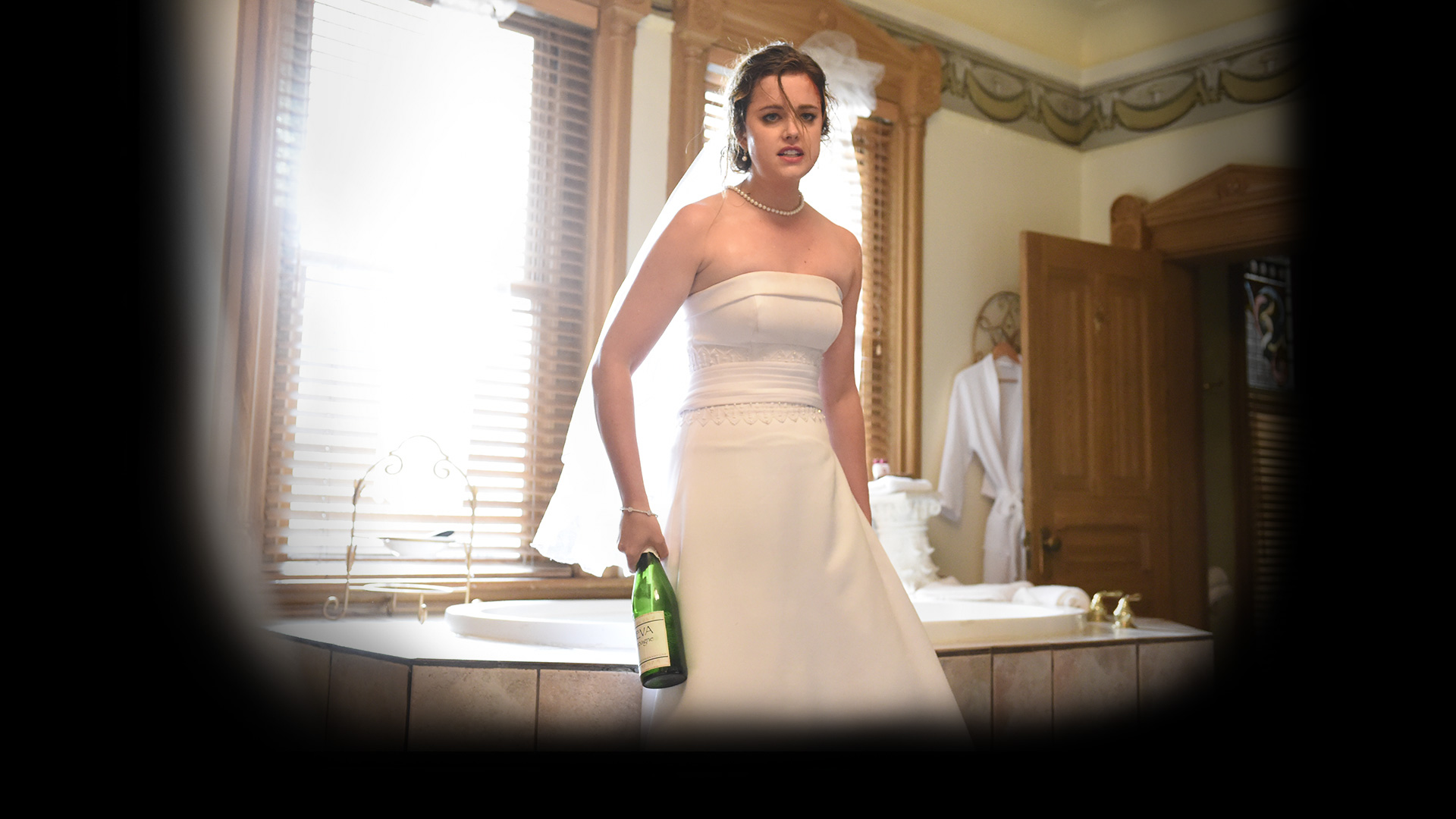
Let’s be real. We’ve all been there. You're flipping through channels on a lazy Sunday afternoon, or maybe you're scrolling through a streaming app late at night, and you see a title that is so aggressively dramatic you just have to click. That is exactly the pull of You May Now Kill the Bride. It’s a 2016 Lifetime movie that basically defines the "wedding-gone-wrong" subgenre. It isn't trying to be The Godfather. It’s trying to be a rollercoaster of obsession, and honestly? It succeeds at being exactly what it wants to be.
The Setup You Think You Know
So, the plot follows Nicole and Mark. They are engaged. They are happy. They are ready to start their lives together in a quaint, picturesque setting. But then—because it’s a thriller—Mark’s sister, Audrey, shows up.
Audrey isn't just a protective sibling. She is "I will ruin your life to keep my brother to myself" levels of unhinged. This isn't a spoiler; the movie tells you who she is within the first fifteen minutes. The tension doesn't come from wondering who the villain is. It comes from watching Nicole slowly realize that her future sister-in-law is a legitimate threat to her physical safety.
Tammin Sursok, whom many know from Pretty Little Liars, plays Audrey. She brings this sharp, calculated energy to the role. It’s a performance that makes the movie. If she played it too soft, it wouldn't work. If she played it too "crazy" right away, there’d be no suspense. Instead, she finds that sweet spot of being just "off" enough to make you uncomfortable before the actual violence starts.
Why We Are Obsessed With Wedding Horrors
Why do movies like You May Now Kill the Bride stay popular for years? It’s been nearly a decade since this one premiered, yet it still pops up in recommendations.
Weddings are inherently stressful. They are high-stakes events where families collide, secrets come out, and everyone is under a microscope. Movies like this take that universal anxiety—the fear of the "monster-in-law" or the jealous sibling—and crank the volume up to eleven.
We see this trope everywhere now. From big-budget films like Ready or Not to indie hits. But Lifetime has a specific formula that feels like comfort food for thriller fans. It’s about the domestic space being invaded. Your home, your family, your wedding day—the things that should be safe—are the very things being weaponized against you.
Breaking Down the Audrey Dynamics
Audrey’s motivation is rooted in a twisted sense of loyalty. She feels that Nicole is taking Mark away from the "bond" they shared after their parents died. It's a classic psychological hook.
In many ways, the film explores the concept of "enmeshment." That’s a real psychological term for families where boundaries don't exist. Audrey hasn't formed an identity outside of her brother. When Nicole enters the picture, it isn't just a marriage; it's an existential threat to Audrey's entire world.
Nicole, played by Ashley Newbrough, is the perfect foil. She’s the "everywoman." She wants to give Audrey the benefit of the doubt because that’s what "good" people do. But the movie punishes her for that kindness, which is a hallmark of the genre.
Production Value and the "Lifetime" Aesthetic
Directed by Kohl Glass, the movie looks better than your average shoestring-budget TV movie. There is a specific use of lighting here—lots of bright, sunny exteriors that contrast with the dark, claustrophobic feeling of Audrey’s plotting.
It’s interesting to note that the film was shot in Utah. The locations provide that "Anywhere, USA" feel that makes the horror feel closer to home. You could be in that house. You could be planning that wedding.
The pacing is brisk. Short scenes. Tight edits. It doesn't linger on philosophical questions. It moves from one "accident" to the next, building the body count—or at least the injury count—until the inevitable showdown at the altar.
Comparing It to the Competition
If you look at other films in this category, like My Best Friend's Wedding (the thriller version, not the rom-com) or The Roommate, You May Now Kill the Bride holds its own because it leans into the absurdity.
Some critics argue these movies are formulaic. They aren't wrong. You can usually predict the ending by the thirty-minute mark. But that’s sort of the point. You aren't watching for a twist that changes the history of cinema. You're watching for the "cat and mouse" game.
- The "gaslighting" phase where the villain makes the protagonist look crazy.
- The "isolated incident" where someone gets hurt but it looks like an accident.
- The "final confrontation" where the truth finally comes out.
Audrey's tactics are particularly cruel. She doesn't just try to kill Nicole; she tries to dismantle her reputation. That is a very specific kind of horror that resonates with people who have dealt with toxic personalities in real life.
The "So Bad It's Good" Argument
Is it high art? No. But the term "guilty pleasure" exists for a reason. There’s a certain joy in watching a villain who is so unapologetically evil.
There are moments in You May Now Kill the Bride where the logic leaps are... significant. How does she get away with some of this stuff? Why doesn't Mark see through it sooner? In the real world, these questions would sink the ship. In the Lifetime universe, we suspend our disbelief because we want to see the payoff. We want to see the bride fight back.
And Nicole does fight back. That’s the empowering part of these thrillers. They usually end with the woman saving herself. Mark might be the prize they're fighting over, but he's often the most useless character in the room when the knives come out.
Actionable Takeaways for Fans of the Genre
If you’re diving into the world of domestic thrillers or just re-watching this one, here is how to get the most out of the experience.
- Watch the background. In many of Audrey’s scenes, her facial expressions when other characters aren't looking are the best part of the movie. Sursok does a great job with subtle "evil" glances.
- Track the "red flags." If you're using this as a "what not to do" guide for real-life wedding planning, pay attention to the early boundary-crossing. It starts small—showing up unannounced, "helping" with the dress—before it escalates to murder.
- Double Feature it. If you want a full day of "killer wedding" vibes, pair this with A Deadly Adoption or The Wrong Wedding Planner. It shows the evolution of how these stories are told.
Final Thoughts on the Legacy of the Film
You May Now Kill the Bride isn't going anywhere. It’s a staple of cable syndication for a reason. It taps into a primal fear: that the people we are supposed to welcome into our families might actually be the ones who want to destroy us.
It reminds us that the "happiest day of your life" can easily become a nightmare if the wrong person is holding the ring.
What to do next
If you enjoyed the campy, high-tension energy of this movie, your next move should be exploring the filmography of the lead actors. Tammin Sursok has a knack for these kinds of roles, and her work in other TV thrillers carries that same edge. Also, keep an eye on the "New Movie" sections of streaming platforms like Lifetime Movie Network (LMN) or Tubi; they often cycle through these titles, and you can catch them for free with ads.
Check your local listings or streaming search engines to see where it’s currently playing. Most importantly, the next time you meet a "too-helpful" future sibling-in-law, maybe—just maybe—keep one eye open.



