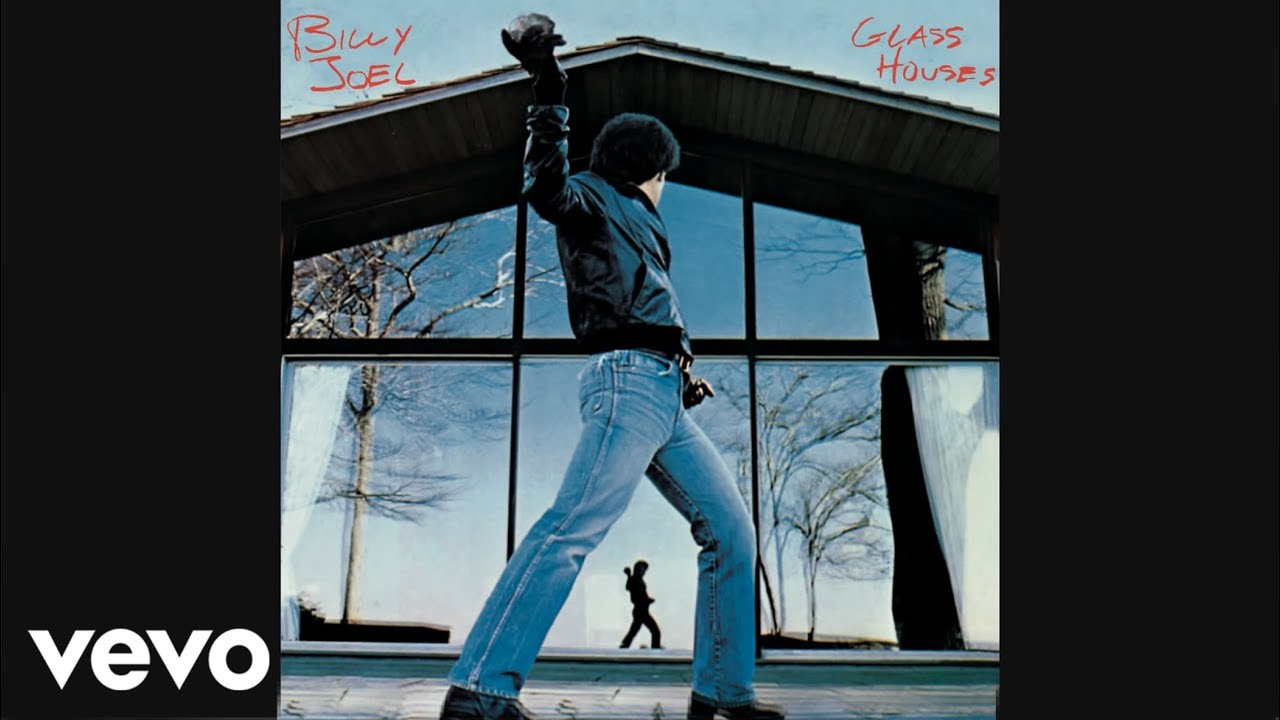
Billy Joel didn't just write a pop song when he sat down to pen the opener for Glass Houses. He wrote a middle finger to the "Piano Man" persona that had started to define him by 1980. If you’ve ever tried to play the you may be right chords on a guitar or piano, you quickly realize it’s not just a basic three-chord campfire tune. It’s got grit. It’s got that specific, chunky rock-and-roll swagger that feels more like the Rolling Stones than a guy who usually hangs out in a jazz lounge.
Honestly, the magic of this track isn't just in the lyrics about riding a motorcycle in the rain or checking into the psychiatric ward. It’s in the structure. Most people think they can just strum through a standard A-D-E progression and call it a day. They’re wrong. To get it to sound like the record, you have to understand how Billy uses a specific blues-rock vocabulary that bridges the gap between 1950s boogie-woogie and 1980s New Wave.
The Foundation of You May Be Right Chords
The song is firmly rooted in the key of A Major. But it’s a "dirty" A Major.
When you look at the opening riff, you aren't just playing a triad. You’re dealing with a dominant feel. The primary you may be right chords revolve around A, D, and E, but the way they are voiced makes all the difference. On the guitar, Phil Ramone (the legendary producer) ensured those tracks were layered. You’re hearing a lot of power chords, sure, but there’s a persistent use of the A7 and even hints of an A6 flavor that gives it that "honky-tonk on steroids" vibe.
The verse structure is relatively straightforward: A to E, then back to A. But wait. Listen to the transition. There’s a quick movement to a G chord—a bVII (flat seven) for the music theorists out there—that gives the song its rock edge. Without that G natural, it would sound like a nursery rhyme. That flat-seven chord is the secret sauce. It’s what makes the song feel rebellious. It’s the sound of a window breaking—literally, as the song famously opens with the sound of glass shattering.
Most amateur charts you find online will skip the nuances of the Bm and the E7. In the "I've been crazy" section, the movement from B minor to E is what builds the tension before resolving back into that triumphant A major hook. If you just hang out on the A chord the whole time, you lose the frantic energy of the protagonist's mental breakdown.
Why the Bridge Changes Everything
You've probably heard the bridge a thousand times. "You can’t sleep at night..."
This is where the song gets sophisticated. Suddenly, we aren't just in a three-chord rock song. The chords shift to a D, then to an F# minor, and eventually to a B7. This B7 is crucial. It’s a secondary dominant that leads your ear back to the E chord, which acts as the "turnaround" to get us back into the verse.
The F#m provides a momentary sense of darkness. It’s a minor chord in a song that is otherwise very bright and loud. This reflects the lyrics. While the verses are about the narrator's wild antics, the bridge touches on the consequences—the loneliness, the lack of sleep, the "walking on the edge of a knife."
If you're playing this on a keyboard, you have to mimic the way Billy plays it. He isn't just hitting blocks. He’s doing a rhythmic "chugging" with his right hand while the left hand provides a driving bassline. On a guitar, you’re looking at a lot of downstrokes. Think of it as a relentless pulse. If you lose the rhythm, the chords fall apart.
The Nuance of the Gear and Tone
Let's talk about the sound. You can't just play these chords on a clean acoustic and expect to feel like a rockstar. On the original recording, Russell Javors and David Brown used guitars that had a bit of "bite." We’re talking about P-90 pickups or maybe a Telecaster through a slightly overdriven tube amp.
- The Attack: Every chord should be hit with conviction.
- The Muting: Use palm muting during the verses to allow the vocals to breathe.
- The Release: Open up the strumming during the chorus to create a "wall of sound."
It's also worth noting that the song stays at a consistent tempo of about 150 BPM. That’s fast. If your chord transitions aren't crisp, the whole thing turns into a muddy mess. People often rush the G to D transition in the chorus, but you have to keep it locked with the snare drum.
Common Mistakes When Playing These Chords
One of the biggest blunders I see when people tackle the you may be right chords is overcomplicating the voicing. This isn't a Steely Dan song. You don't need Maj9 chords or 13ths. In fact, adding too much "color" ruins the raw, punk-adjacent energy Billy was going for.
Another mistake? Ignoring the bass line. If you’re a solo performer on guitar, you need to incorporate that descending bass line into your thumb work. The movement from A to G to D is the hook. If the bass note stays on A the whole time, the song loses its forward momentum.
- Keep the power chords tight.
- Don't forget the G major chord—it's the pivot point.
- Focus on the E7 during the "I may be crazy" line to provide that "unstable" feeling.
The song's ending is another area where people stumble. It’s a long fade-out with Billy ad-libbing. If you’re playing this live, you need a definitive "stinger" ending. Most bands end on a big, crashing A Major chord after a final "You may be right!" shout.
Beyond the Sheet Music
To truly master the you may be right chords, you have to understand the era. 1980 was a transitional period. Disco was dying, and New Wave was taking over. Billy Joel was responding to the critics who said he was too "soft."
He wanted something that could compete with the high-energy acts of the time. This is why the chords are played with such aggression. It’s not just about the notes; it’s about the attitude. When you hit that D chord in the chorus, it should feel like a punch.
I’ve spent years looking at different transcriptions of this song. Some suggest using a capo on the 2nd fret and playing in G shapes. Don't do that. It sounds too thin. The "open A" sound is essential. The resonance of those open strings ringing out against the fretted notes is what gives the song its "stadium rock" feel.
If you’re a beginner, start by just mastering the A, D, and E triad. Once you have that, slowly work in the G major and the Bm. The Bm is the hardest part for most novices because it requires a barre chord, but you can’t skip it. It’s the "emotional" heart of the verse.
Actionable Steps for Mastering the Song
Don't just stare at a chord chart. Start by listening to the isolated drum and bass tracks if you can find them. It’ll show you how much space there actually is in the arrangement.
- Practice the "V-IV-I" cadence: That’s the E to D to A movement. It’s the bread and butter of rock.
- Work on your "chugging": Set a metronome to 150 and practice eighth-note downstrokes on an A chord until your forearm burns.
- Record yourself: Play along with the track. If you can't hear your guitar because it blends perfectly with the record, you’re doing it right.
The beauty of these chords is their simplicity paired with their power. You don't need a music degree to play them, but you do need a bit of soul. Stop worrying about "perfect" finger placement and start worrying about the groove. That’s how Billy would do it.
Once you’ve got the rhythm down, try experimenting with the dynamics. Play the verses quiet and "sneaky," then explode into the chorus. This contrast is what makes the song a classic. It’s a narrative journey. You aren't just playing chords; you're telling a story about a guy who’s a little bit out of his mind but totally okay with it.
Go grab your instrument. Plug in. Turn the gain up just a little bit more than you think you should. Smash that A major chord. You'll see exactly why this song has remained a staple of rock radio for over four decades. It’s loud, it’s proud, and it’s arguably one of the most fun sets of chords you’ll ever learn to play.



