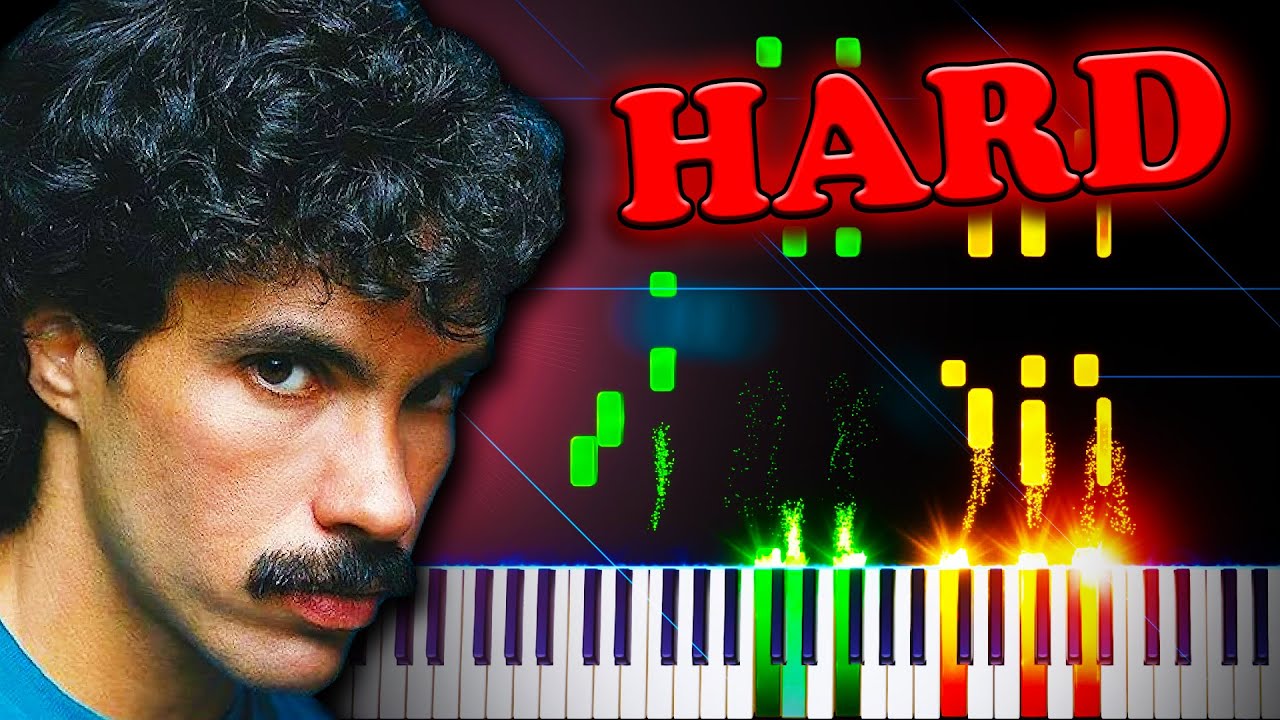
It is that opening riff. You know the one. That bouncy, staccato Yamaha CP-30 electric piano line that immediately makes everyone in the room feel like they’re in the closing credits of a 500 Days of Summer montage. Released in 1980 on the Voices album, "You Make My Dreams" (often searched as "You Make My Dreams Come True") is a masterclass in blue-eyed soul and power-pop efficiency. But if you’ve ever sat down with a guitar or a keyboard thinking the You Make My Dreams Come True chords were just a simple three-chord shuffle, you're in for a reality check.
Daryl Hall is a sophisticated songwriter. He doesn't just play "I - IV - V" and call it a day. He’s obsessed with the Great American Songbook and Philly soul. That means there are subtle harmonic shifts and rhythmic syncopations that most amateur charts on the internet get totally wrong.
The Core Progression: It Is All About the Bounce
Most people hear the key of F Major and think they can just camp out there. While F is the home base, the energy of the song comes from the constant movement between the F and the Bb. But wait. It isn't just a standard Bb. If you listen to the recording closely, the bass stays relatively static while the chords dance on top.
The verse is basically a rhythmic playground. You are looking at a repetitive cycle of F - Bb/F - C/F - Bb/F. Using those slash chords—where the F note stays in the bass while the chords change above it—is what gives the song that "pedal point" tension. It creates a feeling of forward motion without ever actually leaving the driveway.
If you’re a guitarist, playing this in standard tuning can be a bit of a hand-cramp situation if you try to bar everything. Most pros actually suggest using a capo on the first fret and playing in E shapes, or just embracing the barre chords and focusing on the palm muting. The "chugging" rhythm is more important than the voicing. If you don't get that "up-down" swing right, the chords will sound like a funeral dirge instead of a dance-floor filler.
The Nuance of the Pre-Chorus
Here is where the "casual" players get lost. When Daryl sings "And I'm down on my daydream," the song shifts gears. It doesn't just stay in F. It moves into a soulful sequence that utilizes a Dm7 and a Gm7.
Typically, the progression follows a Dm - Bb - C - Bb pattern, but there is a sneaky Am7 thrown in there depending on which live version you’re watching. The transition back into the chorus requires a sharp "hit" on the C chord. It acts as the dominant tension that begs to be resolved. If you miss that C, the chorus feels unearned. It's the musical equivalent of a sneeze that won't come out.
Why the Keyboard Part is the Real Star
We have to talk about the gear. You can't talk about the You Make My Dreams Come True chords without mentioning the Yamaha CP-30. That specific electric piano has a percussive, almost "clavi" sound that defines the track.
On a standard piano, the chords sound too heavy. Too thick. The CP-30 has a thin, biting tone that allows the chords to cut through the heavy bass and the drums. If you’re playing this on a modern synth, look for a "Rhodes" or "Wurlitzer" preset, but dial back the sustain. You want it crisp. You want it dry.
- The Left Hand: It’s doing a lot of octaves on the F.
- The Right Hand: This is where the syncopation lives. You aren't playing on the "one." You are playing on the "and" of the beats.
The rhythm is a 4/4 swing, but it feels like a 12/8 shuffle at times because of how Daryl and John Oates lock in with the drummer, Jerry Marotta. Marotta’s beat is essentially a four-on-the-floor rock pulse, but the piano is doing a "shuffle" feel. That "straight vs. swung" conflict is why the song feels so energetic. It’s literally pulling itself in two directions at once.
Common Mistakes People Make With These Chords
I’ve watched a lot of cover bands. Usually, they mess up the bridge.
The bridge—the part where the song gets a little more "rock" and Daryl starts doing those iconic vocal runs—actually shifts the tonal center. A lot of online tabs suggest it stays in F, but there’s a brief flirtation with a G major chord that catches people off guard.
- The "Bb" Trap: Many people play a standard Bb major. In reality, Daryl often uses a Bb/C (a C11 sound) to bridge the gap back to the root.
- The Tempo Problem: This song is 120 BPM. People always play it at 130. Don't. If you speed it up, the swing disappears, and it sounds like a bad punk cover.
- The Vocal Cues: The chords are actually dictated by the vocal melody. If you're playing the guitar and not singing, you might lose your place because the chord changes happen on "weird" syllables.
Honestly, the best way to learn it is to listen to the Live at the Apollo version with The Temptations or the 2000s live recordings. You can hear the separation of the instruments better than on the polished 1980 studio track. In those live versions, Oates usually plays a very percussive muted guitar part that mirrors the piano, which helps clarify the harmonic structure.
Mastering the "Twist" in the Chorus
The chorus is deceptively simple: F - C - Bb - C.
But wait. There’s a "turnaround."
On the second pass of the chorus, they often throw in a quick Dm - Am - Bb. It’s a classic "walk down" that adds a bit of melancholy to an otherwise relentlessly happy song. This is the "Oates" influence—adding that R&B sophistication to a pop melody.
If you're a beginner, just stick to the F, C, and Bb. You'll get through the song at a wedding or a party just fine. But if you want to sound like a session pro, you need to hear the difference between the first chorus and the final outro. By the end of the song, the band is improvising around the F major pentatonic scale, and the chords start to become more fluid.
Chord Voicing Tips for Guitarists
- F Major: Play it as a barre chord on the 1st fret, but don't worry about the high E string.
- Bb Major: Use the "A shape" barre on the 1st fret.
- C Major: Move that same shape up to the 3rd fret.
- The Trick: Try to keep your pinky finger on the C note (3rd fret, A string) during the transitions to keep that "drone" feel going.
The Legacy of the Arrangement
Why do we still care about these chords 45 years later?
It’s because Hall and Oates understood something that modern pop often forgets: "The Hook" isn't just the words. The hook is the harmonic rhythm. When you hear the You Make My Dreams Come True chords, you're hearing a perfect marriage of jazz-adjacent theory and bubblegum pop sensibility.
Daryl Hall has often said in interviews (notably on Live from Daryl’s House) that his songs are built on a foundation of "the groove." If the chords don't groove, the song doesn't work. This track is the ultimate proof of that. It’s been featured in The Wedding Singer, Step Brothers, and The Office. It’s a cultural shorthand for "everything is going great."
That "greatness" is built on a specific F to Bb swing that requires a bit of soul and a lot of practice.
Actionable Steps for Learning the Song
If you're ready to master this track, don't just pull up a random tab and start strumming. You'll end up sounding stiff. Follow this roadmap instead:
- Start with the Bassline: Seriously. Put down the guitar or the keyboard. Hum the bassline. It’s a steady 8th note pulse on the F. Once you feel that "thump" in your chest, you'll understand where the chords need to sit.
- Isolate the "Stabs": Practice the chord changes as "stabs." Don't let them ring out. You want to hit the chord and immediately mute the strings or lift your fingers off the keys. This "chugging" effect is 90% of the song's DNA.
- Slow it Down: Use a YouTube playback setting of 0.75x. Listen to the transition between the verse and the pre-chorus. Notice how the drums don't change, but the "weight" of the chords does.
- Record Yourself: Play along to the original track. If you find yourself drifting ahead of the beat, you're losing the swing. This song lives "behind" the beat just a tiny bit.
- Focus on the F-Bb-C Loop: Spend ten minutes just looping those three chords until your hand transitions are seamless.
By focusing on the percussive nature of the progression rather than just the notes on the page, you'll capture the actual spirit of Daryl Hall's writing. It’s less about music theory and more about the "pocket." Once you find that pocket, the song plays itself.



