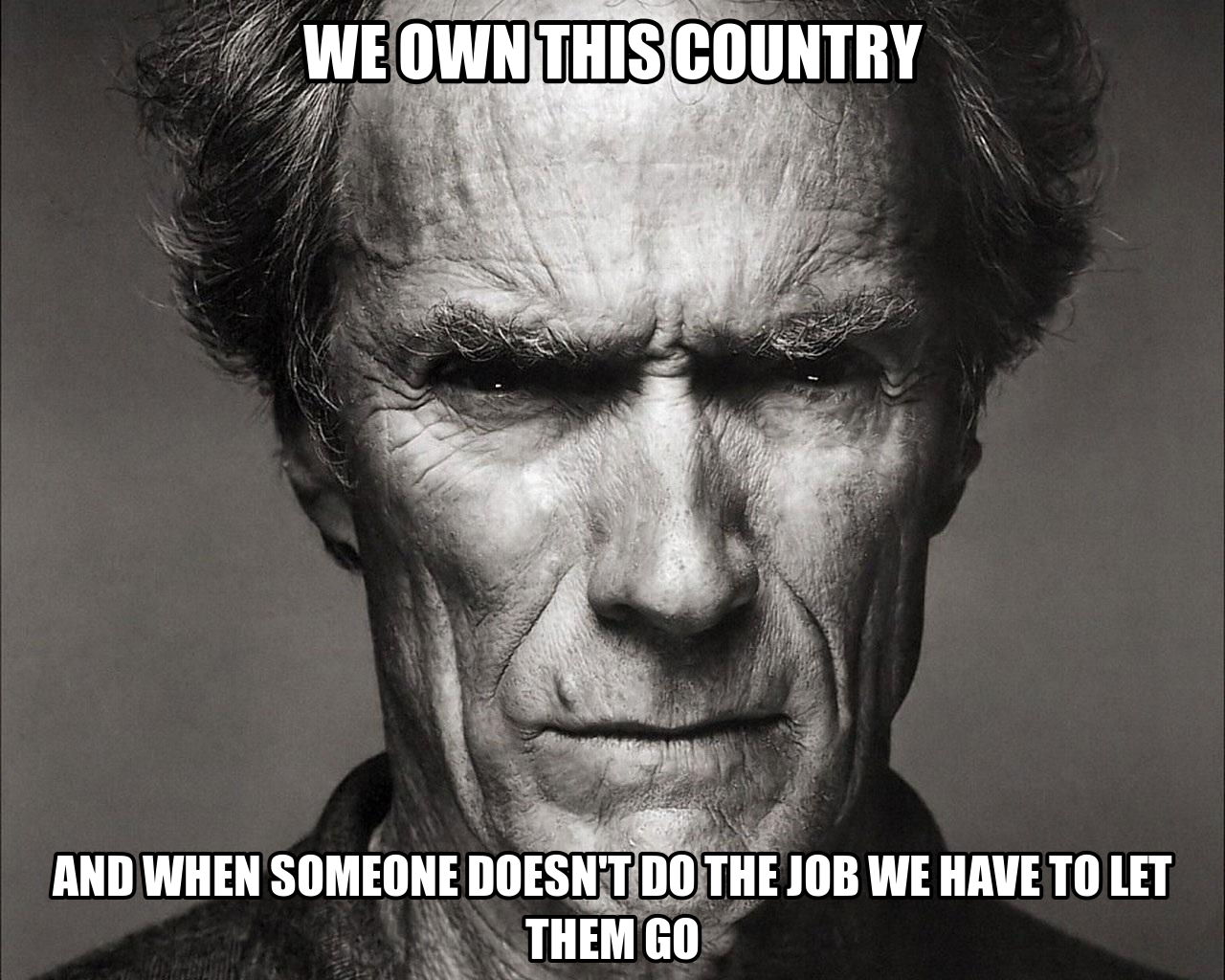
Ever been scrolling through a perfectly wholesome thread about sourdough starters or a stray cat in a tuxedo, only for someone to drop a comment about late-stage capitalism or the upcoming election? It’s jarring. It’s annoying. And it’s exactly why the you made it political meme exists.
Honestly, it's the ultimate "vibe check."
The phrase has morphed from a genuine complaint into a multi-layered piece of internet culture. Sometimes it’s a shield used to dodge accountability. Other times, it’s a legitimate plea for a "politics-free" zone in a world that feels increasingly like a 24-hour news cycle on steroids. You've seen the reaction images—usually a character looking exhausted, disappointed, or just plain done. But where did this collective groan come from, and why does it keep trending every time a brand posts a rainbow logo or a movie casts a lead who isn’t a white guy named Chris?
The Anatomy of the "You Made It Political" Reaction
We need to talk about what people actually mean when they post this. At its core, the you made it political meme is a response to perceived "agenda-pushing" in non-political spaces. It’s a linguistic eyeroll.
The most famous iterations often feature characters from The Simpsons, Spongebob Squarepants, or various anime series. There is a specific energy to these images. It's the energy of someone who just wanted to enjoy a cheeseburger but was instead reminded of the carbon footprint of the beef industry. It’s the "can we just not, for five minutes?" energy.
But here is the twist.
The meme is often a "double-edged sword." Critics of the phrase argue that saying "you made it political" is, in itself, a political act. By claiming a space should be "neutral," you are often defending the status quo. If you’re a gamer and you complain that a character’s identity makes the game "political," you’re essentially saying that the absence of that identity is the natural, non-political state of things.
Sociologists often point to this as "normalized hegemony." Basically, the things we are used to don't feel like "politics"—they just feel like "real life." It’s only when something challenges that comfort zone that the "political" label gets slapped on.
Where the Meme Actually Hits Hard
The meme really took off during the late 2010s. Remember the Gillette "The Best Men Can Be" ad? Or every single time a Star Wars trailer drops?
The comment sections become a battlefield of you made it political iterations.
- The Brand Pivot: When a corporation takes a stand on a social issue, the immediate backlash usually involves this meme. People feel marketed to. They feel like their hobbies are being hijacked for ESG scores or PR points.
- The "Escapism" Defense: This is the most common use. Many people use entertainment as an escape from a stressful reality. When that reality bleeds into their favorite show or hobby, they lash out. It’s a defense mechanism against "outrage fatigue."
- The Bad Faith Argument: Let’s be real—sometimes people use the meme to shut down uncomfortable truths. If a factual discussion about history or science makes someone uncomfortable, calling it "political" is an easy way to dismiss the information without actually engaging with the facts.
The Psychology of the Digital Eyeroll
Why do we find this so relatable? Because context switching is hard. Our brains aren't really wired to jump from "cute puppy video" to "existential climate dread" in three seconds.
The you made it political meme captures that cognitive dissonance.
According to research into digital communication patterns—like those discussed by media scholars at institutions like the Berkman Klein Center—memes serve as a shorthand for complex emotional states. We don't have to write a 500-word essay on why a specific comment annoyed us; we just post a picture of a tired Ben Affleck smoking a cigarette with the caption "you made it political."
It’s efficient. It’s visceral.
It also highlights the "silo" effect. We want our boxes to stay separate. We want the "Gaming Box" to stay away from the "Government Box." But in a hyper-connected world where every purchase and every piece of media is tied to global supply chains and social movements, those boxes are melting. The meme is the sound of us trying to tape the boxes back together.
The Meme as a Tool for "Post-Irony"
Lately, the meme has evolved again. We’ve reached the "meta" stage.
Now, people use you made it political ironically. If someone mentions that it’s raining, a troll might reply with "Wow, you made it political. Way to bring up the government’s weather manipulation/climate change agenda." This creates a layer of absurdity that mocks the original sincerity of the meme.
It’s a way of saying: "Everything is political now, so why even try to fight it?"
This shift is fascinating because it shows the internet's ability to cannibalize its own tropes. The original meme was a protest. The new version is a cynical shrug. It reflects a generation that is so tired of the culture wars that they’ve started treating the conflict itself as a joke.
How to Navigate the "Political" Minefield Without Losing Your Mind
If you find yourself on either side of this meme—either the person being accused of "making it political" or the person hitting 'send' on the meme—there are ways to handle it that don't end in a 40-comment deep thread of doom.
- Audit the Intent: Is the person actually pushing a partisan agenda, or are they just acknowledging a reality that happens to involve a social issue? Sometimes, talking about the cost of eggs isn't "politics," it's just life.
- Acknowledge the Need for Rest: If someone hits you with the meme, they might just be exhausted. It’s okay to let a space be "quiet" for a while. Not every platform needs to be a debate stage.
- Define "Political": Honestly, half the fights on the internet happen because we don't agree on what words mean. To some, "political" means "legislation." To others, it means "anything I disagree with."
The you made it political meme isn't going anywhere because the tension it represents isn't going anywhere. We are living through a period of massive cultural recalibration. Everything is being examined, from the toys we play with to the food we eat. That examination is uncomfortable.
Memes are just the way we process that discomfort. They are the release valve for the pressure of living in a world where you can't even buy a pair of socks without feeling like you're making a statement on international trade.
So next time you see that weary-looking cartoon character staring back at you from a Twitter thread, remember: it’s not just a meme. It’s a snapshot of a society that is desperately trying to figure out where the "private" ends and the "public" begins. It’s messy, it’s annoying, and yeah, it’s definitely political.
Actionable Insights for Digital Sanity
If you want to survive the meme-heavy landscape of modern social media without burning out, try these specific tactics.
Set "No-Go" Zones Establish specific times or platforms where you refuse to engage with "heavy" topics. If you're in a Discord for a specific hobby like wood-turning or vintage watch repair, keep the conversation on-task. This isn't "ignoring reality," it's "managing bandwidth." It helps prevent the burnout that leads to the aggressive use of the you made it political meme in the first place.
Practice the "Three-Second Rule" Before you reply to a "political" comment with a meme, or before you post a "political" take in a casual space, wait three seconds. Ask yourself: "What is the goal of this interaction?" If the goal is just to vent or "win," you’re probably just contributing to the noise. If the goal is genuine education or connection, carry on—but be prepared for the reaction.
Diversify Your Feed The reason people get so triggered by "political" intrusion is often because their feeds are either total echo chambers or constant battlegrounds. By intentionally following people who have different hobbies (not just different politics), you soften the edges of your digital world. It makes the "political" moments feel less like an invasion and more like a normal part of human discourse.
Know When to Log Off Seriously. If a meme about politics makes your blood boil, the problem isn't the meme—it's the screen. The most effective way to deal with the you made it political phenomenon is to step into the physical world where people are generally much more nuanced and less prone to communicating via reaction gifs.
By recognizing the meme as a symptom of cultural exhaustion rather than just a "hater" move, you can navigate these online spaces with a bit more empathy and a lot less stress. Whether you're the one making things political or the one complaining about it, we're all just trying to make sense of a very loud, very complicated world.



