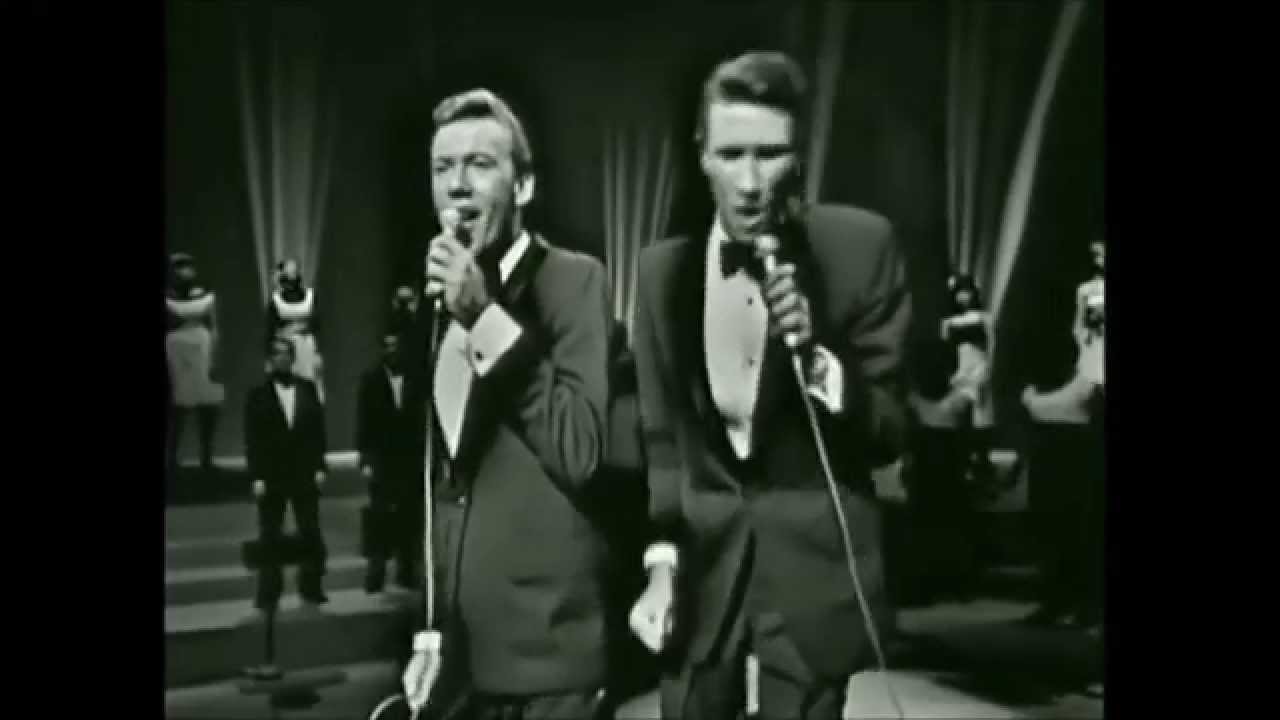
It’s the blue-eyed soul anthem of a billion jukeboxes. You know that booming, cavernous baritone. Bill Medley starts low, almost a whisper, before Bobby Hatfield’s soaring tenor breaks through the clouds. It feels like a force of nature. But honestly? Back in 1964, "You Lost That Loving Feeling" was considered a massive risk that nearly broke the Righteous Brothers before they even truly started.
Most people assume hits just happen because they’re good. That’s rarely the case. This specific track is a case study in ego, technical obsession, and a producer who was basically trying to play the studio like a musical instrument. Phil Spector didn’t just want a catchy tune; he wanted a "Wall of Sound" so thick you couldn't find the seams.
He found it. Then he tried to hide how long the song was because he was terrified DJs wouldn't play it.
The 3-Minute Lie That Saved the Song
Radio in the mid-sixties was a rigid, unforgiving beast. If a song ran longer than three minutes, programmers tossed it in the trash. They needed slots for commercials and fast-talking transitions. When Spector finished "You Lost That Loving Feeling," the track clocked in at 3:45. That sounds short today, but in 1964, it was an eternity.
So, what did Spector do? He lied.
He famously had the record labels printed with a false running time of 3:05. It was a total gamble. He figured that by the time a DJ noticed the song was still going, the listener would already be hooked. He was right. People weren't just hooked; they were transfixed by a sound that felt more like a cathedral than a pop record.
Why the Righteous Brothers Weren't Actually Brothers
There is a common misconception that Bill Medley and Bobby Hatfield were related. They weren't. They were just two white guys from California with a deep, inexplicable obsession with rhythm and blues. The name "Righteous Brothers" actually came from Black fans at their early gigs in Orange County who would shout, "That's righteous, brothers!" after a set.
When they signed with Spector’s Philles Records, they were skeptical. Bill Medley actually told Spector that his voice was too low for the opening of the song. He thought people would think the record was playing at the wrong speed. Spector told him to shut up and sing.
Then there was the Hatfield problem.
Bobby Hatfield was famously annoyed because he didn't even sing until the song was halfway over. During the recording sessions, he reportedly asked Spector, "What am I supposed to do while Bill is singing?"
Spector’s reply was blunt: "You can go to the bank."
The Wall of Sound Architecture
To understand why this song hits differently, you have to look at the "Wall of Sound." This wasn't just a few guys in a room. For "You Lost That Loving Feeling," Spector crammed a small army into Gold Star Studios in Hollywood.
We are talking about:
- Three pianos playing the same chords to create a massive, percussive thud.
- A legion of acoustic guitars layered so deep they sound like a single, humming entity.
- The "Wrecking Crew"—the legendary session musicians like bassist Carol Kaye and drummer Hal Blaine—working under grueling, repetitive conditions.
Spector would make them play the same three-minute passage for hours. He wanted the musicians exhausted. He believed that when the players were tired, they stopped thinking and started playing with a raw, desperate energy. By the time they reached the final take, the room was a pressure cooker of sound.
The Cissy Houston Connection and the Background Vocals
If you listen closely to the "whoa-oh-oh" crescendos, you’re hearing more than just a couple of guys. Spector brought in The Blossoms, featuring the legendary Darlene Love. Rumor has it that a young Cissy Houston (Whitney’s mom) was also involved in the sessions, though credits from that era are notoriously messy.
The goal was a literal wall. No air. No gaps. Just a tidal wave of emotion that matched the desperation of the lyrics. The songwriters, Barry Mann and Cynthia Weil, actually wrote the lyrics specifically for the duo after hearing them perform at a club, but even they were shocked by how "heavy" the final production felt.
It was a departure from the upbeat, sugary pop of the era. This was adult. It was painful. It was about the slow, agonizing death of a relationship.
Why it Still Ranks as the Most Played Song
BMI (Broadcast Music, Inc.) eventually named "You Lost That Loving Feeling" the most-played song on American radio and television of the 20th century. Think about that. It beat out The Beatles. It beat out Elvis. It beat out "Yesterday."
Why? Because it’s the "Goldilocks" of pop songs. It’s soulful enough for R&B stations, polished enough for Top 40, and dramatic enough for "Oldies" formats. It bridges the gap between the doo-wop era and the psychedelic rock that was just around the corner.
But there's a technical reason, too. The dynamic range is insane.
The song starts at a whisper—around 70 decibels in a standard room—and ends at a roar. In a car, that meant you had to turn the volume up at the beginning to hear Bill Medley’s low notes. By the time the climax hits, the speakers are vibrating, and you’re fully immersed. It forces the listener to participate in the volume control.
The Maverick Status of the 1980s Revival
Most songs fade. This one refused to die, largely thanks to Top Gun in 1986.
When Tom Cruise and Anthony Edwards serenaded Kelly McGillis in a bar, they weren't just doing a bit. They were tapping into the "standard" status of the song. It was already a relic by then, a piece of "Dad music," but the movie transformed it into a symbol of masculine vulnerability. It became the ultimate "begging" song.
Interestingly, Bill Medley wasn't even sure about the movie's use of the song at first. He’d seen his hits come and go. But that one scene probably added another 10 million plays to the BMI tally.
The Controversy of the "Blue-Eyed Soul" Label
We have to talk about the term "Blue-Eyed Soul." It’s a polarizing phrase. Some see it as a compliment—a recognition that these white singers had genuine "soul." Others see it as a form of musical colonization, where white artists were given the platform and production budgets that their Black contemporaries were denied.
The Righteous Brothers themselves were always very humble about this. They never claimed to have invented the sound; they were vocal about their debt to artists like Little Richard and The Checkers. In fact, many radio listeners in 1964 genuinely thought they were Black until they saw them on TV.
This ambiguity helped the song cross over. It broke down barriers at a time when radio was still largely segregated by "race records" vs. "pop."
What Most People Miss About the Lyrics
Everyone focuses on the chorus. "You've lost that lovin' feelin', whoa, that lovin' feelin'..."
But the real gut punch is in the verses.
- "There's no welcome look in your eyes when I reach for you."
- "You're starting to criticize little things I do."
These aren't poetic metaphors. They are the mundane, brutal realities of a breakup. It’s the "smallness" of the loss that makes the "largeness" of the music work. It’s a contrast. You have this massive, Wagnerian production backing up a story about someone noticing their partner doesn't look at them the same way anymore.
What You Can Learn From the Production
If you’re a creator, musician, or just someone who likes knowing how the gears turn, there are a few "unconventional" takeaways from the history of this track:
- Imperfection is a Tool: The "Wall of Sound" was actually quite "muddy" by modern standards. There’s a lot of bleed between the microphones. But that bleed creates the "glue" that makes it feel like a single unit of sound.
- The "Fake It 'Til You Make It" Strategy: Spector’s lie about the song length proved that sometimes you have to bypass the gatekeepers by being a little bit deceptive for the sake of the art.
- Contrast is Everything: If the song had been loud from the start, it would have been boring. The "low" start is what gives the "high" end its power.
Actionable Ways to Experience the Song Today
If you want to actually "hear" what made this record a phenomenon, don't just stream it on your phone speakers.
- Find a Mono Mix: Spector hated stereo. He thought it was a gimmick that ruined the "Wall." If you can find the original mono mix, the instruments hit you all at once like a physical punch. Stereo spreads them out and loses the "Wall" effect.
- Listen for the Bass: Listen for Carol Kaye’s bass line during the bridge. It’s the heartbeat that keeps the whole chaotic arrangement from falling apart.
- Compare the Covers: Listen to the Elvis Presley version from his 1970 Las Vegas residency. It’s bigger, brassier, and arguably more bombastic, but it lacks the "haunted" quality of the original.
"You Lost That Loving Feeling" remains a masterclass in what happens when you take a simple emotion and give it the scale of an epic film. It shouldn't have worked. It was too long, the intro was too low, and the producer was a maniac. But sixty years later, we’re still talking about it, and the "loving feeling" hasn't faded.



