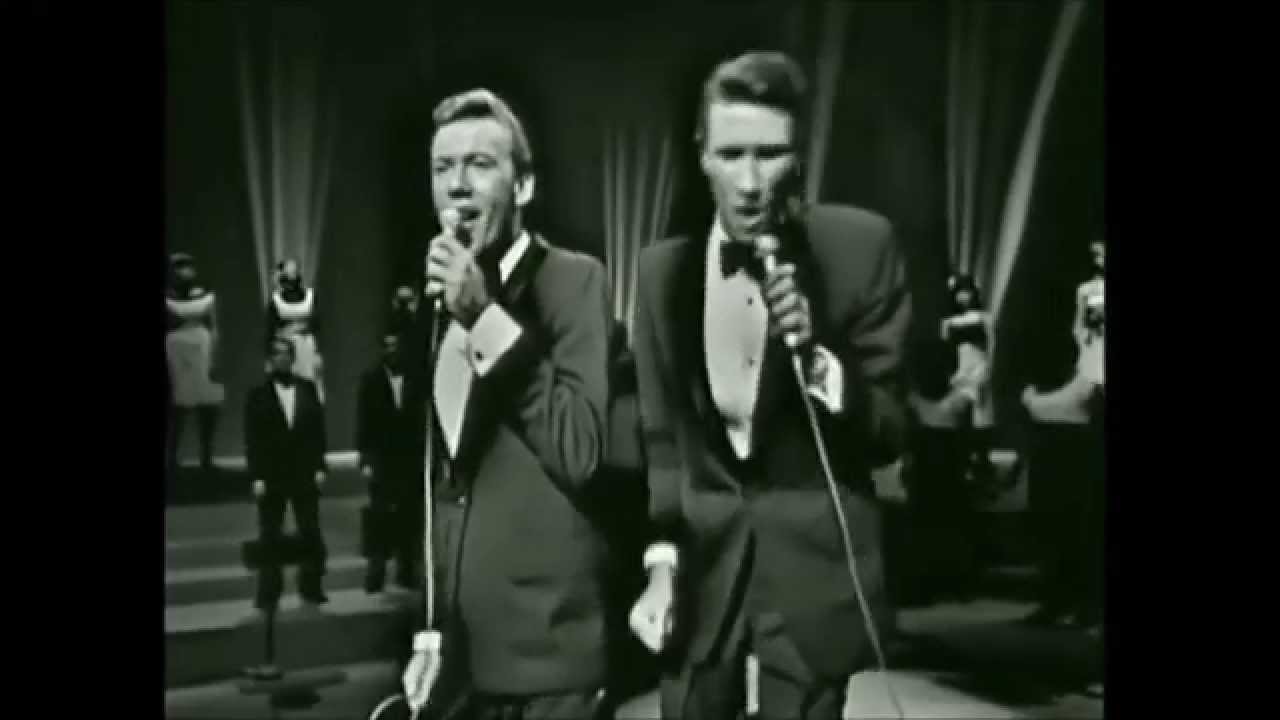
It starts with a bass line so low it feels like a secret. Bill Medley opens his mouth, and that cavernous baritone drops in, heavy with a kind of desperation you don't usually hear on top 40 radio. Most people think of "You Lost That Loving Feelin'" as just another oldie, a karaoke staple, or the song Tom Cruise used to woo Kelly McGillis in Top Gun. But honestly? It’s much weirder than that.
It's a record that shouldn't have worked. It was too long for 1964. It was too slow. The production was so dense it supposedly sounded like "mush" to some engineers at the time. Yet, it became the most played song in American radio history.
Why? Because Phil Spector, the Righteous Brothers, and the legendary "Wrecking Crew" studio musicians captured a very specific, very ugly human emotion: the moment you realize the person across the table has already checked out, but you’re still sitting there, begging.
The Wall of Sound Meets Blue-Eyed Soul
When Phil Spector signed Bobby Hatfield and Bill Medley, he wasn't looking for a simple pop hit. He was looking for a "Wagnerian" masterpiece. He wanted to build a cathedral out of sound. To get that massive, echoing atmosphere on You Lost That Loving Feelin', Spector crammed dozens of musicians into Gold Star Studios’ tiny Studio B.
Imagine four acoustic guitars playing the same chords. Three pianos. Three basses. A whole brass section. They weren't just playing; they were bleeding into each other’s microphones. This created a "wash" of sound that felt alive. It’s thick. It’s messy. It’s beautiful.
Barry Mann and Cynthia Weil, the husband-and-wife songwriting duo, actually wrote the song with the Four Tops in mind. They wanted a Motown feel. But once Spector got his hands on it, he slowed the tempo down to a crawl. He wanted it to ache. Bill Medley actually asked Spector what he was supposed to do while Bobby Hatfield waited for his part to come in during the climax. Spector famously told him, "You can go to the bank."
Why the Length Almost Killed the Hit
In 1964, if your song was over three minutes, DJs wouldn't touch it. Radio was a game of turnover. More songs meant more ads. You Lost That Loving Feelin' clocked in at nearly four minutes. Spector knew this was a death sentence.
So, he lied.
If you look at the original Philles Records 45rpm label, the time is listed as 3:05. It was a blatant deception. He figured by the time the DJ realized the song was still going, it would be too late to turn it off. He was right. People were transfixed. The song broke all the rules of the "Teenage Symphony" and forced the industry to accept that pop music could be art, not just a product.
The Tension Between Hatfield and Medley
The magic of the Righteous Brothers wasn't just in the voices; it was in the contrast. You have Medley’s floor-shaking low end and Hatfield’s glass-shattering tenor.
In the bridge of the song—the "Baby, baby, I'd get down on my knees for you" part—the tension reaches a breaking point. Hatfield’s ad-libs weren't just rehearsed lines; they were screams of genuine frustration. They did dozens of takes. Spector was notorious for being a perfectionist, often pushing singers until their voices were literally raw.
When you listen to the final chorus, you aren't hearing a clean, digital recording. You’re hearing the sound of two men exhausted by the process, pouring everything they had left into a microphone. That’s why it feels real. You can’t fake that kind of vocal strain with Autotune.
The Cultural Weight of the 1960s
Music critics often point to 1964 as a pivot point. The Beatles had arrived. The Beach Boys were harmonizing about the sun. Everything was getting brighter. Then comes this dark, brooding, soul-infused ballad from two white guys from Orange County.
Critics called it "Blue-Eyed Soul." It was a term that carried a lot of weight. It acknowledged that the Righteous Brothers were heavily influenced by Black R&B artists like Little Richard and the Ray Charles-inspired gospel sounds, but they were bringing it to a suburban audience. It bridged a gap. It wasn't just a cover; it was an interpretation that respected the source material while adding that Wall of Sound grandiosity.
The Top Gun Effect and Modern Resurgence
It is impossible to talk about the song today without mentioning the 1986 film Top Gun. Honestly, it’s kinda funny how a song about a devastating breakup became a "bro" anthem for picking up women in a bar.
But that scene did something important: it introduced the song to Gen X and Millennials. It gave the track a second life. Suddenly, a song that was twenty years old was a cultural touchstone again. It proved that the melody was indestructible. Whether it’s played in a high-fidelity studio or shouted out of tune by Tom Cruise and Anthony Edwards, the hook remains one of the strongest ever written.
Technical Brilliance: The Recording Secrets
If you’re a gear head or a music nerd, the technical side of this record is a goldmine. Larry Levine, the engineer, used a gold-plated echo chamber to get that specific reverb. They didn't have digital plug-ins. They had to move physical microphones around a room until the "air" felt right.
- The Bass: They used multiple bassists (including Carol Kaye, the legendary session player) to create a percussive, melodic low end that drove the track.
- The Percussion: There are tambourines and castanets buried in the mix that you don't consciously hear, but you'd feel it if they were gone.
- The Vocals: They were recorded with very little separation, meaning Medley and Hatfield’s voices blended with the instruments in the room, creating a cohesive wall instead of isolated tracks.
What Most People Get Wrong
People often think this was a happy collaboration. It wasn't. Spector was a difficult, often terrifying person to work with. The Righteous Brothers eventually left Philles Records because of the creative stranglehold he had over them.
Also, despite the title, it’s not just a "sad song." It’s a song about the ego. It’s about the refusal to accept the end. The lyrics aren't "I'm sad you're gone"; they are "I'm going to do whatever it takes to make you feel what you used to feel." There’s a desperation there that borders on obsession.
Actionable Insights for Music Lovers and Creators
If you want to truly appreciate the depth of this track or apply its lessons to your own creative work, consider these points:
- Listen to the Mono Mix: Most modern streaming services play the Stereo version, but the Mono mix is how Spector intended it to be heard. It’s punchier and the "Wall of Sound" effect is much more pronounced when everything is hitting you from one central point.
- Study the Dynamics: The song starts at a level 2 and ends at a level 11. Most modern pop stays at an 8 the whole time. If you’re a songwriter, look at how they use the "hush" of the verses to make the explosion of the chorus feel earned.
- Respect the Space: Notice how the instruments drop out during the bridge. Silence is a tool. By stripping the "Wall" away for a few seconds, the return of the full band feels massive.
- Vocal Honesty Over Perfection: Medley and Hatfield aren't always "perfectly" in tune by modern standards, but they are emotionally honest. When you’re performing or creating, prioritize the "feel" over the technical flawlessness.
The legacy of the song is cemented. It’s been covered by everyone from Elvis Presley to Hall & Oates. But the original remains the gold standard because it captured lightning in a bottle—a perfect alignment of songwriting, production, and raw vocal power that hasn't been duplicated since.



