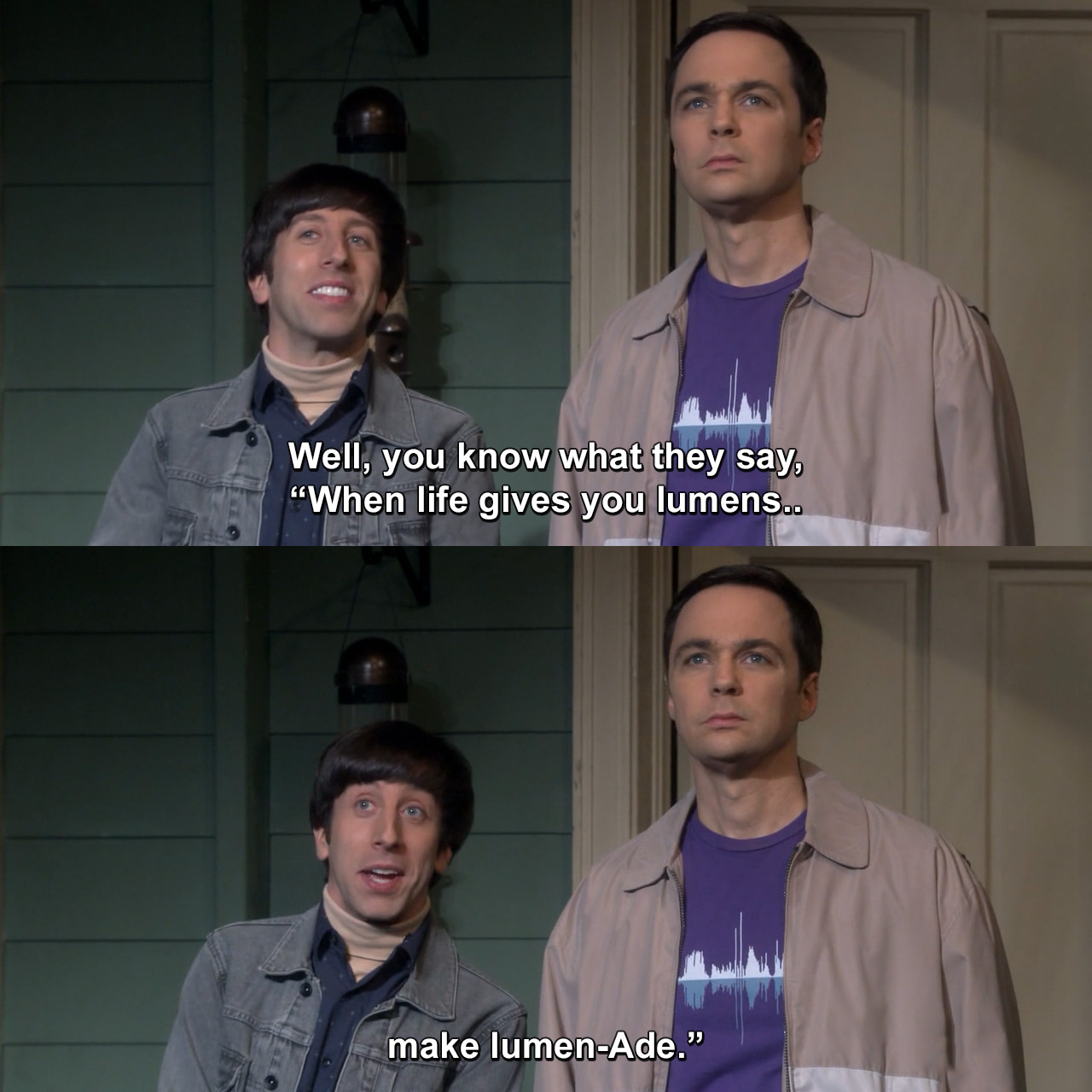
"You know what they say."
It’s the ultimate conversational escape hatch. We use it when we’ve run out of original thoughts or when we want to sound like we’ve got the backing of a thousand generations of wisdom. But have you ever stopped to think about who "they" actually are? Most of the time, you know what they say sayings are just verbal shorthand for complex psychological truths that we’ve simplified into bite-sized nuggets. Some of them are brilliant. Others are, frankly, total nonsense that we should’ve stopped saying in the 1800s.
Language is a weird, living thing. It evolves.
Think about the phrase "blood is thicker than water." You’ve probably heard it used to justify putting family above everything else, right? Except the original proverb is often argued to be "the blood of the covenant is thicker than the water of the womb." If that’s true, the meaning is the exact opposite of how we use it today. It implies that bonds formed by choice—like soldiers on a battlefield or deep friendships—are stronger than mere biological ties. It’s wild how we just flip the script because the shorter version felt more convenient.
The Psychology Behind Why We Use Proverbs
Why do we rely on these clichés? It’s not just laziness. Our brains love patterns. Cognitive scientists call it "fluency." When a statement is easy to process, rhythmic, or rhymes, we are statistically more likely to believe it’s true. It’s a dangerous little mental glitch. If I tell you "birds of a feather flock together," you nod along. But if I immediately follow up with "opposites attract," you probably nod at that, too.
We live in a world of contradictions.
Expert linguist Wolfgang Mieder, who has spent decades studying paremiology (the actual scientific study of proverbs), notes that proverbs function as social "authorizers." When you use a saying, you aren’t just giving your opinion; you’re recruiting the collective ghost of human history to agree with you. It’s a power move. It shuts down debate. If you’re trying to convince a friend to quit a dead-end job and you say, "better safe than sorry," you’re using a linguistic shield to protect a cautious worldview.
But what if they need to hear "nothing ventured, nothing gained"?
Both are you know what they say sayings, yet they offer diametrically opposed advice. This is the "proverbial paradox." We have a saying for every possible situation because we have a human impulse for every situation. We want to be brave, but we’re also terrified of failing. So, we kept both sayings in the cultural rotation for a few centuries.
Famous Sayings That Are Actually Half-Finished
A lot of the "wisdom" we throw around is actually a mutilated version of a longer thought. Take "curiosity killed the cat." It’s the ultimate wet blanket phrase used to stop people from asking questions. But the full version is "curiosity killed the cat, but satisfaction brought it back."
That changes the whole vibe.
It’s no longer a warning to stay in your lane; it’s an acknowledgement that the risk of seeking knowledge is worth the reward. Then there's "great minds think alike." We use it to celebrate when two people have the same idea. The full version? "Great minds think alike, though fools seldom differ." It’s actually a warning against groupthink and intellectual conformity. We’ve literally deleted the part that tells us to be original.
Why the "The Early Bird" Might Be Wrong
"The early bird catches the worm" is the anthem of the hustle culture movement. It’s been used to guilt-trip "night owls" for decades. However, chronobiology—the study of internal biological clocks—suggests that for about 30% of the population, their peak cognitive performance happens late at night. For these people, forcing an 5:00 AM start isn't productive; it's a recipe for burnout and metabolic dysfunction.
Even the saying itself has a cynical rebuttal: "The second mouse gets the cheese."
Success isn't always about being first. Sometimes it’s about being the one who watched the first person fail and learned from their mistakes. In the tech world, this is called the "First-mover advantage," but plenty of companies like Apple proved that being the "Fast Follower" is often more profitable. They didn't make the first MP3 player or the first smartphone; they just made the one that didn't snap in the mouse trap.
The Dark Side of Traditional Wisdom
Sometimes, you know what they say sayings do real damage. They can reinforce toxic social norms under the guise of "common sense."
"Boys will be boys."
This is a classic example of a saying used to excuse poor behavior or lack of accountability. It’s a linguistic shrug. By framing behavior as an inevitability of nature, we remove the need for teaching empathy or discipline. Similarly, "what doesn't kill you makes you stronger" is a favorite of people who don't understand how trauma works. Ask any physical therapist or psychologist; things that don't kill you can often leave you with chronic pain or PTSD. Resilience is a skill, not a guaranteed byproduct of suffering.
How Sayings Vary Across Cultures
It’s fascinating to see how different cultures tackle the same problems. In America, we say "the squeaky wheel gets the grease." It’s an individualistic society's way of saying you need to be loud and demanding to get what you want.
In Japan, there is a famous counter-proverb: "The nail that sticks up gets hammered down."
That’s a massive cultural divide packed into two tiny sentences. One prizes the individual; the other prizes social harmony. Neither is "correct," but they shape the way millions of people approach their careers and relationships. If you’re a squeaky wheel in a "hammered down" culture, you’re going to have a very bad time at the office.
In Africa, specifically among the Ashanti people, there’s a saying: "Rain beats a leopard’s skin, but it does not wash out the spots." It’s a beautiful, poetic way of saying that external circumstances don't change your fundamental nature. It’s much more evocative than our dry "a leopard can’t change its spots," don’t you think?
Are We Making New Sayings?
Language didn't stop evolving in the 1700s. We’re minting new "you know what they say" phrases every single day.
- "F**k around and find out." (The modern version of "play with fire and you'll get burned.")
- "Don't @ me." (A digital-age plea for peace.)
- "The vibes are off." (A shorthand for intuitive discomfort.)
These might sound "lowbrow" compared to Shakespearean idioms, but they serve the exact same function. They categorize a complex social reality into a phrase everyone understands instantly. A hundred years from now, some history student will be writing a paper on the profound sociological implications of "it is what it is."
Honestly, "it is what it is" might be the most "Gen Z/Millennial" saying ever. It’s a phrase of radical acceptance—or maybe just exhausted apathy. It’s what you say when the world is chaotic and you have zero control over the outcome. It’s the modern "Que Sera, Sera."
The Power of Reframing
If you want to actually use these sayings to your advantage, you have to start questioning them. Don't just let them sit in the back of your brain as "truth."
When someone says "money can't buy happiness," they are usually trying to comfort someone who is broke, or a wealthy person is trying to sound humble. But research from Wharton (specifically Matthew Killingsworth’s 2021 study) shows that happiness actually does continue to rise with income, well past the previous "cap" of $75,000. It turns out, having more money gives you more choices and less stress.
So, the saying isn't quite right. Money can't buy joy, but it can certainly buy the stability that makes joy easier to find.
Taking Action: Auditing Your Idioms
We all have a "proverbial soundtrack" running in our heads. These are the sayings our parents shouted at us or the ones we've picked up from our peers. They dictate our "common sense." But common sense is often just a collection of prejudices acquired by age eighteen.
To move forward, you need to audit your internal library.
Identify your "Go-To" Sayings Next time you find yourself saying "Well, you know what they say..." stop. What exactly are you about to say? Is it "don't count your chickens before they hatch"? If so, are you using it to be prudent, or are you using it to stifle your own excitement and optimism because you're afraid of being disappointed?
Flip the Script For every saying you use, find its opposite. If you live by "look before you leap," try "he who hesitates is lost" for a week. See how it changes your decision-making. If you always say "good things come to those who wait," try "the squeaky wheel gets the grease."
Check the Full Quote Before you use a saying to win an argument, Google the full version. You might find that the original author actually intended the opposite of what you're trying to prove. This not only makes you more accurate but also makes you look significantly smarter in a debate.
Stop Using Sayings as Excuses Don't use "it's just the way it is" to avoid fixing a problem. Don't use "forgive and forget" to allow people to keep crossing your boundaries. "Forgive" is for your peace of mind; "forgetting" is just bad data management. You can forgive someone and still remember exactly why you don't trust them with your car keys.
Wisdom is a tool, not a cage. The moment a saying stops helping you navigate the world and starts limiting your options, it’s no longer wisdom. It’s just noise. Use your words carefully, because the things "they" say have a weird way of becoming the things you believe.
When you find yourself reaching for a cliché, take a breath. Think. Is that actually true right now, in this moment? Or are you just repeating something because it’s easier than finding your own words? Authenticity is harder than repeating a proverb, but it’s a lot more interesting.
The next time someone hits you with "you know what they say," you’re allowed to ask: "Yeah, but do they actually know what they’re talking about?"
Usually, the answer is a lot more complicated than a catchy phrase.
Start by picking one common phrase you use daily and researching its origin this evening. You might find that the "wisdom" you’ve been following was actually a sarcastic joke from a 14th-century poet or a marketing slogan from the 1920s. Knowing where your thoughts come from is the first step toward actually owning them.



