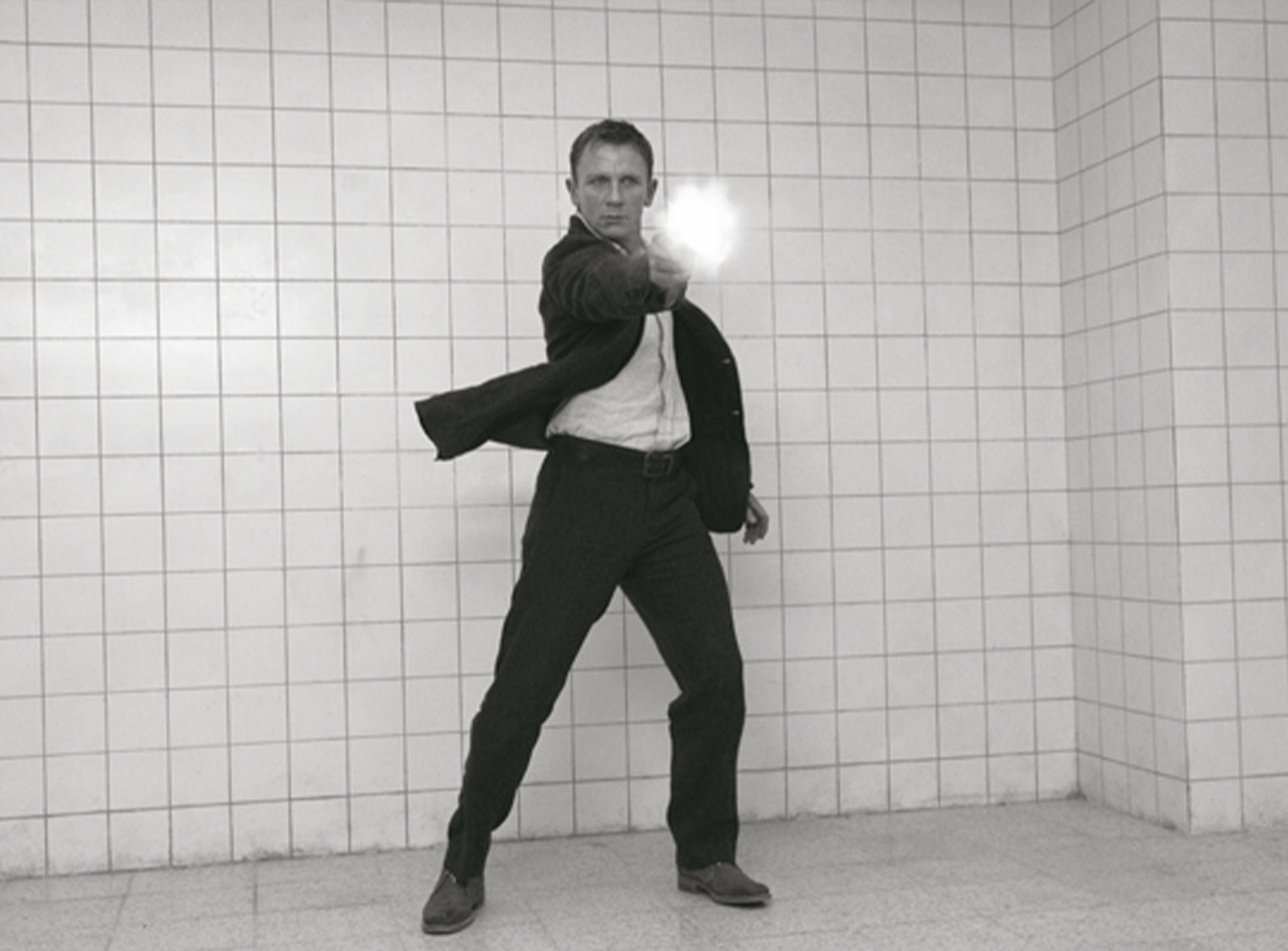
The year was 2006. Bond was in a bit of a crisis. After the invisible cars and ice palaces of Die Another Day, the franchise felt like it had nowhere left to go but down. Fans were skeptical. Daniel Craig had just been announced as the new 007, and the internet—primitive as it was back then—wasn't exactly kind about a "blonde Bond." Then the lights dimmed, the silhouette of a man walked across a gritty, stylized bathroom, and that first guitar riff hit. Honestly, the Casino Royale opening song did more to save the franchise than any marketing campaign ever could.
Chris Cornell’s "You Know My Name" didn't just play over the credits; it set a new tone. It was loud. It was aggressive. It sounded like a punch to the face. Gone were the sweeping orchestral strings and the sultry lounge-singer vibes that had defined the series for decades. This was grunge royalty meeting the world’s most famous spy.
A Departure from the Bond Template
Usually, a Bond theme follows a very specific recipe. You take a powerful female vocalist—think Shirley Bassey or Adele—and add a dash of brassy orchestration with a hint of mystery. But the Casino Royale opening song threw the cookbook out the window. Producers Barbara Broccoli and Michael G. Wilson knew they needed a hard reset. They didn't want "Goldfinger" part two. They wanted something that reflected a Bond who was still "a blunt instrument," as M famously describes him in the film.
Chris Cornell was an inspired, if controversial, choice. As the frontman of Soundgarden and Audioslave, his voice carried a raw, gravelly texture that felt more like a construction site than a tuxedo. David Arnold, the longtime Bond composer, collaborated with Cornell to ensure the track still felt like it belonged in the 007 universe. If you listen closely to the bridge, you’ll hear those signature brass swells, but they’re buried under a wall of distorted electric guitars.
It was the first time since 1987’s The Living Daylights that a male solo artist had taken the lead for a Bond theme. And unlike Tina Turner or Sheryl Crow, Cornell wasn't trying to sound "Bond-ian." He was just being Chris Cornell. That authenticity is exactly why the track still holds up nearly twenty years later. It doesn’t feel like a parody of a spy movie; it feels like a statement of intent.
The Lyricism of a Cold-Blooded Killer
"You Know My Name" is a clever title because, ironically, it’s the first Bond theme since Octopussy that doesn't actually mention the movie’s title in the lyrics. Can you imagine Chris Cornell trying to rhyme "Casino Royale" with anything? It would have been a disaster. Instead, the lyrics focus on the psychological toll of being a double-O.
Cornell once mentioned in interviews that he didn't want to write a song about a "superhero." He wanted to write about the guy who has to live with the consequences of killing people for a living. When he sings, "The coldest blood runs through my veins," he isn't bragging. It’s a warning. The song serves as a prologue to the entire Daniel Craig era, which prioritized the emotional weight of Bond's career over the gadgets and the puns.
The track also smartly avoids the "James Bond Theme" melody until the very end. It teases you. It builds. It waits until the final frames of the movie to give you that iconic Monty Norman riff. By withholding the familiar, the Casino Royale opening song forced the audience to accept this new version of the character on his own terms.
The Visuals: Cards and Combat
We can’t talk about the song without talking about the title sequence designed by Daniel Kleinman. Usually, Bond intros involve silhouettes of naked women dancing around guns. Casino Royale went in a different direction. It used a deck of cards as a metaphor for violence.
You’ve got hearts and spades turning into blood spatters. You’ve got digital silhouettes of Bond fighting faceless goons in a way that looks like a high-end graphic novel. The color palette—deep reds, blacks, and muted sepias—mirrored the grit of the song. It was a visual representation of the transition from the "campy" Bond of the 90s to the "realistic" Bond of the 2000s.
Kleinman’s work here is often overlooked because people are so focused on Cornell’s vocals, but the synergy between the two is incredible. The way the animation snaps to the beat of the drums during the chorus makes the whole thing feel like a fever dream of a high-stakes poker game where the stakes are literally life and death.
Why It Outshines Its Successors
Looking back at the Craig era, the themes have been a bit of a mixed bag. Jack White and Alicia Keys gave us the experimental (and somewhat messy) "Another Way to Die" for Quantum of Solace. Adele delivered a classic with "Skyfall," which was great but played it safe. Sam Smith’s "Writing’s on the Wall" and Billie Eilish’s "No Time to Die" were both beautiful ballads, but they were... well, they were sad.
The Casino Royale opening song is the only one in the modern era that actually gets your blood pumping. It’s an anthem. It’s the kind of song you listen to when you’re heading to the gym or trying to psych yourself up for a difficult meeting. It has a masculine energy that fits the "reboot" vibe perfectly.
Many critics at the time felt it was too "rock and roll" for Bond. They were wrong. Bond has always been a character born out of the Cold War, a figure of rebellion and institutional power all at once. Rock music is the perfect medium for that duality. Cornell’s performance captured the loneliness of the character—that feeling of being a "diamond that’s got no shine."
The Legacy of Chris Cornell’s Contribution
Sadly, Chris Cornell passed away in 2017, which has given "You Know My Name" a bit of a somber legacy. When he performed it live, he often stripped it down to just an acoustic guitar, revealing how well-written the melody actually was. It wasn't just production tricks and loud amps; it was a solid piece of songwriting.
The song’s success paved the way for more diverse musical choices in the franchise. It proved that a Bond theme didn't have to be a certain "genre" as long as it captured the soul of the film. Without the risks taken here, we might not have seen the more atmospheric, indie-leaning tracks that followed in later years.
Interestingly, the song wasn't included on the official Casino Royale soundtrack initially due to rights issues with Cornell's label. Fans had to buy his solo album, Carry On, just to get the track. This actually helped the song's longevity—it existed as a standalone hit on rock radio, separate from the movie's marketing machine. It lived its own life.
How to Appreciate the Technicality of the Track
If you really want to understand why this song works, you have to look at the structure. It doesn't follow a standard pop format.
- The Intro: Those first four notes are a distorted variation of the "Bond motive." It tells your brain "this is Bond" without actually saying it.
- The Verse: Cornell stays in a lower register, almost whispering. This builds the tension.
- The Chorus: The explosion of sound. This is where the 60-piece orchestra joins the rock band. It’s a massive wall of sound that mirrors the explosion at the start of the film.
Immediate Next Steps for Fans
If you're looking to dive deeper into the world of the Casino Royale opening song and its impact on the series, here is how you should spend your next hour:
- Listen to the "Instrumental Only" version: You can find this on various streaming platforms or YouTube. Without Cornell's vocals, you can hear the intricate orchestral work David Arnold put into the background. It’s surprisingly complex.
- Compare it to "The James Bond Theme": Play the original 1962 theme and then "You Know My Name" back-to-back. Notice the shared DNA in the brass sections. It’s a masterclass in how to modernize a classic motif without losing the original's spirit.
- Watch the Live Acoustic Performance: Search for Chris Cornell's 2007 acoustic session in Stockholm. Hearing the song without the big production highlights the raw, vulnerable lyrics that define Daniel Craig's Bond.
- Analyze the Lyrics: Read the words to the second verse. It's essentially a summary of the entire plot of Casino Royale, specifically the betrayal Bond faces. It’s rare for a theme song to be that narratively integrated.
The Casino Royale opening song remains the gold standard for how to reboot a franchise's musical identity. It was bold, it was loud, and it refused to apologize for being different. Much like the man who played Bond for fifteen years, it proved that sometimes you have to break tradition to save it.



